Keep our news free from ads and paywalls by making a donation to support our work!

Notes from Poland is run by a small editorial team and is published by an independent, non-profit foundation that is funded through donations from our readers. We cannot do what we do without your support.
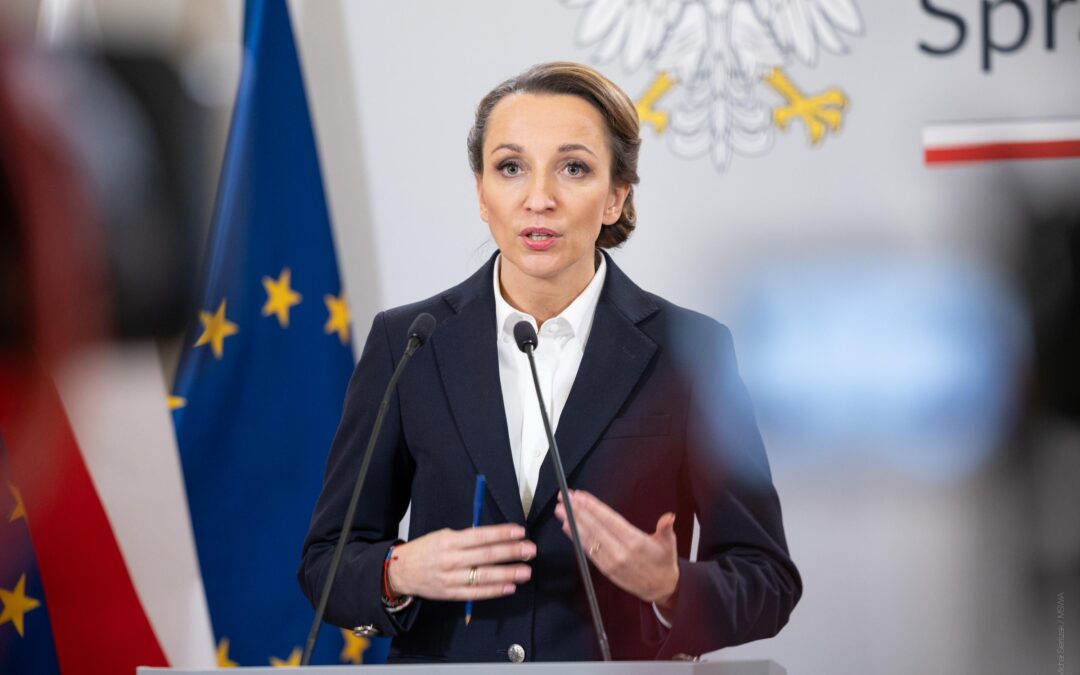
The government’s majority in parliament has chosen Sylwia Gregorczyk-Abram as Poland’s new human rights commissioner. She will take office after the five-year term of the incumbent, Marcin Wiącek, expires today.
Gregorczyk-Abram is a prominent lawyer and activist, who is particularly well known for opposing the overhaul of the judiciary by the former national-conservative Law and Justice (PiS) government.
PiS, which is now the main opposition party, strongly opposed her election, arguing that she is politically aligned with the current, more liberal government. Gregorczyk-Abram herself, however, has pledged to “put all my beliefs and views aside” when she takes up the new role.
Senat wyraził zgodę na powołanie Sylwii Gregorczyk-Abram na Rzecznika Praw Obywatelskich. pic.twitter.com/gz3rwGy3hi
— Senat RP 🇵🇱 (@PolskiSenat) July 22, 2026
The commissioner for human rights (widely known by its Polish initials, RPO) is appointed by a resolution of the Sejm, the lower house of parliament, with the consent of the upper-house Senate.
Candidates must meet certain requirements, including not belonging to any political party and having legal expertise and relevant experience.
As well as acting as a watchdog for human rights, the RPO also has the power to submit motions to the Constitutional Tribunal to assess the constitutionality of laws and to file so-called cassation appeals to the Supreme Court and Supreme Administrative Court against rulings by lower courts.
Poland’s human rights commissioner has written to the government expressing concern that a "temporary" ban on asylum claims by most migrants who irregularly cross the border from Belarus remains in place after more than a year https://t.co/9SA2TypQdK
— Notes from Poland 🇵🇱 (@notesfrompoland) May 28, 2026
Gregorczyk-Abram was last month nominated as a candidate to be the new RPO by the main ruling party, Prime Minister Donald Tusk’s centrist Civic Coalition (KO), along with one of its coalition partners, The Left (Lewica).
PiS proposed a rival candidate, Adam Borowski, a veteran of Poland’s anti-communist struggle in the 1980s. However, critics argued that Borowski, an activist and former PiS election candidate, does not appear to have the requisite legal knowledge and experience.
In a Sejm vote last Friday, the ruling coalition supported Gregorczyk-Abram, who won 233 votes to Borowski’s 177. On Wednesday, her candidacy was also supported by the Senate, with 59 votes in favour and 25 against, confirming that she will become the new RPO.
Gregorczyk-Abram is best known as one of the founders and leaders of the Free Courts (Wolne Sądy) initiative launched in 2017 amid a wave of protests against the then-PiS government’s efforts to take greater control over the judiciary.
Free Courts was prominent in efforts to defend the rule of law. Many of its leading figures are now associated with the current ruling coalition: Maria Ejchart is a deputy justice minister, while Michał Wawrykiewicz is a member of the European Parliament representing KO.
In April last year, Gregorczyk-Abram was made chairwoman of a commission established by the current government to look into cases of abuse of power against civil society under the former PiS administration.
In September, her commission published its first findings, in which it said that public media outlets under PiS control had “carried out systematic repressive and defamatory actions against activists, non-governmental organisations, and civil society”.
Poland's public media “carried out systematic repressive actions against activists, NGOs and civil society” during the rule of the former PiS government, a report commissioned by the new government has found https://t.co/S2MO9KGssC
— Notes from Poland 🇵🇱 (@notesfrompoland) September 26, 2025
PiS argues that Gregorczyk-Abram’s previous activity makes her unsuitable as a suitable candidate for RPO, which is meant to be a non-partisan role. They also point to claims that she was involved in a group of legal figures that discussed the Tusk government’s controversial takeover of public media in December 2023.
“[She] is a discredited and extremely politicised person who should be brought to justice, and not receive the laurels of the commissioner for human rights,” former PiS justice minister Marcin Warchoł told the Do Rzeczy weekly last month.
After a Sejm committee hearing on Gregorczyk-Abram’s candidacy earlier this month, former PiS deputy justice minister Sebastian Kaleta criticised her for ignoring questions over her alleged “role in the illegal takeover of public media”.
Zadałem Sylwii Gregorczyk-Abram serię pytań o jej działania i możliwe spotkania z Ewą Wrzosek w sprawie przejęcia TVP, w tym możliwego tworzenia dokumentów prokuratorskich w prywatnej kancelarii.
Kandydatka ostentacyjnie zdecydowała się ignorować te pytania.
Ma bardzo dużo do…
— Sebastian Kaleta (@sjkaleta) July 15, 2026
Speaking to state broadcaster TVP on Wednesday after her appointment was confirmed by the Senate, Gregorczyk-Abram declared that, “from the moment I take the oath and assume the position of commissioner, I will be independent and sovereign”.
She pledged to “put all my beliefs and views – because each of us has them – aside and become an advocate for all citizens, regardless of what they believe in, how they live, or who they vote for”.
Gregorczyk-Abram said that among her priorities as RPO would be the justice system, supporting the rights of disabled people and their carers, protecting older people, and fighting hate speech.
With regard to the last of these issues, she noted that certain politicians present some groups as “enemies”, pointing to how this previously happened with LGBT+ people and judges, and is now being directed towards Ukrainians. Those are all groups who have at various stages been targeted by PiS and other right-wing parties.
The number of reported hate crimes against Ukrainians in Poland is up 30% so far this year, police data show.
The figures come following recent high-profile cases of verbal and physical attacks against Ukrainians, who are Poland's largest immigrant group https://t.co/pcTsJddDz7
— Notes from Poland 🇵🇱 (@notesfrompoland) July 17, 2026
Notes from Poland is run by a small editorial team and published by an independent, non-profit foundation that is funded through donations from our readers. We cannot do what we do without your support.
Main image credit: MS (under CC BY-SA 4.0)

Daniel Tilles is editor-in-chief of Notes from Poland. He has written on Polish affairs for a wide range of publications, including Foreign Policy, POLITICO Europe, EUobserver and Dziennik Gazeta Prawna.