Keep our news free from ads and paywalls by making a donation to support our work!

Notes from Poland is run by a small editorial team and is published by an independent, non-profit foundation that is funded through donations from our readers. We cannot do what we do without your support.
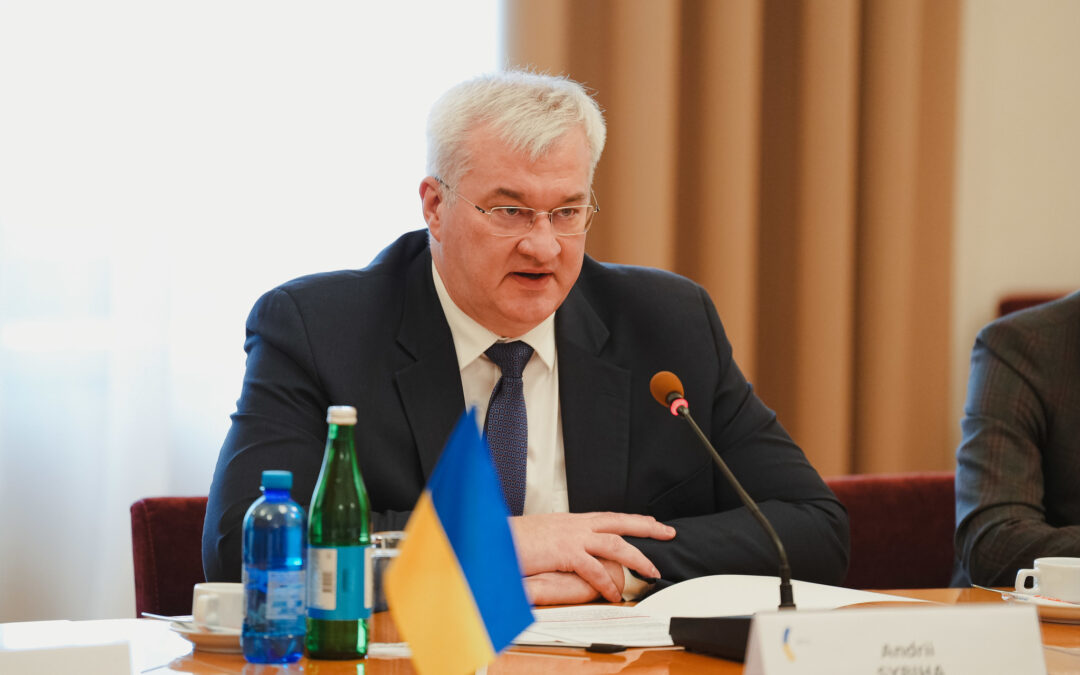
Ukraine’s foreign minister, Andrii Sybiha, has called for dialogue with Poland over President Volodymr Zelensky’s decision to name a military unit after the “heroes of the UPA”, a World War Two partisan group that fought for Ukrainian independence but also led massacres of Polish civilians.
The decision prompted widespread anger in Poland, where President Karol Nawrocki has begun the process of stripping Zelensky of Poland’s highest honour. However, Sybiha says the name of the unit was chosen by the Ukrainian military itself and there was “absolutely no anti-Polish intent”.
The tensions between Ukraine and Poland benefits neither Ukrainians nor Poles.
For nearly two years, we have been rebuilding a constructive dialogue step by step. We unblocked search and exhumation efforts. With dignity and in accordance with Christian traditions, we reburied…
— Andrii Sybiha 🇺🇦 (@andrii_sybiha) June 3, 2026
The controversy began last week, when Zelensky’s office announced that he had renamed a special forces unit in honour of the Ukrainian Insurgent Army (UPA).
The UPA is widely revered in Ukraine for its role in fighting against Moscow-backed Soviet rule. However, in Poland it is associated with the Volhynia massacres, in which up to 100,000 Polish civilians – mostly women and children – were slaughtered, often with great brutality.
Poland has officially recognised the massacres as a genocide. But Ukraine rejects that label, and also argues that the massacres took place in the context of long-standing anti-Ukrainian policies by the prewar Polish state and that Polish partisan units massacred Ukrainian civilians during the war.
President @NawrockiKn has announced plans to strip @ZelenskyyUa of the Order of the White Eagle, Poland’s highest honour, after the Ukrainian president named a military unit after a group that led massacres of ethnic Poles during WWII https://t.co/kdfpMhnina
— Notes from Poland 🇵🇱 (@notesfrompoland) May 29, 2026
The naming of a unit after the UPA prompted strong criticism from right-wing President Nawrocki, who said it “shows that Ukraine, in terms of mentality – glorifying bandits, murderers from the UPA – is not ready to be part of the European family”.
Poland’s more liberal government, which regularly clashes with Nawrocki, has also criticised Zelensky’s decision. However, at the same time, it sought to calm tensions, with Prime Minister Donald Tusk warning that Russia would be the only beneficiary of conflict between Poland and Ukraine.
In a social media post on Wednesday morning, Sybiha addressed the issue for the first time. He expressed gratitude to Poland for its support of Ukraine and called for “mutual understanding”, “openness” and “dialogue”.
“Tensions between Ukraine and Poland benefit neither Ukrainians nor Poles,” he wrote. “This is especially true now, as the threat from our historic enemy, Russia, once again looms over all of us – Ukrainians, Poles, and other Europeans alike.”
Sybiha revealed that the “name of the unit was a choice made by our military”, who “deserve unconditional respect” because “it is they who, at the cost of their health and often their lives, are holding the frontline and defending all of Europe against the Russian threat”.
“I know for certain that our military had absolutely no anti-Polish intent,” he added. “For them, it was about honouring those who, similarly many years ago, fought against imperial Moscow, Bolshevik-communist occupation, and repression.”
The Ukrainian foreign minister also pointed to progress in recent years in conciliation and dialogue with Poland over difficult historical issues, including Kyiv allowing the exhumation of victims of the Volhynia massacres, which had previously been banned.
Ukraine has granted permission for searches at another location on its territory for the remains of Polish victims of massacres carried out by Ukrainian nationalists during WWII https://t.co/bqfLiUQtkq
— Notes from Poland 🇵🇱 (@notesfrompoland) February 20, 2026
“We must…lower the emotional temperature, leave our shared history to the expertise of historians, and focus together on what matters most: countering the common enemy, strengthening our European security, and defending the free future of our nations,” declared Sybiha.
Meanwhile, the Ukrainian foreign ministry revealed that, on Tuesday, deputy foreign minister Olexandr Mischenko had met with the head of the Polish embassy in Kyiv, Piotr Łukasiewicz.
Mischenko emphasised that, for Ukrainians, the UPA is “associated with the struggle for independence, resistance to Soviet rule, and opposition to the occupation”. Like Sybiha, he also called for dialogue and reconciliation over “complex issues of historical memory”.
Poland's state historical institute has criticised remarks by the head of its Ukrainian counterpart about massacres of Poles by Ukrainians in WWII.
He said they are regarded in Ukraine as a "local episode" and suggested they do not constitute a genocide https://t.co/MAi6RhpRDL
— Notes from Poland 🇵🇱 (@notesfrompoland) February 11, 2026
At a meeting next week of the body responsible for overseeing the Order of the White Eagle, Poland’s highest honour, Nawrocki will propose stripping Zelensky of the award, which he received in 2023 from Nawrocki’s predecessor, Andrzej Duda.
While the decision on awarding or withdrawing the order rests with the president, it requires a countersignature from the prime minister. It remains unclear what Tusk would do. Some leading voices in Tusk’s ruling coalition have, however, expressed opposition to stripping Zelensky of the order.
Włodzimierz Czarzasty, the speaker of parliament and one of the leaders of The Left (Lewica), a junior coalition partner, told broadcaster Tok FM that he prefers to find a “diplomatic solution” rather than withdrawing the order.
Katarzyna Pełczyńska-Nałęcz, a government minister and leader of the centrist Poland 2050 (Polska 2050), another junior coalition partner, told Tok FM she is also opposed to “treating [the order] as a bargaining chip”. However, both she and Czarzasty strongly criticised Zelensky’s decision to name a unit after the UPA.
But Piotr Zgorzelski, a deputy speaker of parliament and senior figure in the centre-right Polish People’s Party (PSL), another junior coalition partner, told broadcaster TVN that he is in favour of stripping Zelensky of his honour: “There was an action, now there is a reaction.”
Notes from Poland is run by a small editorial team and published by an independent, non-profit foundation that is funded through donations from our readers. We cannot do what we do without your support.
Main image credit: Ben Dance / FCDO (under CC BY 2.0)

Daniel Tilles is editor-in-chief of Notes from Poland. He has written on Polish affairs for a wide range of publications, including Foreign Policy, POLITICO Europe, EUobserver and Dziennik Gazeta Prawna.