Keep our news free from ads and paywalls by making a donation to support our work!

Notes from Poland is run by a small editorial team and is published by an independent, non-profit foundation that is funded through donations from our readers. We cannot do what we do without your support.
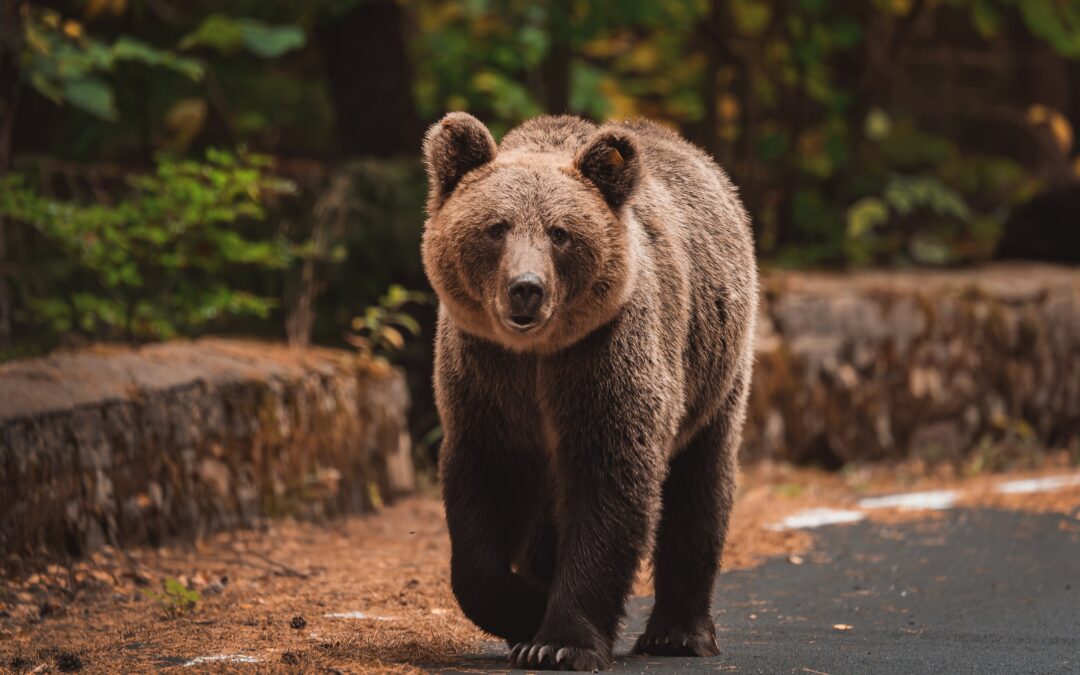
A woman has died in a forest in southeastern Poland after being attacked by a bear. Such incidents are extremely rare, with the last fatal bear attack in Poland recorded in 2014. However, there have been growing reports of bears coming into contact with humans.
A firefighter told broadcaster TVN that they had been alerted to the incident by the 58-year-old woman’s son, who told them he had been speaking to her by phone when he heard her scream “Bear, bear!” before the call cut off.
“He found the body, ran back to us, but later couldn’t find the same spot again,” added the firefighter. Her body was later discovered in woodland near the village of Płonna in Subcarpathia province.
Firefighters reached the woman on quad bikes within an hour of being notified. However, her injuries were so severe that they were unable to administer medical treatment at the scene, a spokesman told TVN. Police later confirmed her death to the media.
[AKTUALIZACJA] – Kobieta ma obrażenia głowy, szarpane i rozległe. Według relacji jej syna, zadzwoniła do niego i podczas rozmowy usłyszał on jej krzyk "Niedźwiedź, niedźwiedź!" – opowiedział strażak.https://t.co/6r67Nru9v6
— tvn24 (@tvn24) April 23, 2026
A spokesman for the forest district in which the incident took place told news website Onet that “the bear fled after the attack” and “there is no ongoing pursuit [of it] at this time”. But he did not rule out that one would take place.
“At this time of year, bears that have awakened from hibernation come to places like this, close to human homes, in search of food,” he explained. “They usually avoid people, [so] this was an unexpected encounter for both the bear and the human. The animal was likely frightened, so it attacked.”
Tomasz Zając, a bear expert from Tatra National Park, which is not where the incident took place but which is also home to the animals, told news website Wirtualna Polska that the attack may have happened because a female bear was defending nearby cubs.
Estimates of Poland’s brown bear population range between 120 and 400, with most found in the Bieszczady mountains in Subcarpathia. Their numbers are thought to be rising, with growing reports of encounters with humans.
However, fatal bear attacks in Poland are extremely rare. The last such case reported by Polish media occurred in October 2014, also in the Subcarpathian province, when a 61-year-old man died, according to news website Interia.
During that incident, rescuers searching for the victim were also confronted by an aggressive bear, which damaged a quad bike after grabbing the handlebars with its teeth and overturning the vehicle.
Residents of Nowy Sącz have been asked by the mayor to remain inside if possible after a bear was seen wandering the streets.
Police patrols have been deployed to search for the animal https://t.co/QS46K7o0rl
— Notes from Poland 🇵🇱 (@notesfrompoland) May 30, 2023
Earlier this year, a bear attack on a 53-year-old man – who suffered head and limb injuries but managed to return home and call for help – prompted local experts in the Bieszczady mountains to call for changes in bear management.
They proposed measures similar to those introduced in the Tatra mountains, including installing bear-proof rubbish bins, removing hunters’ bait stations, and establishing specialised intervention teams.
Two weeks later, Poland’s government announced that it will spend 16 million zloty (€3.7 million) on a programme to protect brown bears and improve public safety. The plan includes forming a 20-person team tasked with monitoring bears around the clock and intervening when necessary.
The programme also includes the installation of around 1,500 bear-proof rubbish bins to discourage the animals from seeking food near human settlements.
Poland has launched a new programme to protect brown bears and ensure the safety of their human neighbours, amid growing reports of encounters.
A special force will be set up to respond to bear sightings and fit the animals with tracking collars https://t.co/GEOCpnEj70
— Notes from Poland 🇵🇱 (@notesfrompoland) March 21, 2026
Notes from Poland is run by a small editorial team and published by an independent, non-profit foundation that is funded through donations from our readers. We cannot do what we do without your support.
Main image credit: Zdeněk Macháček/Unsplash

Alicja Ptak is deputy editor-in-chief of Notes from Poland and a multimedia journalist. She has written for Clean Energy Wire and The Times, and she hosts her own podcast, The Warsaw Wire, on Poland’s economy and energy sector. She previously worked for Reuters.