Keep our news free from ads and paywalls by making a donation to support our work!

Notes from Poland is run by a small editorial team and is published by an independent, non-profit foundation that is funded through donations from our readers. We cannot do what we do without your support.
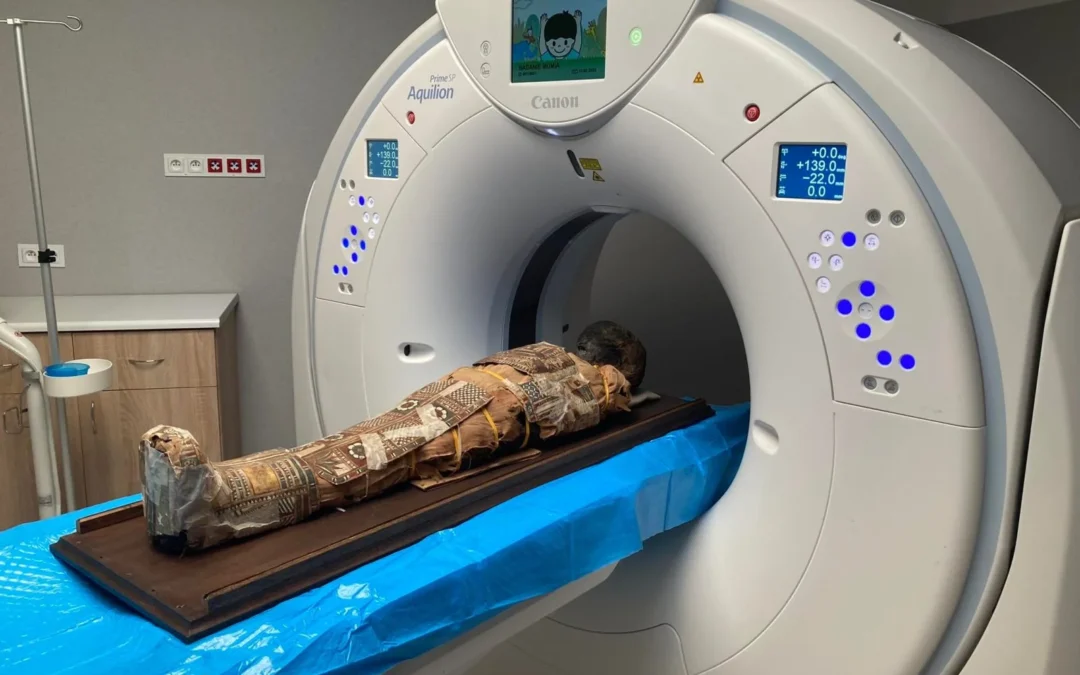
A team of Polish scientists have used modern scanning techniques to reveal some of the secrets of a mummified child from ancient Egypt, including his sex and age at death.
The research, which was carried out at the request of the local bishop because the mummy is housed in the diocesan museum, also revealed a piece of papyrus on his chest, which the team believe may contain his name – though further work is needed to establish that.
„Egipska mumia przechowywana w Muzeum Archidiecezjalnym we Wrocławiu po raz pierwszy została poddana kompleksowym badaniom (…)” napisał o naszych badaniach @NatGeo PL
Badania ekspertów z UWr i MRC nadal trwają.🔬@AP@naukawpolsce@Reuters#archeologia #nauka #odkrycia pic.twitter.com/BOBCDQs9yQ
— Mummy Research Center (@mummy_research) March 2, 2026
The mummy was in 1914 brought to the then-German city of Breslau by Adolf Bertram, who was appointed as the city’s bishop that same year. It was part of a collection he donated to the diocesan museum. In 1945, amid postwar border changes, Breslau became part of Poland, known as Wrocław.
However, many of the museum’s documents were destroyed during the war, making it nearly impossible to accurately trace the mummy’s origins without conducting research. In 2023, the city’s bishop, Józef Kupny, asked scientists at the University of Wrocław to conduct an investigation.
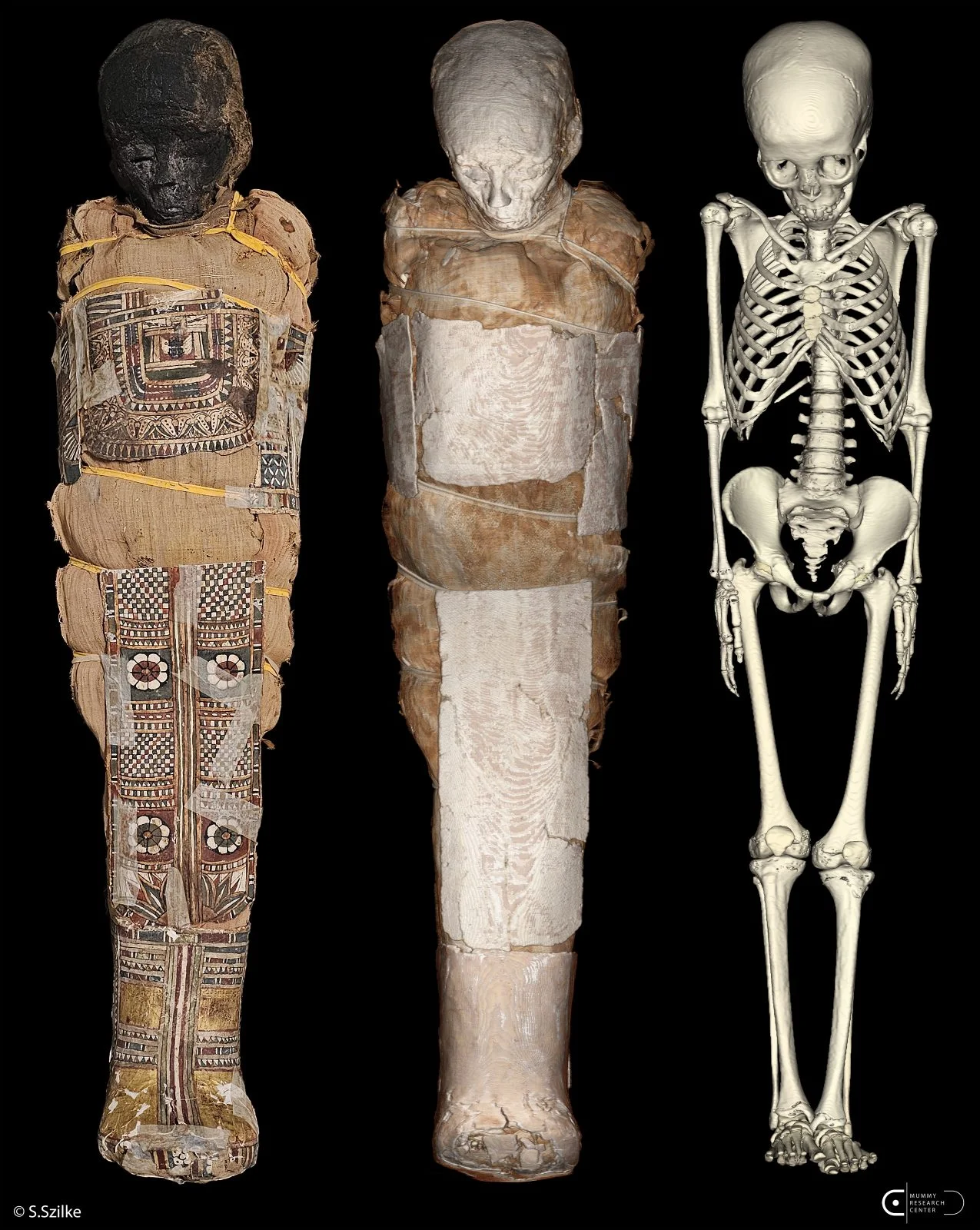
The team, who have published an academic paper on their work, used modern scanning techniques to look inside the mummy, including radiological examinations at a hospital in the city of Lublin.
They found that the mummified person was a boy who lived in Egypt during the Ptolemaic period (4th–1st century BCE) and died around the age of eight.
They were even able to ascertain from the analysis of its cartonnage, a type of material used in funerary masks, that the mummy “originates from the southern part of Upper Egypt…most likely Kom Ombo, Aswan, or another necropolis in the region”.
Together with its bandages and cartonnage, the mummy is 123 cm tall and 28.4 cm wide at the shoulders. “The child’s face is visible, as the bandages have been mostly removed,” note the researchers. “A significant layer of brownish-black embalming material is present on the head and neck.”
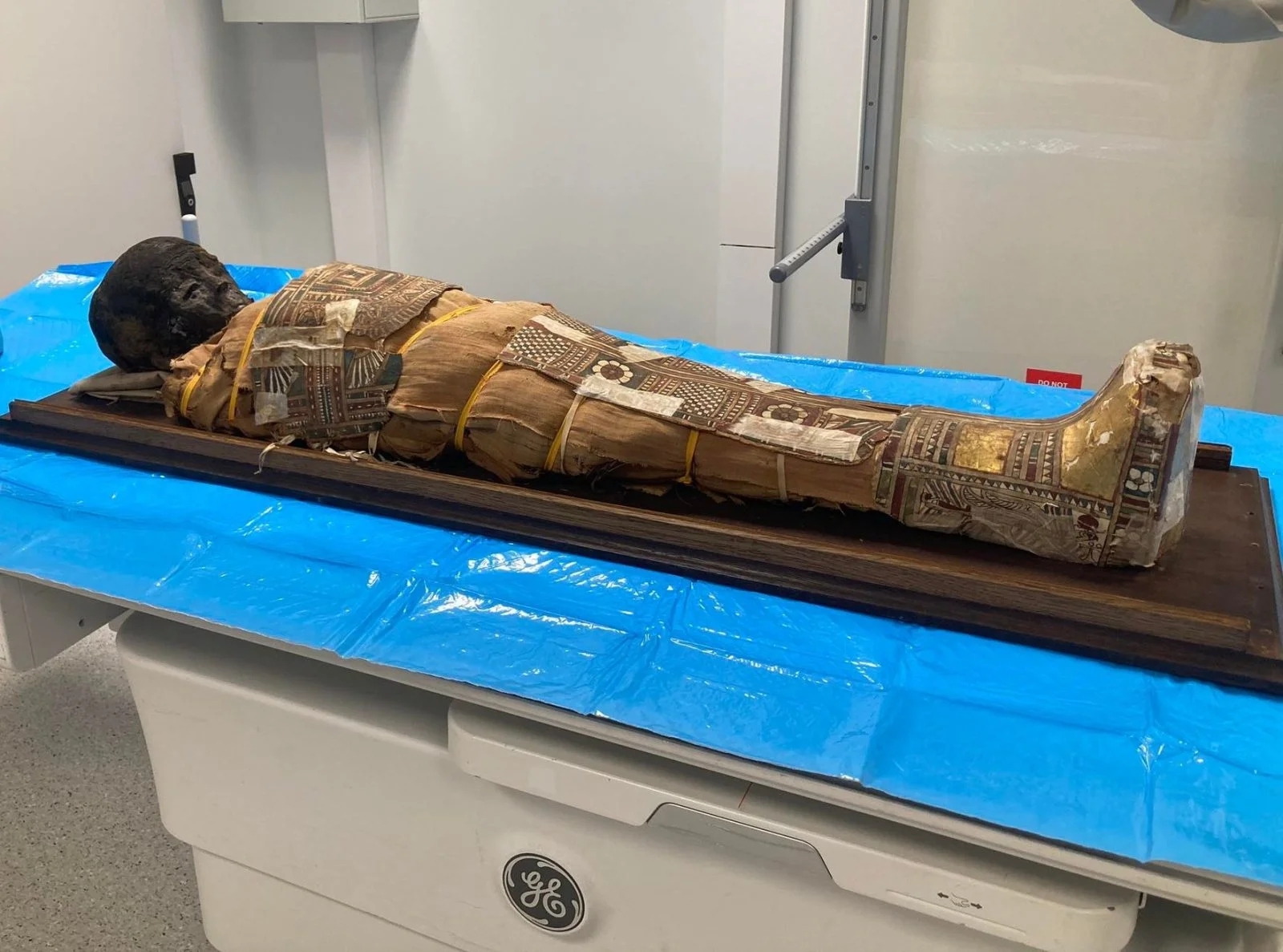
The scans also revealed the presence of an object on the boy’s chest. “It could be a papyrus containing, for example, the boy’s name,” says Agata Kubala, the report’s lead author. But further work is needed to confirm that.
“This isn’t the end of our research…We’re still working on the mummy,” added Kubala. However, in order to do so, they must develop a method to remove the mummy’s already fragile cartonnage without causing further damage, she explained.
In 2021, a separate team of Polish researchers used radiological scanning to discover the world’s first pregnant Egyptian mummy, which is housed at the National Museum in Warsaw.
Notes from Poland is run by a small editorial team and published by an independent, non-profit foundation that is funded through donations from our readers. We cannot do what we do without your support.
Image credits: Marzena Ożarek-Szilke/Universytet Wrocławski

Olivier Sorgho is senior editor at Notes from Poland, covering politics, business and society. He previously worked for Reuters.