Keep our news free from ads and paywalls by making a donation to support our work!

Notes from Poland is run by a small editorial team and is published by an independent, non-profit foundation that is funded through donations from our readers. We cannot do what we do without your support.
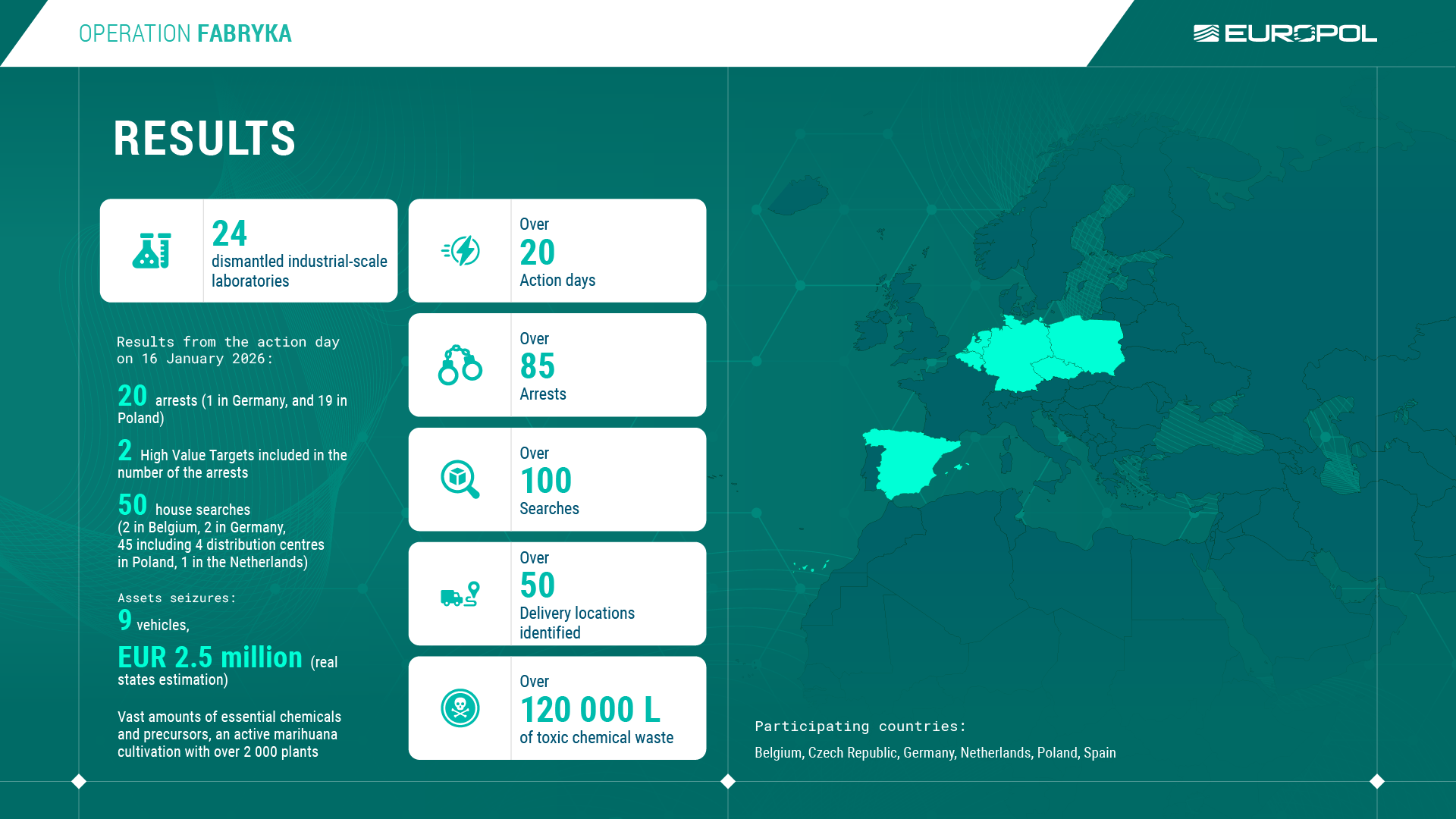
Poland has played a leading role in the European Union’s largest-ever operation against synthetic drugs. Police in six countries dismantled 24 industrial-scale laboratories, seized tonnes of drugs, and arrested dozens of suspects, including the alleged ringleaders of the network in Poland.
The operation, named Fabryka (meaning “factory” in Polish), was announced on Wednesday by Europol, the EU’s law-enforcement agency, which coordinated the action across Spain, Belgium, the Netherlands, Germany, the Czech Republic and Poland itself.
⚠️ Authorities seized 1 000 tonnes of chemicals, potentially removing 300 tonnes of synthetic drugs from the EU drug market, in Operation Fabryka.
➡️ Read more in our press release: https://t.co/Ozp4ZGTmh9 pic.twitter.com/yaU8W431IQ
— Europol (@Europol) January 21, 2026
It culminated in a series of raids that took place last Friday and saw 20 people arrested, 19 of them in Poland. Overall, 85 people were arrested during the course of the operation.
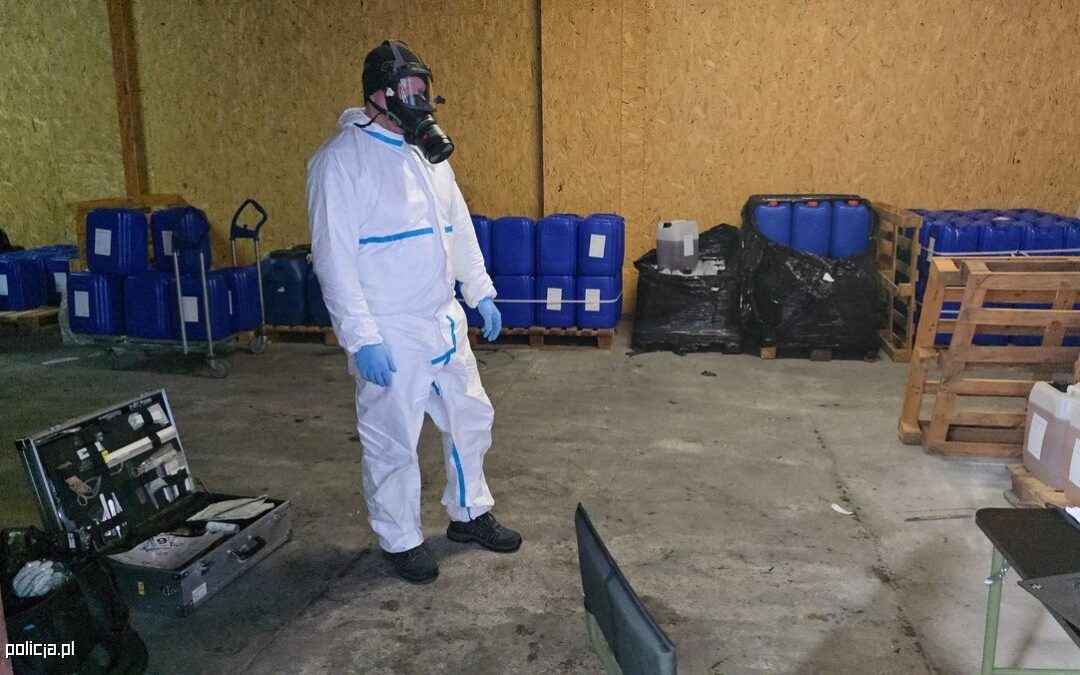
Officers seized over 3.5 tonnes and 982 litres of drugs (including 4-CMC, cathinone, MDMA, and amphetamine oil) as well as 1,000 tonnes of chemical precursors, which could have been used to produce 300 tonnes of synthetic drugs.
Europol estimates that the illegal activities could have generated billions of euros in profits for the criminal networks involved.
The investigation began in 2022 when police in Wrocław, Poland’s third largest city, started examining the import and sale of chemicals used to produce drugs, the Polish interior ministry said.
The probe later expanded across Poland and, from late 2024, Europol coordinated the international operation. Investigators found that the group used legally registered companies to import chemicals from China and India, officially for pharmaceutical use.
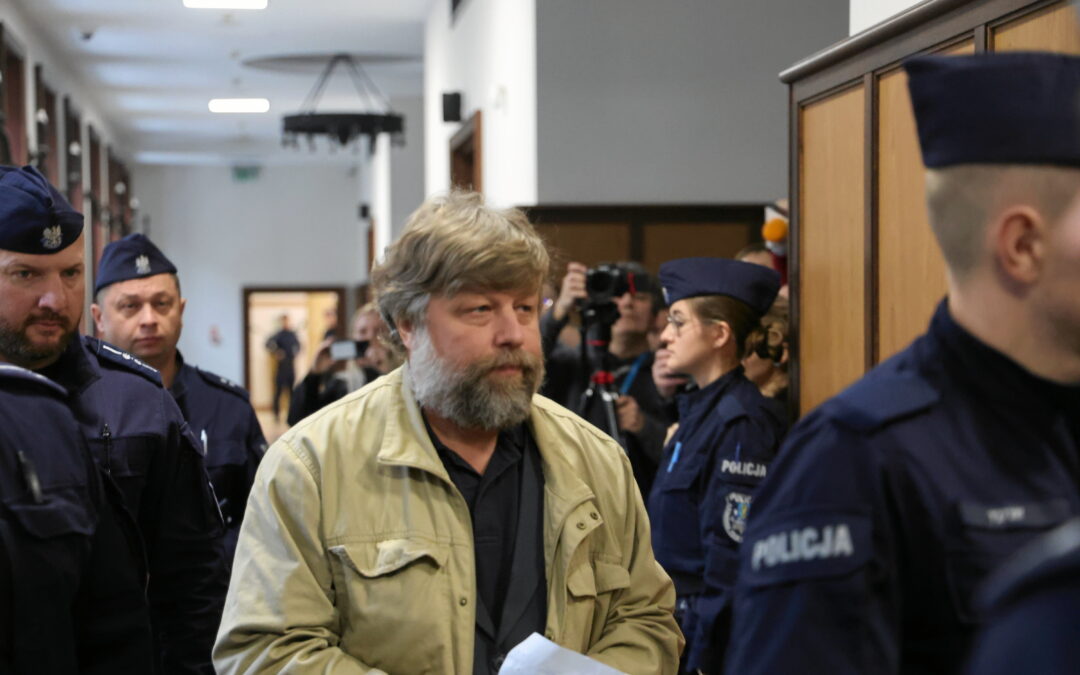
Among those detained in Poland, a court has placed four alleged ringleaders in pretrial detention for three months, while other suspects were released on bail under police supervision.
Prosecutors have charged them with offences including organised crime, large-scale drug production and money laundering. If convicted, they could face up to 20 years in prison, reports broadcaster TVN24.
This is not the first time Polish authorities have targeted synthetic drug production: in September 2024, they carried out a major operation with Ukrainian police that dismantled 38 laboratories.
That operation was also described as “unprecedented” at the time by Europol, which said that the 195 kilograms of methadone seized alone “could kill almost 4 million people”.
Poland itself has also seen rising use of fentanyl, a synthetic opioid. In response, the country’s health ministry introduced a monitoring system for opioid prescriptions earlier in 2024 to curb abuse and prevent overdoses.
Poland and Ukraine have mounted a major joint operation to shut down synthetic drug production sites.
An "unprecedented" amount of drugs was seized, says @Europol, and the biggest synthetic opioid lab ever discovered in Poland was dismantled https://t.co/JeXrlr9bR1
— Notes from Poland 🇵🇱 (@notesfrompoland) September 2, 2024
Notes from Poland is run by a small editorial team and published by an independent, non-profit foundation that is funded through donations from our readers. We cannot do what we do without your support.
Main image credit: Policja (under CC BY-SA 4.0)

Alicja Ptak is deputy editor-in-chief of Notes from Poland and a multimedia journalist. She has written for Clean Energy Wire and The Times, and she hosts her own podcast, The Warsaw Wire, on Poland’s economy and energy sector. She previously worked for Reuters.