Keep our news free from ads and paywalls by making a donation to support our work!

Notes from Poland is run by a small editorial team and is published by an independent, non-profit foundation that is funded through donations from our readers. We cannot do what we do without your support.
The Polish government has approved a bill that would provide greater support to elite female athletes after they give birth. It also includes measures to provide sports referees with the same level of protection as public officials.
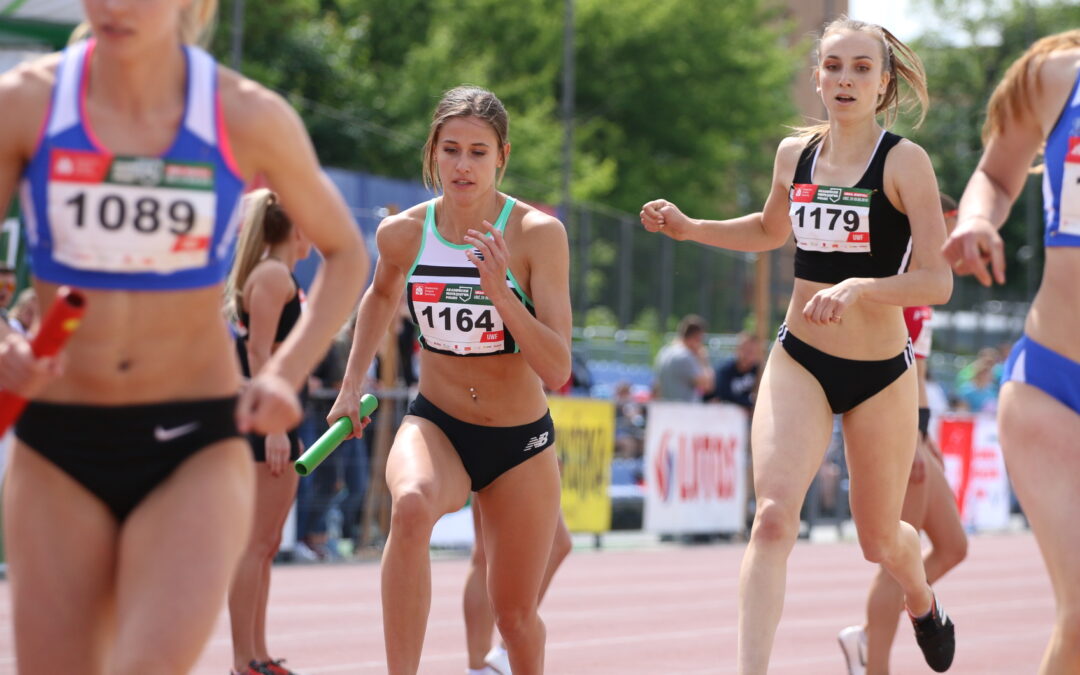
Under the proposed legislation, women who are members of the Polish national team in their sport will continue to receive funding for 12 months after giving birth, twice the current duration. The measures also apply to women who have miscarriages or stillbirths.
The amount they are entitled to will also increase – from 50% to 81.5% of their usual funding – and female athletes will also have the same statutory rights as women employed with a full-time employment contract.
Projekt nowelizacji ustawy o sporcie przyjęty przez rząd ‼️
✅ Wzmacniamy ochronę zawodniczek po urodzeniu dziecka. Sportsmenki będą miały takie same prawa, jak kobiety pracujące na etacie.
➡️ z 6 do 12 miesięcy wydłużony zostanie czas pobierania stypendium sportowego przez… pic.twitter.com/2xy8Kto0ch
— Ministerstwo Sportu i Turystyki (@SPORT_GOV_PL) January 7, 2026
“One of the aspects of inequality that affects women in sport is the question of receiving a sports scholarship in the period after childbirth,” reads the bill. At present, such athletes “are in a much less favourable situation than people employed under a work contract”.
Under a law introduced in 2010, the sports minister can award a member of a national team a “sporting stipend” for achievements in international competition.
Similar rules to the proposed changes will apply to female athletes supported by funding from local authorities.
Poland’s team for @Paris2024 Olympics contains more female athletes than male ones for the first time in history https://t.co/tsmARaHwAl
— Notes from Poland 🇵🇱 (@notesfrompoland) July 16, 2024
The bill approved by the government would also give sports referees the same legal protection as public officials, and would introduce more stringent penalties for violence, abuse or assault and battery. Such cases will be prosecuted ex officio, meaning the victim will not have to make a complaint.
The proposed measures come in response to a perceived rise in attacks and abuse directed towards sports officials, particularly in lower-league football matches.
One such referee, Marcin Polański, told the Polish Press Agency (PAP) that physical attacks were relatively rare and that culprits are usually punished, but that tightening the law could deter potential assailants.
Verbal abuse in stadiums is widespread, on the other hand, although it is very difficult to identify those responsible, Polański adds. “My impression is that a stadium during a match is a place detached from reality…It is great that there will be a law, but I wonder if it will be a dead [unenforceable] one.”
Jacek Masiota, a specialist in sports law, also told PAP that he had doubts about the enforceability and necessity of the law. “I don’t see similarities between sporting referees and public officials. We cannot keep expanding the list of public officials infinitely, because it will stop working.”
A third major element of the proposed legislation is an expansion of the powers of the Institute of Sport, a state agency, to allow it to receive funding to prepare national teams for major events when this is not available to individual sports associations.
This is in response to such incidents as the situation last year when the Polish ice hockey federation could not afford to send the national women’s team to an Olympic qualifying tournament in Japan, reports news website Sport.pl. The sports ministry was unable to transfer the necessary funds because of the federation’s debts.
“Unfortunately, there are sports associations in Poland that have debts and obligations to the bailiff, and I cannot fund them,” then sports minister Sławomir Nitras explained at the time.
A promise to give a new apartment as a reward to each of Poland's gold medallists at @Paris2024 has now been extended to silver medallists Julia Szeremeta, Klaudia Zwolińska and Daria Pikulik.
The decision comes after Poland won only one gold at the games https://t.co/V1LfhcSHDe
— Notes from Poland 🇵🇱 (@notesfrompoland) August 13, 2024
The legislation must still be approved by parliament, where the government has a majority, and opposition-aligned President Karol Nawrocki, who has regularly vetoed government bills.
In December 2024, Nawrocki’s predecessor, Andrzej Duda, refused to sign a similar bill due to his concerns over its proposed gender quotas in sports associations.
The latter provisions have not been included in the latest version and Sport.pl suggests that Nawrocki faces a dilemma in choosing whether to support the bill and its protections of female athletes and referees but risk alienating fan groups with which he is closely affiliated.
Notes from Poland is run by a small editorial team and published by an independent, non-profit foundation that is funded through donations from our readers. We cannot do what we do without your support.
Main image credit: Rzober89/Wikimedia Commons (under CC BY-SA 4.0)
Ben Koschalka is a translator, lecturer, and senior editor at Notes from Poland. Originally from Britain, he has lived in Kraków since 2005.