Keep our news free from ads and paywalls by making a donation to support our work!

Notes from Poland is run by a small editorial team and is published by an independent, non-profit foundation that is funded through donations from our readers. We cannot do what we do without your support.
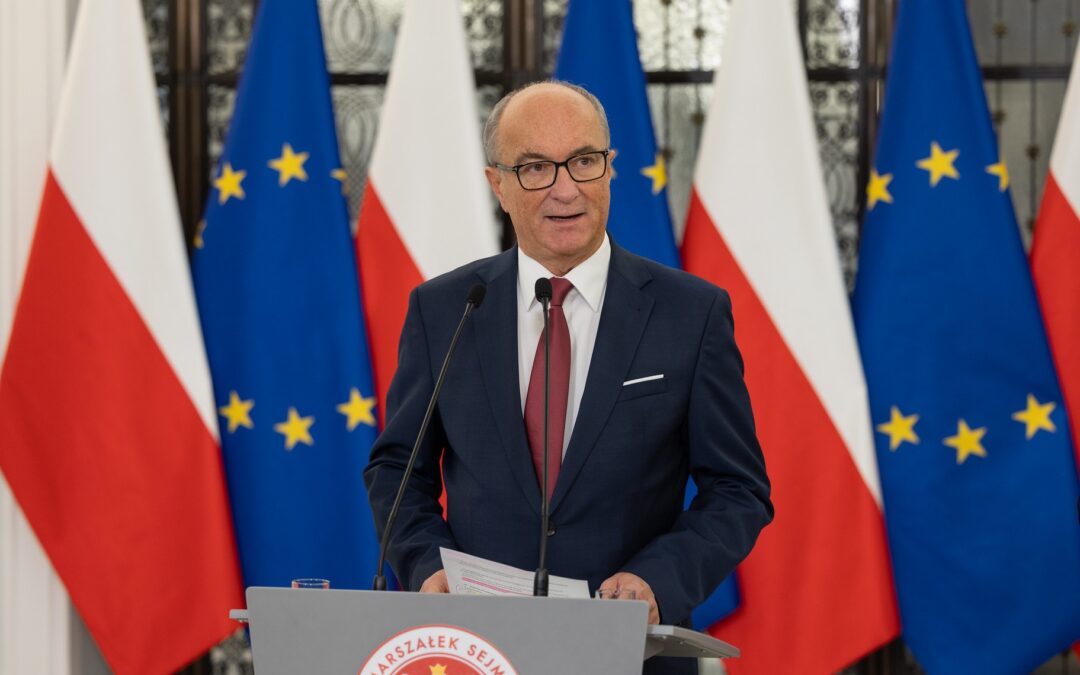
The speaker of the Sejm, the lower house of Poland’s parliament, has announced that the chamber will seek to overturn President Karol Nawrocki’s decision on Tuesday to veto a law banning the chaining up of dogs.
A presidential veto can be overridden by a three-fifths majority in the Sejm. However, that happens very rarely: the last time was in 2009 under then-President Lech Kaczyński.
In this case, there appears a chance of success, given that over two thirds of MPs supported the dog-leashing ban. However, sources suggest that members of the opposition Law and Justice (PiS) party who originally voted for the bill will now not be willing to give the government a victory against the PiS-aligned president.
Ustawa łańcuchowa. Sejm spróbuje odrzucić weto prezydenta @NawrockiKn
Kliknij w zdjęcie, by dowiedzieć się więcej 🔽 https://t.co/2e8mRdRz3E
— Rzeczpospolita (@rzeczpospolita) December 3, 2025
On Tuesday afternoon, Nawrocki announced that he was vetoing the bill banning the chaining of dogs. He argued that, “although the intention – protecting animals – is just and noble, the law itself was poorly drafted”.
In particular, the president argued that elements of the legislation introducing minimum sizes for dog kennels – of at least 20m² for the largest dogs – were unrealistic and would “harm farmers, breeders and ordinary rural households”.
His decision to veto the law was condemned by figures from the ruling coalition, including the speaker of the Sejm, Włodzimierz Czarzasty, who said that it made him “feel like crying”.
On Wednesday, Czarzasty announced that he had launched efforts for the Sejm to overturn the veto. That requires the support of at least three fifths of MPs in a vote at which at least half of all MPs are present.
“The [ruling] coalition has made a decision on this matter, and the veto will be voted on, because we consider this decision by the president to be yet another that is absolutely incomprehensible,” said Czarzasty.
Given how the Sejm originally voted on the bill in September, it appears possible that Czarzasty has a chance of success. Among the 415 MPs present for the vote in the 460-seat chamber, 280 (67%) were in favour of the bill.
That included all MPs from the ruling coalition, which ranges from left to centre-right, but also 49 MPs from the national-conservative PiS, including the party’s leader, Jarosław Kaczyński (who is a well-known proponent of animal rights). A further 84 PiS MPs voted against and 30 abstained.
Poland’s parliament has voted in favour of a ban on dogs being kept on leashes at home.
The new measures also specify a minimum size for kennels that dogs can be kept in https://t.co/1p4wUuZPZu
— Notes from Poland 🇵🇱 (@notesfrompoland) September 26, 2025
However, unnamed PiS politicians told Wirtualna Polska, a leading news website, that they do not want to help the ruling coalition achieve a victory against Nawrocki, who was elected as president this year with PiS’s support and has regularly stymied the government’s agenda through vetos and other actions.
Instead, PiS is likely to argue that parliament should support an alternative bill on the treatment of dogs that Nawrocki said, when announcing his veto, he would soon submit for consideration.
So far, there are no details of what it will contain, but the president said that it “will allow dogs to be unleashed, will truly improve the lives of animals, but will not impose restrictive and unrealistic obligations on people to build kennels [of] several dozen square meters”.
PiS – jak twierdzą politycy tej partii w rozmowie z WP – nie pomoże koalicji rządzącej odrzucić prezydenckiego weta w sprawie tzw. ustawy łańcuchowej. Chcą, by koalicja przyjęła w Sejmie prezydencki projekt w tej sprawie.@wirtualnapolska https://t.co/OJjqf0LdsN
— Michał Wróblewski (@wroblewski_m) December 3, 2025
“I don’t think [the attempt to overturn the veto] will succeed,” PiS MP and former party spokesman Radosław Fogiel told broadcaster RMF. “The president said he will propose his own bill, which no longer has these flaws and loopholes.”
The overturning of presidential vetoes is extremely rare. In the years 2008 and 2009, the Sejm overturned a number of vetos issued by PiS-aligned president Lech Kaczyński. However, since then, under Presidents Bronisław Komorowski, Andrzej Duda and Nawrocki.
Nawrocki has issued an unprecedented number of vetoes since taking office in August. However, in previous cases, they have concerned bills that were completely opposed by the opposition, meaning there is no chance of the government’s narrow Sejm majority overturning the vetoes.
Notes from Poland is run by a small editorial team and published by an independent, non-profit foundation that is funded through donations from our readers. We cannot do what we do without your support.
Main image credit: Klub Lewicy/Flickr (under public domain)

Daniel Tilles is editor-in-chief of Notes from Poland. He has written on Polish affairs for a wide range of publications, including Foreign Policy, POLITICO Europe, EUobserver and Dziennik Gazeta Prawna.