Keep our news free from ads and paywalls by making a donation to support our work!

Notes from Poland is run by a small editorial team and is published by an independent, non-profit foundation that is funded through donations from our readers. We cannot do what we do without your support.
The proportion of Poles who negatively assess their country’s justice system has increased under the current government, despite its promises to restore the rule of law and ensure that courts function more effectively and independently.
New polling by state research agency CBOS found that, in June this year, 61% of Poles had a negative view of the functioning of the justice system, up from 55% in 2022 and 51% in 2017, when the former Law and Justice (PiS) government was in power.
Only 26% now positively assess the system, down from 28% in 2022 and 36% in 2017. The last time positive views were lower was in 2005 (22%).
Jak Polacy oceniają działanie wymiaru sprawiedliwości w Polsce? ⚖️
📙 Więcej w komunikacie #CBOS „Społeczna ocena wymiaru sprawiedliwości” ⤵️ https://t.co/kBfxnHNXrC#sądy #wymiarsprawiedliwości pic.twitter.com/CcWcn6Lro3
— CBOS (@CBOS_Info) August 11, 2026
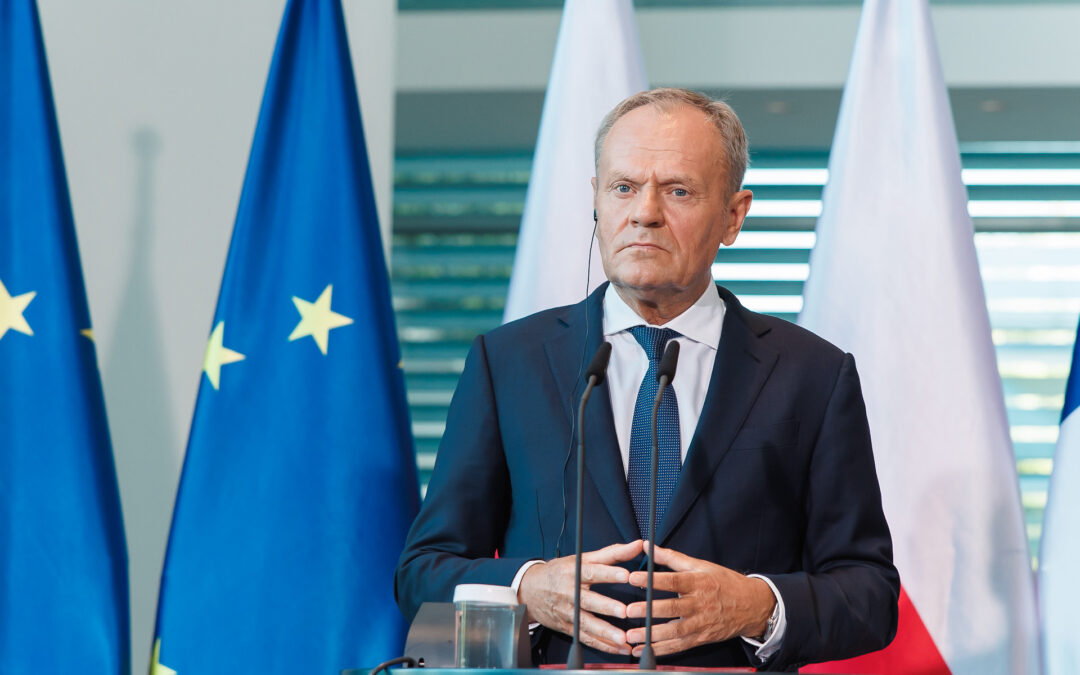
The findings come two and a half years after the current government, a coalition ranging from left to centre right led by Prime Minister Donald Tusk, came to power in December 2023, replacing the national-conservative PiS administration.
One of Tusk’s main promises was to restore the rule of law after eight years in which PiS had implemented a series of contested judicial reforms that experts, European courts and many Polish judges had condemned as undermining the independence and functioning of the judiciary.
However, Tusk’s government has struggled to implement its promised changes. In many cases, its efforts have been blocked by PiS-aligned Presidents Andrzej Duda and Karol Nawrocki or other officials appointed under the former government.
But in other cases, such as with a pledge to separate the functions of justice minister and prosecutor general, which were fused by PiS in 2016, the current ruling coalition has simply not followed through on its promises.
In its latest polling, CBOS found that supporters of the current opposition are most dissatisfied with the functioning of the justice system: 72% of PiS voters have a negative view, as do 71% of those who support the far-right Confederation (Konfederacja).
However, even among voters of Tusk’s centrist Civic Coalition (KO) party, a majority, 53%, have a negative opinion, with only 38% holding a positive one.
Interestingly, public attitudes towards judges themselves have hardly changed. Currently, 19% of Poles have a positive view towards them and 23% a negative one. That is similar to findings in 2017 (22% positive, 24% negative) and 2012 (19% positive, 23% negative).
More Poles (35%) think that the rule of law has got worse under Tusk's government than believe it has improved (24%).
A further 28% think there has been no change, finds a new poll https://t.co/KkiuY2vDSW
— Notes from Poland 🇵🇱 (@notesfrompoland) January 5, 2025
When asked to identify the greatest problems with the justice system, Poles instead often point to structural issues – that is, those that are under the control of politicians.
The most commonly identified problem (chosen by 38% of respondents, who could select up to three main problems) was “prolonged proceedings” in court cases. The second biggest issue was “politicisation of courts” (18%).
Only 4% said that “judges’ neglect of duty, incompetence and impunity” were among the biggest problems. However, 23% of respondents were unable to name a single major issue that the justice system faces.
Fifteen months since the change of government, Poland's rule-of-law crisis continues – indeed, many Poles think the situation has got worse.@J_Jaraczewski explains the roots of the crisis, what its impact has been, and how it might be resolved https://t.co/7KOCURV3dU
— Notes from Poland 🇵🇱 (@notesfrompoland) March 17, 2025
CBOS’s findings echo a number of other polls. After the first year of Tusk’s government, a survey by SW Research for the Rzeczpospolita daily found that 35% of Poles thought the rule-of-law situation had got worse, compared to only 24% who thought it had improved.
Another poll by the same agency for Onet, a news website, in January this year similarly found that 40% of Poles believe the justice system has not improved under the current government, while only 33% think it has got better.
In response to the latter poll, justice minister Waldemar Żurek admitted to Onet that there had been problems in addressing the rule of law. But he blamed the “hurdles [put] in our path” by Presidents Duda and Nawrocki.
Opposition-aligned President @NawrockiKn has vetoed a government bill intended to reform a judicial body at the heart of Poland’s rule-of-law crisis.
He argued that the measures would simply create even greater “legal chaos” https://t.co/I7FHRKIoP1
— Notes from Poland 🇵🇱 (@notesfrompoland) February 19, 2026
In 2024, Duda refused to sign government bills overhauling the Constitutional Tribunal (TK), which still contains judges illegitimately appointed under the former PiS administration. As a result, Tusk’s government refuses to recognise rulings issued by the TK.
In February this year, Duda’s successor, Nawrocki, vetoed a government bill intended to restore the legitimacy of the National Council of the Judiciary (KRS), the body responsible for nominating judges to positions on courts.
In 2017, the KRS was overhauled under PiS in a manner that rendered it illegitimate, according to multiple Polish and European court rulings. That in turn has led to doubts over the legal status of around 3,000 judges appointed by the KRS since 2017 and all the rulings issued by them.
Nawrocki has also refused to swear in four new TK judges nominated by parliament this year, despite an order by the European Court of Human Rights that they be allowed to take up their positions.
The European Court of Human Rights has ordered Poland’s Constitutional Tribunal (TK) to accept four judges whom opposition-aligned President Nawrocki refused to swear in.
The decision was welcomed by the government but rejected by the TK itself https://t.co/9NxInPdYk9
— Notes from Poland 🇵🇱 (@notesfrompoland) May 6, 2026
Notes from Poland is run by a small editorial team and published by an independent, non-profit foundation that is funded through donations from our readers. We cannot do what we do without your support.
Main image credit: KPRM/Flickr (under CC BY-NC-ND 4.0)

Daniel Tilles is editor-in-chief of Notes from Poland. He has written on Polish affairs for a wide range of publications, including Foreign Policy, POLITICO Europe, EUobserver and Dziennik Gazeta Prawna.