Keep our news free from ads and paywalls by making a donation to support our work!

Notes from Poland is run by a small editorial team and is published by an independent, non-profit foundation that is funded through donations from our readers. We cannot do what we do without your support.
President Karol Nawrocki has agreed to swear in a new judge to the Constitutional Tribunal (TK), ending weeks of doubt as to whether the opposition-aligned president would accept the judge appointed by the government’s parliamentary majority.
Although Sławomir Patyra will now be accepted onto the court, four other judges appointed by parliament earlier this year continue to be excluded after Nawrocki refused to receive their oaths and the TK’s chief justice, also aligned with the opposition, blocked them from taking office.
W najbliższy wtorek 28 lipca Prezydent Karol Nawrocki działając na postawie art. 4 ust. 1 ustawy o statusie sędziów Trybunału Konstytucyjnego, przyjmie ślubowanie od prof. Sławomira Patyry i tego samego dnia wręczy powołania czterem nowym sędziom Sądu Najwyższego.
W przyszłym…— Zbigniew Bogucki🇵🇱 (@BoguckiZbigniew) July 22, 2026
Under Polish law, when a vacancy emerges among the 15 positions on the TK – for example when a judge’s nine-year term expires – the lower house of parliament, the Sejm, chooses who should fill it. However, to take office, the judge must swear an oath before the president.
In April, after the Sejm had chosen six candidates to fill vacancies on the court, Nawrocki took the unprecedented step of inviting only two of them to be sworn in. He argued there were doubts over the legality of how all six had been chosen, but decided to accept two to ensure the TK had the necessary quorum to function.
Those two have been able to take up their seats on the court, but the other four remain in limbo. Although they arranged their own private swearing-in ceremony without the presence of Nawrocki, the TK’s chief justice, Bogdan Święczkowski, has refused to accept them.
In May, the European Court of Human Rights ordered that the quartet be allowed to take up their positions. But the TK – where judges appointed under the former Law and Justice (PiS) government retain a majority – issued its own ruling endorsing Nawrocki’s right not to swear in the new judges.
On 11 June, the Sejm then chose another judge, Patyra, to fill a newly opened vacancy on the court. In his case, the legal doubts Nawrocki had expressed regarding the previous appointments, which in some instances were made more than a year after the vacancies had arisen, did not seem to apply.
Yet for weeks the president refused to confirm whether he would swear him in. That prompted Patyra to write to Nawrocki in early July and then again this week, asking the president to indicate a date on which he could take his oath.
Patyra himself has also made clear on which side of the dispute he stands. In an interview with news website Onet in May, he accused Nawrocki and Święczkowski of “blatantly unlawful actions” in deciding which TK judges can and cannot take office and suggested that the police should intervene.
Sędzia TK prof. Patyra po raz kolejny zaapelował do Prezydenta o wyznaczenie mu terminu na złożenie przysięgi.
Ignorowanie sędziego TK przez Prezydenta jest kolejnym przykładem psucia państwa. To pokazuje, jak bardzo siły anty-demokratyczne boją się odbudowy niezależnego TK.…
— Dariusz Mazur (@_Dariusz_Mazur) July 21, 2026
Finally, on Wednesday this week, Nawrocki’s chief of staff, Zbigniew Bogucki, announced that Nawrocki had invited Patyra to the presidential palace on Tuesday next week to take his oath.
Speaking to Polsat News, Bogucki said that, in the case of Patyra, initially “there were some doubts, but the president dispelled them”, without specifying what they were.
In the end, they concluded that “we had a fundamentally clean situation here” and Patyra was chosen “in accordance with all procedures”, unlike the six new judges chosen by the Sejm in March to fill longstanding vacancies.
“It was not President Nawrocki or the current opposition who destroyed and are destroying the tribunal; it is the government that is doing it,” he added.
The European Court of Human Rights has ordered Poland’s Constitutional Tribunal (TK) to accept four judges whom opposition-aligned President Nawrocki refused to swear in.
The decision was welcomed by the government but rejected by the TK itself https://t.co/9NxInPdYk9
— Notes from Poland 🇵🇱 (@notesfrompoland) May 6, 2026
The TK has been at the heart of the rule-of-law crisis that has developed in Poland over the last decade.
In 2015, former PiS-aligned President Andrzej Duda refused to swear in three judges legally chosen by the Sejm. Shortly afterwards, PiS won parliamentary elections and nominated three replacements for those judges, who were sworn in by Duda.
Those three judges and their successors have been deemed illegitimate in a succession of rulings by Polish and European courts. Due to their continued presence on the court, the current government, which replaced PiS in 2023, rejects the TK’s legitimacy and refuses to recognise its rulings.
Under both Święczkowski, a former member of the PiS government, and his predecessor Julia Przyłębska, a close personal associate of PiS leader Jarosław Kaczyński, the TK has been widely seen as issuing rulings aligned with the political interests of PiS.
Notes from Poland is run by a small editorial team and published by an independent, non-profit foundation that is funded through donations from our readers. We cannot do what we do without your support.
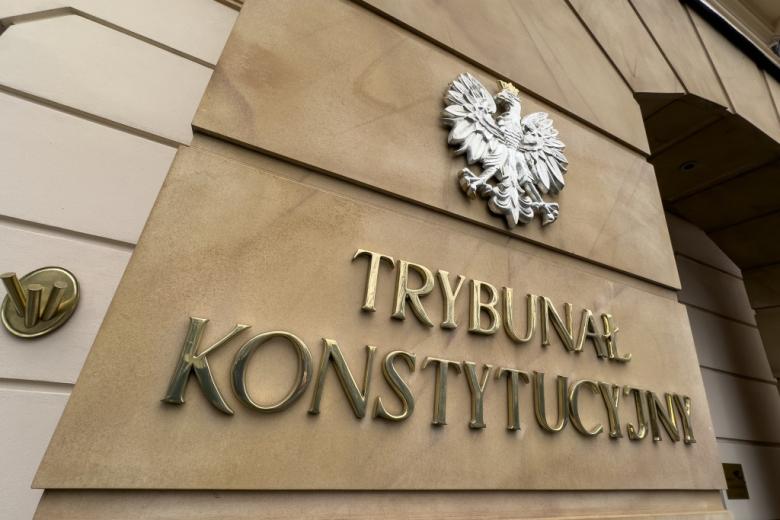
Main image credit: Grzegorz Krzyżewski/BRPO (under CC BY-SA 4.0)

Daniel Tilles is editor-in-chief of Notes from Poland. He has written on Polish affairs for a wide range of publications, including Foreign Policy, POLITICO Europe, EUobserver and Dziennik Gazeta Prawna.