Keep our news free from ads and paywalls by making a donation to support our work!

Notes from Poland is run by a small editorial team and is published by an independent, non-profit foundation that is funded through donations from our readers. We cannot do what we do without your support.
By Bartłomiej Orzeł
Poland’s right-wing parties face a strategic dilemma: how to reconcile the race to out-radicalise each other with the need to win back centrist voters. The energy transition is becoming a key battleground in this fight.
Poland’s right-wing opposition is at a crossroads. On one side, an internal dispute is playing out between Law and Justice (PiS), the Confederation (Konfederacja) of Krzysztof Bosak and Sławomir Mentzen, and Grzegorz Braun’s Confederation of the Polish Crown (KKP).
On the other, Poland’s right is competing for power not just among itself, but against the ruling coalition, made up of Civic Coalition (KO), The Left (Lewica), the Polish People’s Party (PSL), Poland 2050 (Polska 2050) and Centre (Centrum).
This situation forces the opposition, on one hand, to hold a right-wing course, while, on the other, to seek an electorate in the centre. Even with a very good campaign and sharp messaging, these two objectives cannot be simultaneously achieved in the long term.
The Green Deal is a political corpse in Poland
The obvious asset for a right-wing fishing in centrist waters should be the energy transition, which is crying out for a new narrative. The EU’s flagship Green Deal programme has become a bogeyman on Poland’s political scene.
The government and the opposition trade blame for the current situation, while Poland’s largest trade union, Solidarity, gathered tens of thousands of people in Warsaw in the middle of the working week under the banner of fighting the “Green Deal”.
Thousands joined a protest in Warsaw against EU green policies organised by the Solidarity trade union.
The march, at which many anti-government banners were visible, was supported by the right-wing opposition and opposition-aligned President Nawrocki https://t.co/fnSLytRutW
— Notes from Poland 🇵🇱 (@notesfrompoland) May 20, 2026
It has to be said plainly – the Green Deal label as a concept is dead in Poland today and there is no going back. Research from the think tank Project Tempo, where I act as Poland lead, shows that only 19% of Poles believe the “Green Deal” (understood as a whole) is good for the European economy. Contrary to appearances, we do not stand out markedly from the EU average of 25% here.
At the same time, however, Poles generally do not oppose cleaner energy sources. In fact, they strongly support certain transition policies, such as the construction of nuclear power plants and photovoltaics. What they are primarily opposed to are the bans and mandates that the Green Deal is associated with. The name itself is toxic, but the problems the Green Deal was meant to solve are not.
At the same time, the Green Deal is so broad today that Poles feel restricted. Energy, industry, transport, buildings, agriculture: the Green Deal touches every single one of these areas, creating a sense of encirclement. This is further magnified by the fact that the Green Deal originated in Brussels. Poles do not want any further expansion of the EU’s competences at the expense of nation-states.
The government’s majority in the Senate has rejected opposition-aligned President Nawrocki’s proposal for a national referendum on whether Poland should continue implementing EU climate policies
It said the "absurd" idea was intended to "polarise society" https://t.co/XPPUa8ZlSq
— Notes from Poland 🇵🇱 (@notesfrompoland) May 21, 2026
It is hard to deny, however, that in recent years the global economic and geopolitical challenges have posed Europe – Poland included – a very concrete problem: how to free ourselves from dependence on fossil fuel imports in order to protect households and businesses from the blackmail of dictatorships? How do you build on that foundation a new economic model capable of competing globally?
The conflict in the Strait of Hormuz has reminded us how vulnerable we are to global conflicts and the fossil fuel market. According to estimates by the Instrat think tank, that conflict alone cost us 10 billion zloty (€2.33 billion) in just two and a half months.
PiS is ashamed of its own successes
The rivalry on the right means that PiS is trying to win back those voters who have drifted to one Confederation or the other. It is doing so, however, by executing a complete U-turn on its own energy policy and adopting a far more conservative tone in a debate whose symbol has become coal.
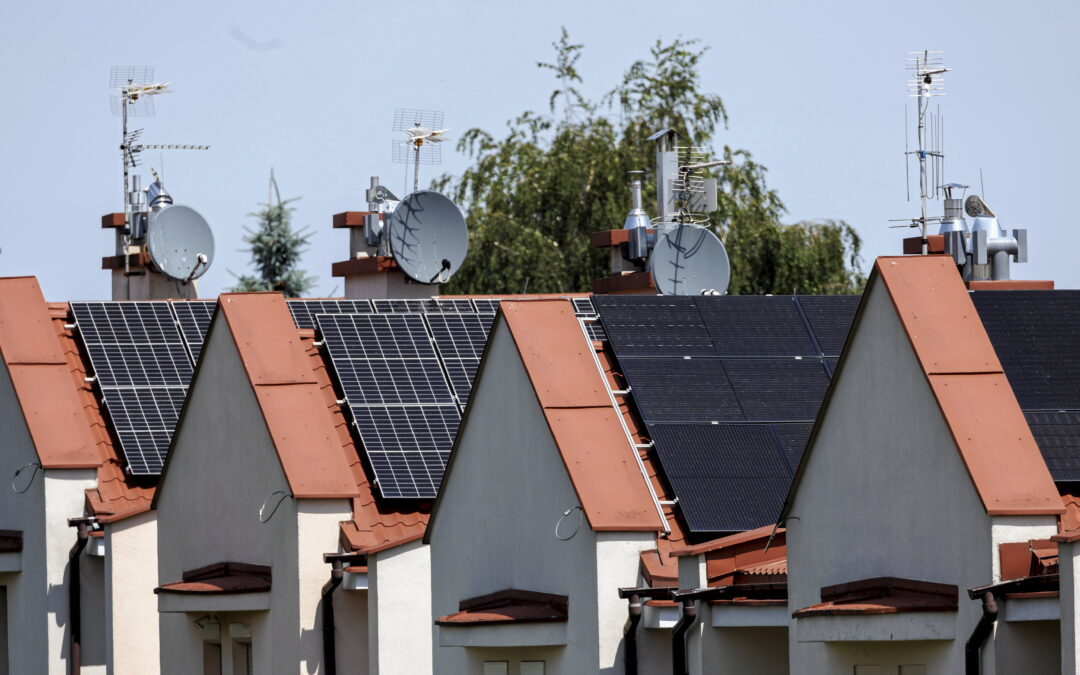
Yet it was during the years of PiS rule from 2015 to 2023 that Poland’s biggest transformational projects got under way. Over eight years in government, starting essentially from scratch, PiS policy led to 1.38 million solar panel users in Poland.
Over that period, installed capacity in Poland rose from 71 MW to over 17,000 MW. The vast majority of those people are satisfied with their solar panels, which reduce their electricity bills.
Renewable energy micro-installations contributed over twice as much power to Poland's electricity network last year as in 2021.
The majority of that came from home solar installations, which have boomed thanks to a state subsidy schemehttps://t.co/1ZRcy65gyZ
— Notes from Poland 🇵🇱 (@notesfrompoland) March 21, 2023
Meanwhile, heating and insulation systems in hundreds of thousands of homes were modernised, with old solid-fuel boilers – the notorious kopciuchy that generated smog – replaced in the process. The phrase “in the process” is not accidental here: the Clean Air programme, launched under PiS, became a widely accessible modernisation scheme that went well beyond the fight against smog.
Thermal retrofitting is not just a bit of polystyrene and a new window – it is a real improvement in quality of life and savings on bills, and for Poland’s economy – a powerhouse in building materials production – it represents a powerful internal stimulus.
Finally, it was in the years 2015–2023 that a revolution began in Polish energy. The Baltic Pipe, bringing Norwegian gas to Poland, was built and the liquefied natural gas (LNG) terminal expanded, while state energy giant Orlen began betting on gas extraction in the North Sea.
Investments connected with building a nuclear power station and several gas-fired plants – intended to replace coal capacity – also got under way. Roadmaps for phasing out coal across individual regions were drawn up, with particular attention to Bełchatów, Europe’s biggest coal-fired plant.
I am not citing these facts to remind anyone of past achievements, but because this legacy of PiS policy is today not merely forgotten by the party, it is disowned entirely. Hence the numerous positive references to coal in recent statements by, among others, Przemysław Czarnek, the party’s prime ministerial candidate. There has even been talk of opening new hard-coal mines.
These references bring to mind, in some ways, 2015, when coal was talked up as “black gold” at every turn and mining was one of the most burning issues in public debate.
Next year’s parliamentary elections will take place 12 years after those events, however. The world around us has changed enormously, and the old prescriptions are not answers to today’s questions.
The falling cost of technologies such as solar panels, heat pumps and energy storage has laid the groundwork for a new energy revolution that, a decade ago, we simply could not have anticipated. This revolution – based on efficiency and flexibility – is indicated by reports from Ember, an energy think tank.
An anti-modernisation PiS is a weak PiS
In the last parliamentary elections three years ago, PiS, buoyed by a modernisation narrative, emerged from eight years in government through an exceptionally difficult period – war, the COVID-19 pandemic, global inflation and an energy crisis – with around 35% of the vote, more than any other party.
Today’s polls show the party clearly below that threshold. In this situation – even allowing for modest increases in support – it is hard to see Jarosław Kaczyński’s party securing an electoral victory.
Support for PiS has fallen to its lowest in 14 years, as the party grapples with internal division, the rise of far-right challengers, living in President Nawrocki's shadow, and the unpopularity in Poland of PiS ally Donald Trump, writes @danieltilles1 https://t.co/QRScBpEQQG
— Notes from Poland 🇵🇱 (@notesfrompoland) March 2, 2026
The Confederation of Bosak and Mentzen has grown in the meantime, stepping into the role of “moderate centre” – not squeezing PiS from the right, contrary to what Kaczyński’s party imagined. The Confederates seem to have a better read on the public mood.
Research we conduct at Project Tempo shows that Poles are attached above all to two values. The first is economic growth, which Poland has recorded almost uninterruptedly since the fall of communism; the second is security in the broad sense, including energy security.
Support for coal is thin across the board. A clear minority of respondents believe that either growth or security can be delivered by coal from Polish hard-coal mines. As an energy source in general, coal is supported by 22% of the public, while support for “black gold” as a guarantor of energy autonomy stands at 38%.
By comparison: 70% of the public believes nuclear power will secure our autonomy. That gap widens further when we asked about costs to the end user: 74% of Poles view nuclear positively, while the figure for coal is 31%. To be clear: these data reflect coal’s standing against the full range of alternatives – nuclear, gas, renewables.
Poland will from next month be the last remaining EU country still mining hard coal, after the Czech Republic – the only other producer – announced the closure of its last mine https://t.co/0sfMDQb19N
— Notes from Poland 🇵🇱 (@notesfrompoland) January 30, 2026
Awareness of the cost of coal extraction in Poland has grown significantly in recent years and – in light of successive crises, above all the outbreak of war in Ukraine, when coal was flowing into Poland from across the globe – has cast serious question marks over the safety and viability of a sector that costs us billions of zloty in subsidies each year.
The debate about domestic coal is not the same as solving the problem of rising living costs. Voters – drawing on their own lived experience, which included buying imported coal at very high prices – do not have short memories, and it would serve Poland’s right wing well to internalise that.
I would go one step further: the emotional attachment to one’s own solar panels on the roof – for many people a symbol of independence and freedom in the broadest sense – is today politically more significant than any attachment to coal.
Bosak picked up on these sentiments well; asked about it recently, he touched on precisely the freedom aspect of owning that energy source. By contrast, the coal sector now employs fewer than 70,000 people.
Poland is the most pro-nuclear nation in Europe
Individualism in decision-making is also visible in our research across political divides – both PiS and KO voters oppose the ban on gas boilers and the ban on producing combustion-engined cars after 2035. There is, by contrast, broad public support for nuclear power stations in Poland – from the left to the far right.
Project Tempo’s research shows that Poles are the most pro-nuclear nation in Europe across every dimension – autonomy, security, end-user costs, industrial competitiveness and environmental aspects, and even local job creation.
Nuclear power enjoys the highest support in the segment we have labelled “the climatically engaged”, but in second place come “conservative sceptics” – who as a rule oppose the energy transition and mostly do not believe climate change is man-made. This shows that the debate about transformation has long since moved beyond the climate field. Support exceeds 70% in both groups.
Construction of Poland’s first nuclear power plant is now set to begin after the @EU_Commission approved Warsaw’s request to allocate 60 billion zloty (€14.2 billion) in state aid for the project https://t.co/Z7BJpRRKnq
— Notes from Poland 🇵🇱 (@notesfrompoland) December 9, 2025
The right has the credibility to speak to this sentiment – nuclear as a pillar of development and security. PiS, which governed for eight years and put nuclear policy in motion, has clear standing on the subject.
There is a great deal to draw on across political divides in transformation policy, and across different areas – geothermal energy and hydropower are valued just as highly as nuclear, and Poles want localism in the form of energy communities.
The issue is all the more important because the risks are considerable. I share the concerns of PiS’s former European affairs minister Konrad Szymański, who wrote in March that Poland’s right wing must not allow itself to be herded into a “Polexit” narrative, as that is a harbinger of certain defeat. Diving headlong into calls for a unilateral exit from the EU’s Emissions Trading System (ETS), as PiS has done this year, is moving precisely in that direction.
The role and effectiveness of the ETS – and its genuine reform in a way that does not constrain European industry – is a conversation worth having, but not in that fashion. Such a debate ought to be sensibly constructed and should direct attention towards speculation and global financial institutions rather than the EU.
Poland's right-wing opposition wants to withdraw from the EU Emissions Trading System, saying it makes Poles "a cash machine for absurd leftist climate policies"@PStrzalkowski explains what costs ETS really brings, and what prospects there are for reform https://t.co/UxpMWpG1pE
— Notes from Poland 🇵🇱 (@notesfrompoland) May 4, 2026
Meanwhile, over 80% of KO voters support building more wind turbines. Even among PiS voters, support is not insignificant, at around 47%. The same data points to an opening on the governing side too: a programme built around the specific parts of the transition that voters actually want.
The parties making up the governing majority have the potential to seek support from groups that are not entirely opposed to the transformation, but have doubts and difficulties associated with it, particularly of an economic nature. Whichever side speaks to those voters first – the centre, and those who have tuned out – will have the stronger hand going into 2027.
It is worth bearing in mind that, according to Project Tempo’s research, Poles have no doubt that European industry will sooner or later have to absorb green technologies in order to remain competitive – 73% of respondents hold this view.
Poland’s right has abandoned its own modernisation story
The next year and a half leading up to the parliamentary elections will be an enormous challenge for the right, with particular emphasis on constructing a vision of Poland’s future. This is not a debate about climate, not even strictly about energy, but about the economy, jobs, industry and prices – and about security, independence and freedom.
This story must be credible to a broader electorate – it cannot rest purely on negation. A strong right wing was previously able to impose its own modernisation narrative and tell the story of Poland’s future. Today it is not only incapable of doing that – it is actively ashamed of its own successes.
Notes from Poland is run by a small editorial team and published by an independent, non-profit foundation that is funded through donations from our readers. We cannot do what we do without your support.

About Project Tempo
Project Tempo is a European non-profit research organisation headquartered in London. It produces detailed public opinion data on energy and climate policy to help policymakers, businesses and civil society design policies that earn durable public support. Project Tempo’s flagship EuroPulse programme surveys more than 50,000 voters a year across 25 countries. It has country programmes in France, Germany, Italy, Poland and the UK. Research is published openly at projecttempo.com.