Keep our news free from ads and paywalls by making a donation to support our work!

Notes from Poland is run by a small editorial team and is published by an independent, non-profit foundation that is funded through donations from our readers. We cannot do what we do without your support.
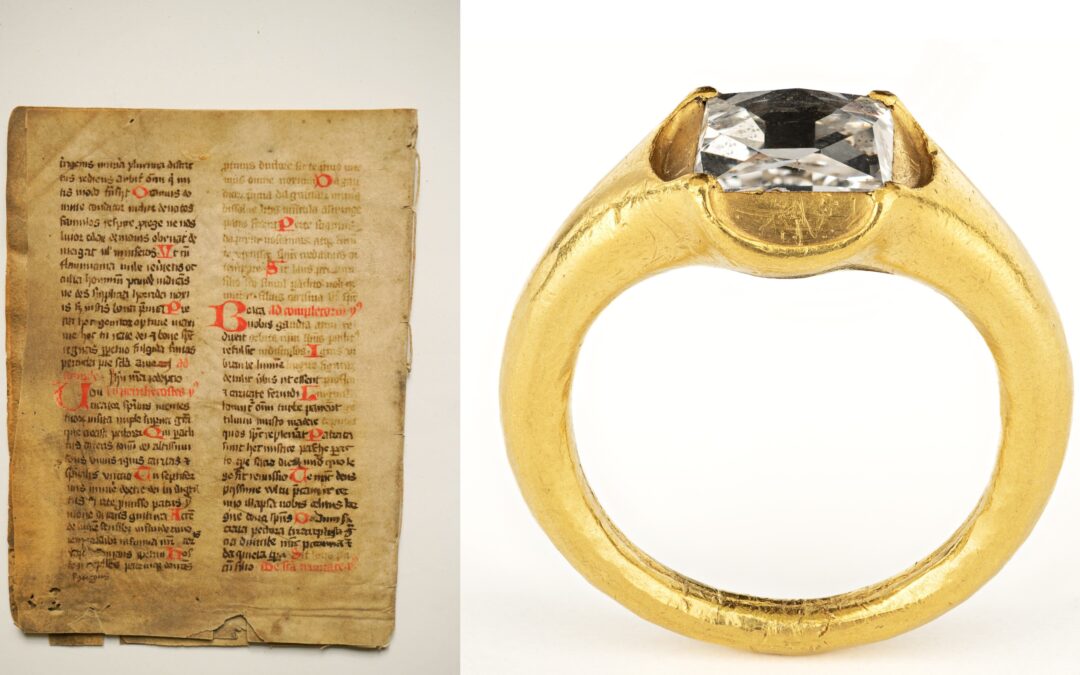
Germany has returned historical artefacts that were looted during the occupation of Poland in WWII. The items include a 14th-century manuscript containing a medieval Polish hymn and a ring that once belonged to 16th-century Polish King Sigismund I.
The items were handed over in Berlin as part of the celebration of the 35th anniversary of Poland and Germany signing the Treaty of Good Neighbourship and Friendly Cooperation, which marked a breakthrough in relations between two countries with a long and difficult history.
Polish foreign minister Radosław Sikorski celebrated the returns in a social media post, saying that they marked “a good day for Poland and Polish-German relations.”
Z okazji 35-lecia traktatu polsko-niemieckiego średniowieczny rękopis ‚Gaude Mater Polonia,’ zrabowany z Płocka przez III Rzeszę podczas drugiej wojny światowej został właśnie zwrócony i wraca do Polski.
Takoż pierścień króla Zygmunta Starego.
Dobry dzień dla Polski i stosunków…— Radosław Sikorski 🇵🇱🇪🇺 (@sikorskiradek) June 17, 2026
The brutal Nazi-German occupation of Poland from 1939 to 1945 resulted in the deaths of millions of Polish citizens, the destruction of Polish cities, and also the looting and destruction of hundreds of thousands of artistic, historical and scientific items held in Polish collections.
Many of them remain unaccounted for, with the culture ministry’s public database of works it has identified as missing still containing tens of thousands of items. Poland actively seeks to locate and restitute those objects, and the issue has at times caused diplomatic tensions with Germany.
Last year, the Polish government confirmed that it had asked Germany to return a ring that once belonged to 16th-century Polish King Sigismund I. Before the war, it had been part of Poland’s famous Czartoryski collection.
Poland has asked Germany to return a ring that once belonged to 16th-century Polish King Sigismund I but was looted during World War Two and is now held in a German museum https://t.co/wHims7bibx
— Notes from Poland 🇵🇱 (@notesfrompoland) June 23, 2025
It was looted by the Germans in September 1939, shortly after they invaded Poland. In 1963, the ring was acquired from a private collection by the Pforzheim Jewellery Museum in Germany, where it has been held until now.
In May this year, the city council of Pforzheim adopted a resolution on returning the ring to Poland, where it will be handed over to the Czartoryski Museum in Kraków, says the Polish culture ministry.
In Berlin today, the ring was formally handed back to Poland at a ceremony attended by Polish culture minister Marta Cienkowska.
Germany also returned fragments of a manuscript containing the text and musical notation of the medieval hymn Gaude Mater Polonia (meaning “Rejoice, Mother Poland”).
The manuscript was likely written in the 14th century and, before World War Two, had been held as part of the collections of the Płock Theological Seminary Library. After the invading Germans took over the seminary in 1939, they transported its holdings to Germany.
In 2023, the manuscript was identified in the collections of the Berlin State Library by a Polish researcher, notes the culture ministry.
In addition to Sigismund’s ring and the Gaude Mater Polonia manuscript, Germany also today returned 11 miniature railway exhibits looted during the war from the former Railway Museum in Warsaw.
35 lat dobrego sąsiedztwa – Polska odzyskuje bezcenne dobra kultury z Niemiec.
W ramach obchodów 35. rocznicy podpisania z Niemcami traktatu o dobrym sąsiedztwie i przyjaznej współpracy do Polski wracają kolejne bezcenne dobra kultury: fragment średniowiecznego rękopisu z… pic.twitter.com/o33KEDzjZB
— Ministerstwo Kultury i Dziedzictwa Narodowego (@kultura_gov_pl) June 17, 2026
“Objects of immense significance, priceless for Polish culture and Polish identity, looted during World War Two, are returning to Poland,” celebrated Cienkowski.
She noted that today’s developments were the continuation of a “historic opening” last year that saw Germany return dozens of other looted medieval documents.
Her ministry notes that there remain over 200 ongoing restitution proceedings in 18 countries. In recent years, Poland has secured the return of looted items from countries including Japan, Denmark and Spain.
Last year, Poland also returned 91 Jewish religious objects to Greece that were stolen by the Germans from Greek Jews during the Holocaust.
Poland has returned 91 Jewish religious objects to Greece that were stolen by the Germans from Greek Jews in the Holocaust.
It is the first time Poland has returned historical items following a request from a foreign country under Polish restitution law https://t.co/DobmxrRCKo
— Notes from Poland 🇵🇱 (@notesfrompoland) March 5, 2026
Notes from Poland is run by a small editorial team and published by an independent, non-profit foundation that is funded through donations from our readers. We cannot do what we do without your support.
Main image credit: MKiDN (under CC BY-NC-ND 4.0)

Daniel Tilles is editor-in-chief of Notes from Poland. He has written on Polish affairs for a wide range of publications, including Foreign Policy, POLITICO Europe, EUobserver and Dziennik Gazeta Prawna.