Keep our news free from ads and paywalls by making a donation to support our work!

Notes from Poland is run by a small editorial team and is published by an independent, non-profit foundation that is funded through donations from our readers. We cannot do what we do without your support.
For the first time, a Polish court has ordered the recognition of a marriage between a same-sex couple who specifically went abroad to marry before immediately returning to Poland.
The decision marks a further breakthrough for LGBT+ rights in Poland – a country where no form of same-sex union is recognised in domestic law – following other recent rulings requiring the recognition of foreign same-sex marriages between couples who were based abroad.
However, there remain doubts about when and how those judgements will be implemented, given that the current registry system only allows male-female marriages and the government has so far failed to implement necessary changes allowing the recognition of same-sex unions.
WSA w Lublinie uchylił decyzję Urzędu Stanu Cywilnego i wojewody lubelskiego. Nakazał transkrypcję aktu małżeństwa Alicji Sienkiewicz i Jolanty Prochowicz, zawartego 27 lipca 2023 roku na Maderze.
Wcześniej odmówiono im dwukrotnie. Argument? Sprzeczność z podstawowymi zasadami… pic.twitter.com/v3hQeKqfj5
— Radio TOK FM (@Radio_TOK_FM) April 28, 2026
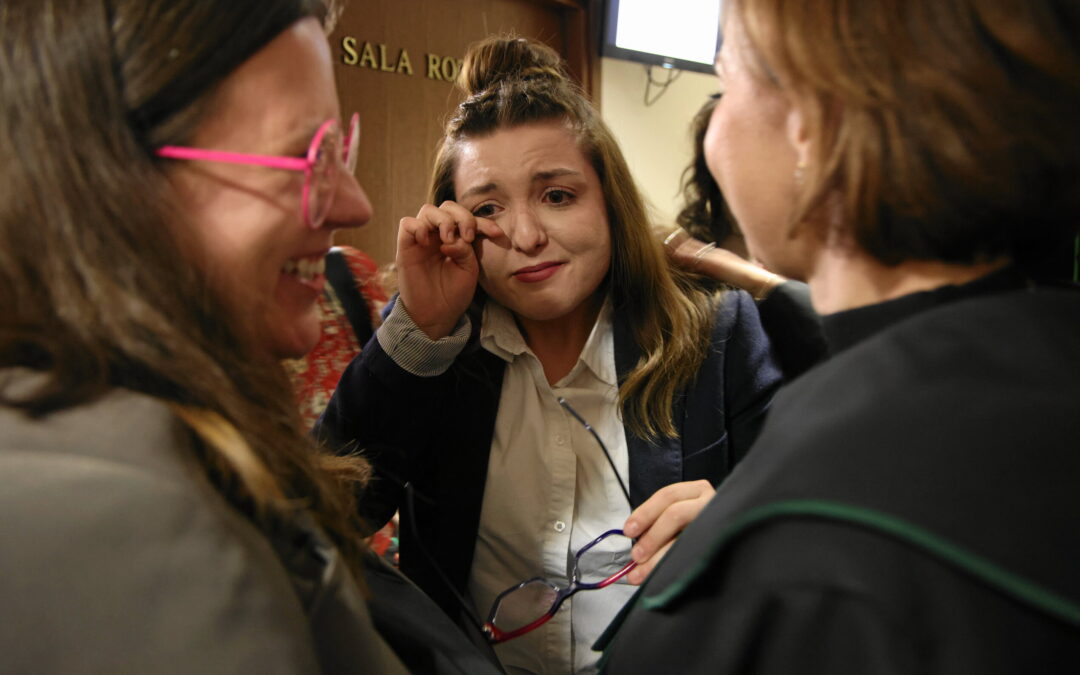
The couple in question, Alicja and Jolanta Prochowicz-Sienkiewicz (pictured above), travelled to Portugal to marry in 2023 and, since then, have been fighting to have their union accepted in Poland.
Previously, the civil registry office in the city of Lublin, in eastern Poland, and the governor of Lublin Province had refused to transcribe their marriage into the Polish registry. That prompted the couple to take the case to Lublin’s provincial administrative court.
On Tuesday this week, the court ruled in their favour, overturning the governor and registry office’s earlier decisions and ordering that Alicja and Jolanta’s marriage be transcribed into the Polish registry.
In its decision, which can still be appealed, the court dismissed an argument employed by some officials as well as opponents of same-sex marriage that the Polish constitution prohibits recognition of same-sex unions.
Article 18 of the constitution states: “Marriage, being a union of a man and a woman, as well as the family, motherhood and parenthood, shall be placed under the protection and care of the Republic of Poland.”
However, judge Iwona Tchórzewska found that “recognition of a marriage legally concluded abroad by transferring this certificate by transcription does not violate constitutional principles”, reports local news service Jawny Lublin.
WSA w Lublinie orzekł, że Alicja i Jola mają prawo do transkrypcji aktu małżeństwa. Wyrok ten nie tylko potwierdza dotychczasową linię orzeczniczą, ale i po raz pierwszy rozstrzyga w sytuacji pary, która za granicę wyjechała wyłącznie po to, by wziąć ślub https://t.co/MWmibbycSv
— OKO.press (@oko_press) April 28, 2026
The court cited a ruling by the Court of Justice of the European Union (CJEU) last November, which ordered Poland to recognise same-sex marriages conducted in other member states. The judge noted that “the primacy of EU law” obliges member states to “ensure the full effectiveness of EU norms”, reports Dziennik Wschodni.
She also pointed to a ruling last month by the Polish Supreme Administrative Court (NSA), which ordered Warsaw’s registry office to recognise a same-sex marriage conducted by two Polish citizens in Germany, as well as two other similar rulings since then by provincial administrative courts in Olsztyn and Gorzów Wielkopolski.
However, whereas those earlier rulings pertained to couples who had been based abroad when they married, Alicja and Jolanta’s case is the first involving a Poland-based couple who specifically went abroad to marry, notes news website OKO.press.
Poland’s top administrative court has ordered the registry office to recognise a same-sex marriage conducted by two Polish men in Germany, a groundbreaking ruling in a country that currently does not allow any form of officially recognised same-sex unions https://t.co/7hlnMFs6YW
— Notes from Poland 🇵🇱 (@notesfrompoland) March 20, 2026
Yet it remains unclear when and how the recent rulings will be implemented. Registry offices point out that the current system only allows a marriage between a man and a woman to be entered, making it impossible for them to transcribe same-sex marriage certificates.
Any change must come from the government, but there are disagreements within the ruling coalition – which ranges from the socially liberal left (which is strongly in favour of recognising same-sex marriage) to the conservative centre right (which is unenthusiastic about the idea) – over how to do this.
Last week, a group of over 100 NGOs, including Amnesty International, the Helsinki Foundation for Human Rights and the Supreme Bar Council, jointly wrote to Prime Minister Donald Tusk criticising the government for failing to implement the rulings requiring recognition of foreign same-sex marriages.
A group of over 100 NGOs, including Amnesty International and the Helsinki Foundation for Human Rights, have criticised Poland’s government for failing to implement recent Polish and EU court rulings requiring recognition of foreign same-sex marriages https://t.co/SUnJb39xM9
— Notes from Poland 🇵🇱 (@notesfrompoland) April 22, 2026
In January, the digital affairs ministry, which is under the control of The Left (Lewica), proposed changes to the registry system that would allow same-sex marriages to be recognised. However, its plans are reportedly being amended following consultations with other ministries.
While the digital affairs ministry’s proposed changes would take the form of a regulation that can be issued unilaterally by the government, interior minister Marcin Kierwiński, who comes from the centrist Civic Coalition (KO) party, suggested earlier this month that recognition of same-sex marriages “requires changes to Polish law”.
That, Kierwiński admitted, would be “very difficult” given that President Karol Nawrocki, who is aligned with the right-wing opposition, would almost certainly exercise his right to veto any such law.
For the first time in six years, Poland is not ranked as the EU's worst country for LGBT+ people.
It is now second from last, having overtaken Romania in the latest annual Rainbow Map published by @ILGAEurope https://t.co/PtLdFtxL2L
— Notes from Poland 🇵🇱 (@notesfrompoland) May 16, 2025
Commenting on the new Lublin ruling, Paweł Knut, a lawyer who represented the same-sex couple who won cases at the CJEU and NSA, told OKO.press that there is now “a uniform line of jurisprudence” from Polish courts on this issue. “Now we need a systemic change at the level of how public offices operate.”
Alicja and Jolanta themselves also celebrated their victory. “The hardest part was the uncertainty and the feeling of injustice,” Jolanta told Dziennik Wschodni. “We’re not harming anyone by calling ourselves wives. Yet we read in the decisions that our relationship posed a threat to the legal order.”
Recognition of their marriage is about much more than symbolism, added Alicja. “It is about specific rights: in crisis situations, health issues, inheritance. These are things that are obvious to others, but would simply allow us to live more peacefully.”
The EU court has ruled that Poland must recognise the marriage of a Polish same-sex couple who married in Germany, even though Polish law does not allow such marriages.
The ruling requires Poland to change its system for recognising such marriages https://t.co/upbcxVEdd8
— Notes from Poland 🇵🇱 (@notesfrompoland) November 25, 2025
Notes from Poland is run by a small editorial team and published by an independent, non-profit foundation that is funded through donations from our readers. We cannot do what we do without your support.
Main image credit: Jakub Orzechowski / Agencja Wyborcza.pl

Olivier Sorgho is senior editor at Notes from Poland, covering politics, business and society. He previously worked for Reuters.