Keep our news free from ads and paywalls by making a donation to support our work!

Notes from Poland is run by a small editorial team and is published by an independent, non-profit foundation that is funded through donations from our readers. We cannot do what we do without your support.
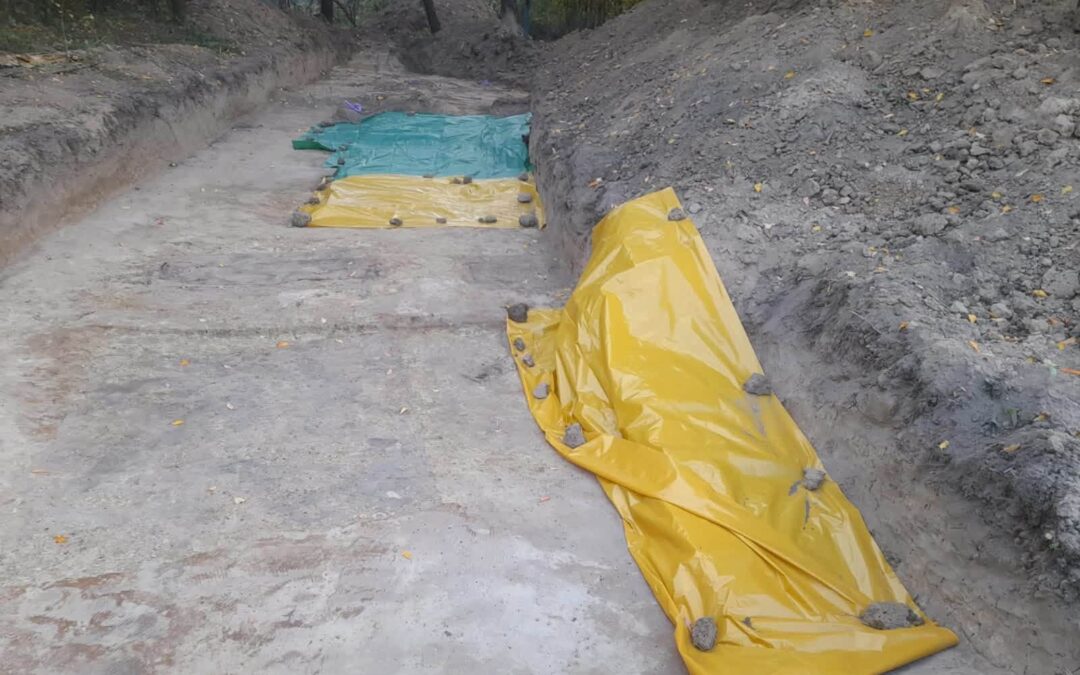
Poland’s state Institute of National Remembrance (IPN) has announced the discovery of a mass grave at a site in Ukraine where ethnic Poles were killed by Ukrainian nationalists as part of the Volhynia massacres during World War Two.
The find was made at a location where Ukraine recently allowed the search for victims to resume following a diplomatic breakthrough that ended a longstanding ban on exhumation work and eased tensions over a difficult period of Polish-Ukrainian history.
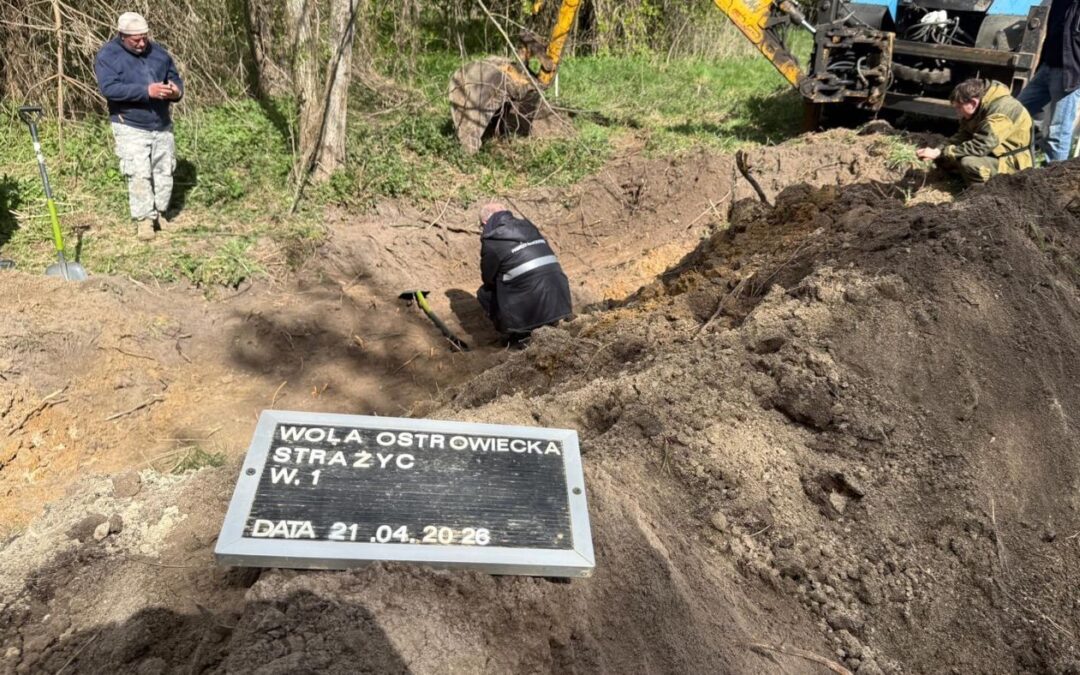
📢 W pierwszym dniu prac poszukiwawczych prowadzonych w Ostrówkach i Woli Ostrowieckiej odnaleziono szczątki ofiar zbrodni.
🟥 Na terenie dawnego gospodarstwa Strażyca w Woli Ostrowieckiej, w miejscu gdzie ukraińscy nacjonaliści w sierpniu 1943 r. dokonali zbiorowego mordu na… pic.twitter.com/FEnM01iCz5
— Instytut Pamięci Narodowej (@ipngovpl) April 21, 2026
“On the first day of search operations in Ostrówki and Wola Ostrowiecka, the remains of victims of the crime were discovered,” announced the IPN on Tuesday, sharing photographs of the find.
Ostrówki and Wola Ostrowiecka are depopulated former neighbouring villages that were part of Poland before the war. On 30 August 1943, the Ukrainian Insurgent Army (UPA) massacred over 1,000 Poles there as part of a broader ethnic cleansing operation.
Exhumation previously took place in both places in the 1990s and again in 2011 and 2015, uncovering the remains of hundreds of victims. But, in 2017, Ukraine imposed a ban on searches for massacre victims on its territory in response to the dismantlement of a UPA monument in Poland.
Researchers believe that there may be as many as 30 burial sites in the two villages containing the remains of 350 victims, reports the Polish Press Agency (PAP).
The IPN revealed that a mass grave had been found on a former farm in Wola Ostrowiecka, where it is known that Ukrainian nationalists carried out the mass murder of Poles. It is located near where exhumations were previously conducted in 1992.
“The preliminary stage of uncovering the outlines of the grave does not yet allow for an estimate of its exact size, but it is certainly a mass grave,” added the IPN, which added the hashtag #VolhyniaMassacre in Polish to its post.
The IPN estimates that around 100,000 ethnic Poles, mostly women and children, were killed in those massacres, which took place between 1943 and 1945. It believes that the remains of around 55,000 Polish victims and 10,000 Jewish ones remain buried in unmarked “death pits”.
Polish victims of massacres committed by Ukrainian nationalists in WWII have been reburied in Ukraine at a ceremony attended by officials from both countries.
Their remains were exhumed this year following a diplomatic breakthrough between Kyiv and Warsaw https://t.co/FQwhjXOZDb
— Notes from Poland 🇵🇱 (@notesfrompoland) September 6, 2025
The history of the massacres has long caused tensions between Poland, which regards them as a genocide, and Ukraine, which rejects that label and still venerates UPA figures.
However, in a major step towards reconciliation, Ukraine last year lifted its ban on searches of victims as part of an agreement with the Polish government.
Kyiv then gave permission for the exhumation of victims in the depopulated former village of Puzhnyky (Puźniki in Polish). The remains of at least 42 people were subsequently discovered and, in September, reburied in a ceremony attended by the Polish and Ukrainian culture ministers.
Since then, Ukraine has granted permission for further searches in other locations. Meanwhile, Poland has also granted permission for Ukraine to search for the remains of UPA soldiers on its territory.
Poland's state historical institute has criticised remarks by the head of its Ukrainian counterpart about massacres of Poles by Ukrainians in WWII.
He said they are regarded in Ukraine as a "local episode" and suggested they do not constitute a genocide https://t.co/MAi6RhpRDL
— Notes from Poland 🇵🇱 (@notesfrompoland) February 11, 2026
Notes from Poland is run by a small editorial team and published by an independent, non-profit foundation that is funded through donations from our readers. We cannot do what we do without your support.
Main image credit: IPN/X

Daniel Tilles is editor-in-chief of Notes from Poland. He has written on Polish affairs for a wide range of publications, including Foreign Policy, POLITICO Europe, EUobserver and Dziennik Gazeta Prawna.