Keep our news free from ads and paywalls by making a donation to support our work!

Notes from Poland is run by a small editorial team and is published by an independent, non-profit foundation that is funded through donations from our readers. We cannot do what we do without your support.
The proportion of people in Poland who say they are financially comfortable has risen to a record high of 39%, according to the latest findings from a long-running survey conducted by state research agency CBOS. The figure is up from 27% in 2023 and just 3% in the early 1990s.
The new poll, carried out in March this year, found that 32% of Poles say they “live well”, meaning they can afford most things without the need to save up, while 7% “live very well”, meaning they can afford some level of luxury.
By contrast, 11% say they live “modestly”, meaning they have to carefully manage money every day, while just 1% say they live in poverty, meaning they cannot afford even basic necessities.
The largest proportion, 49%, say they have an “average” financial situation, meaning they have enough for everyday life but need to save for more important purchases
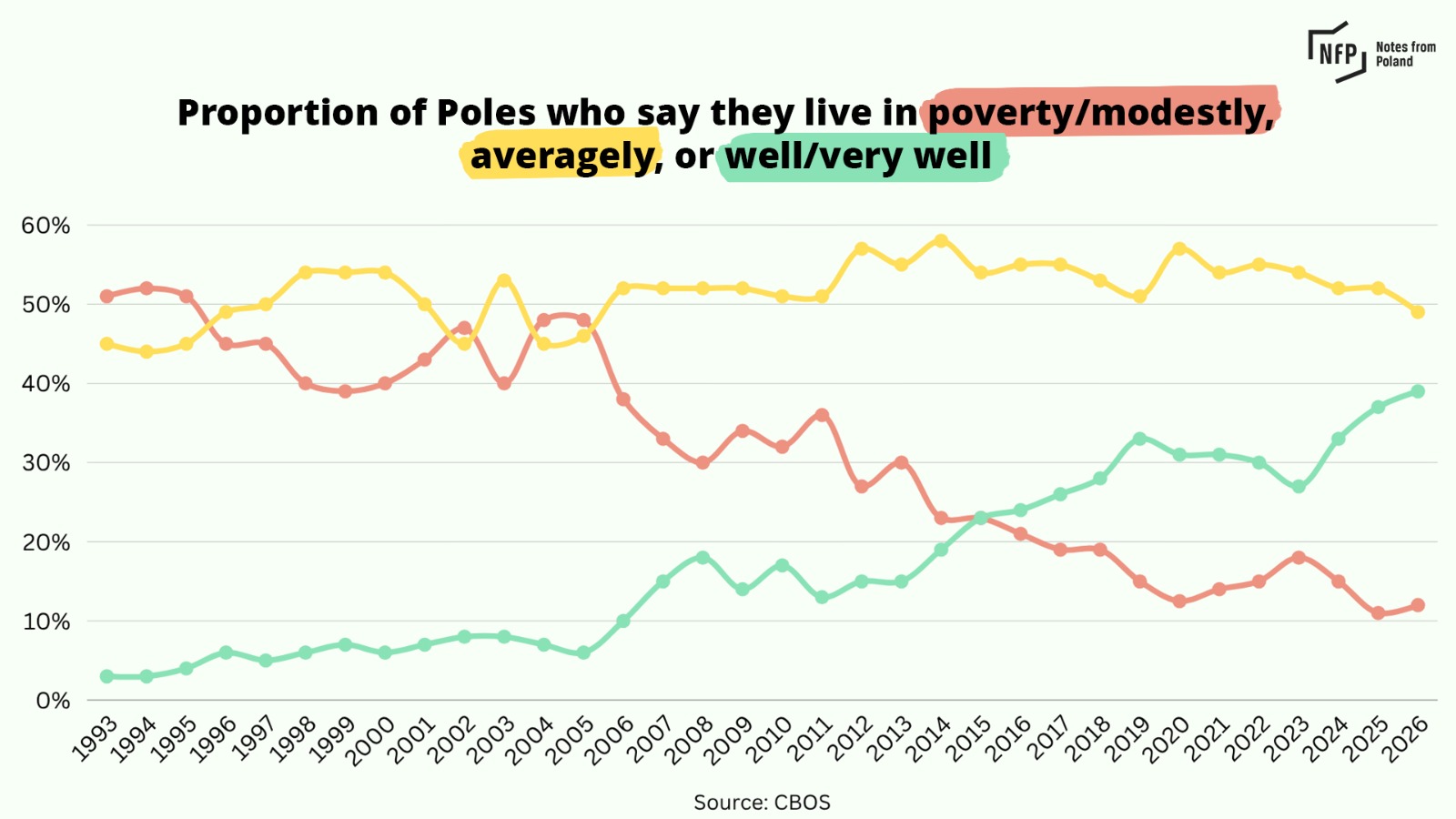
CBOS has been carrying out the same survey since 1993, when only 3% of Poles said they lived well or very well, while the majority, 51%, said they lived modestly or in poverty.
Those figures have since changed dramatically, as Poland embarked on over three decades of almost uninterrupted growth. The situation improved in particular after EU accession in 2004. In 2015, the proportion living well overtook those who negatively assessed their situation.
However, the trend reversed somewhat from 2020, amid the COVID-19 pandemic and then the effects of Russia’s invasion of neighbouring Ukraine. However, from 2023, the upward path resumed.
In its latest findings, CBOS notes that the groups most likely to assess their financial situation positively are those aged 18–24 (54%), university graduates (58%) and residents of the largest cities (52%).
“By contrast, dissatisfaction with their standard of living is relatively common among respondents with [only] primary or lower secondary education (30%) and those aged 65 and over (22%),” the agency added.
Nearly one in four respondents (23%) said they feared poverty, roughly half the level seen in 2006. Among the remainder, 40% said they were not afraid of poverty but were concerned about a possible deterioration in their financial situation, while 34% said they were fully confident about their financial future.
Only 2% of Poles were living in severe deprivation last year, the lowest proportion on record and down from 7.8% a decade earlier, according to Poland’s statistical office, which calculates the figure based on whether people can meet a set of basic needs https://t.co/BqLL5tVTDK
— Notes from Poland 🇵🇱 (@notesfrompoland) April 1, 2026
CBOS’s findings are in line with other data pointing to rising living standards in Poland. Last month, Statistics Poland (GUS), a state agency, reported that the share of Poles unable to meet their most basic needs fell to 2% in 2025, the lowest level on record.
Data from Eurostat also shows Poland narrowing the economic gap with the European Union, reaching 81% of the EU average in terms of GDP per capita adjusted for purchasing power in 2025, the highest level to date.
The Polish economy is set to continue growing, with the International Monetary Fund forecasting GDP growth of 3.3% in 2026, the fastest among the European Union’s 27 member states, ahead of Cyprus (3.0%) and Lithuania (2.9%).
Poland’s economy has moved closer than ever to the EU average, new @EU_Eurostat data show.
Its GDP per capita, adjusted for cost of living, reached 81% of the EU average in 2025. That is Poland's highest ever figure, and up from 44% three decades ago https://t.co/DCTyps6uDT
— Notes from Poland 🇵🇱 (@notesfrompoland) March 26, 2026
Notes from Poland is run by a small editorial team and published by an independent, non-profit foundation that is funded through donations from our readers. We cannot do what we do without your support.
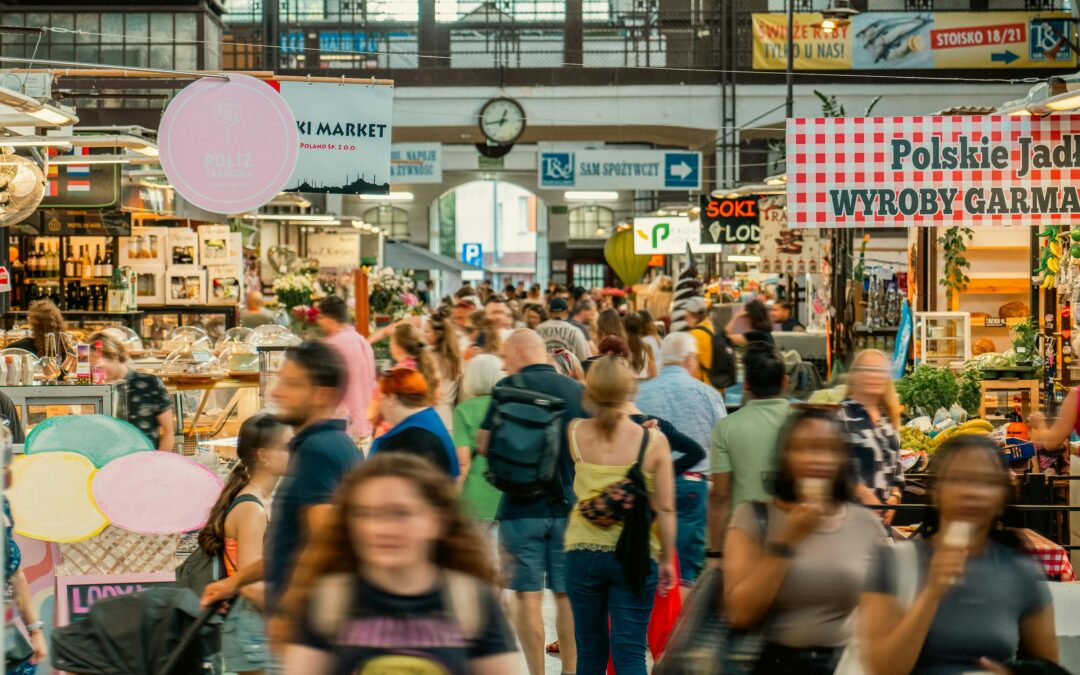
Main image credit: Jakub Zerdzicki/Pexels

Alicja Ptak is deputy editor-in-chief of Notes from Poland and a multimedia journalist. She has written for Clean Energy Wire and The Times, and she hosts her own podcast, The Warsaw Wire, on Poland’s economy and energy sector. She previously worked for Reuters.