Keep our news free from ads and paywalls by making a donation to support our work!

Notes from Poland is run by a small editorial team and is published by an independent, non-profit foundation that is funded through donations from our readers. We cannot do what we do without your support.
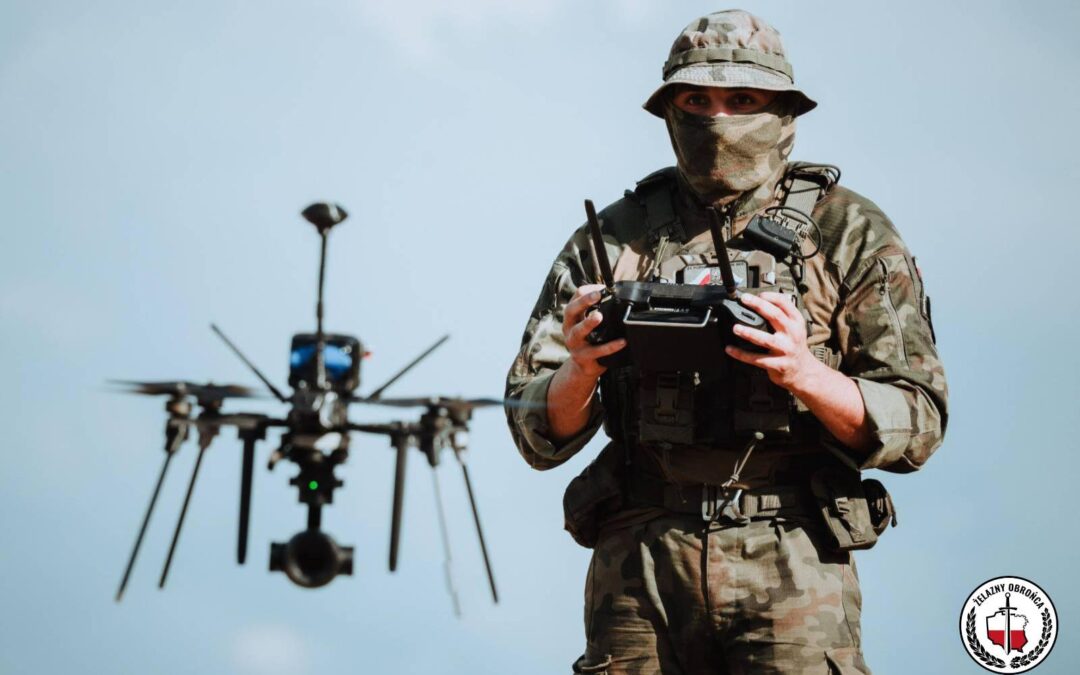
Prime Minister Donald Tusk has announced plans for a “Polish drone armada” that will be developed by drawing on the experience of Poland’s neighbour and ally, Ukraine, and will be supported by European funds.
Polska armada dronowa czyli europejskie pieniądze, polskie firmy i centra badawcze oraz ukraińskie kompetencje z pola walki. Projekt wystartował dziś w Rzeszowie.
— Donald Tusk (@donaldtusk) April 27, 2026
Speaking in Rzeszów, the eastern Polish city that has become the main global hub for equipment and people coming in and out of Ukraine during the war, Tusk noted the central role that drones have come to play in modern warfare.
“We have seen how costly and risky even a relatively minor provocation can be; we experienced this here in Poland in September,” he added, referring to the violation of Polish airspace by around 20 Russian drones last year.
Given its experience of Russian aggression, Ukraine has become “the most attractive partner for countries seeking to defend their airspace”, noted Tusk, pointing to how Kyiv’s drone expertise has been particularly in demand amid the ongoing conflict in the Middle East.
The prime minister said that he was therefore “announcing with great satisfaction a Polish plan to build a drone armada that will also be supported by the technical expertise and skills of our Ukrainian friends”. He added that both Polish and European funds would be invested in the project.
No further details of the plans, their financing, or Ukraine’s involvement were revealed by Tusk. However, last September, Warsaw and Kyiv signed an agreement to cooperate on drone warfare. Poland has also been seeking access to Ukrainian drone technology in return for donating further MIG-29 fighters.
Speaking today, Tusk said that such cooperation is an example of how support for Ukraine in its defence against Russian aggression is not “one-sided aid”, but also allows “us to gain from Ukraine”.
Ukraine’s deputy prime minister, Yulia Svyrydenko, who met today with Tusk in Rzeszów, noted that, over the course of the war, Ukraine had gone from being a recipient of military aid to a supplier of “cutting-edge defence technology”, reports the Polish Press Agency (PAP).
“We actively encourage joint ventures that will take place in both Ukraine and Poland. These are also new business opportunities for all our companies,” added Svyrydenko.
Today, during our meeting with Prime Minister Donald Tusk, I thanked the Polish people for their consistent support of Ukraine.
It is symbolic that the meeting took place in Rzeszów – a city that has welcomed thousands of Ukrainians since the beginning of the full-scale… pic.twitter.com/OCLtJBVG74
— Yulia Svyrydenko (@Svyrydenko_Y) April 27, 2026
Poland has embarked on an unprecedented defence spending spree since Russia launched its full-scale invasion of Ukraine. It defence budget, at 4.8% of GDP this year, is now the highest in NATO in relative terms.
However, some analysts have argued that, amid spending on tanks, fighter jets and howitzers, Warsaw has neglected the lessons of the war in Ukraine, which show the importance of defending against cheap, single-use drones. Poland has recently sought to address those gaps.
In January, the government signed an agreement with a Polish-Norwegian consortium to develop a new anti-drone system that it claims will be the first of its kind in Europe. The system, known as SAN, will be partially funded through loans from the European Union’s SAFE programme.
Last month, Polish state defence group PGZ signed an agreement with Estonia’s Frankenburg Technologies to jointly establish a facility in Poland that will produce up to 10,000 low-cost anti-drone missiles a year.
Polish state defence group PGZ has signed an agreement with Estonia’s Frankenburg Technologies to jointly establish a facility in Poland that will produce up to 10,000 low-cost anti-drone missiles a year https://t.co/oT1n2kN4DG
— Notes from Poland 🇵🇱 (@notesfrompoland) March 30, 2026
Notes from Poland is run by a small editorial team and published by an independent, non-profit foundation that is funded through donations from our readers. We cannot do what we do without your support.
Main image credit: MON (under CC BY-NC-ND 4.0)

Daniel Tilles is editor-in-chief of Notes from Poland. He has written on Polish affairs for a wide range of publications, including Foreign Policy, POLITICO Europe, EUobserver and Dziennik Gazeta Prawna.