Keep our news free from ads and paywalls by making a donation to support our work!

Notes from Poland is run by a small editorial team and is published by an independent, non-profit foundation that is funded through donations from our readers. We cannot do what we do without your support.
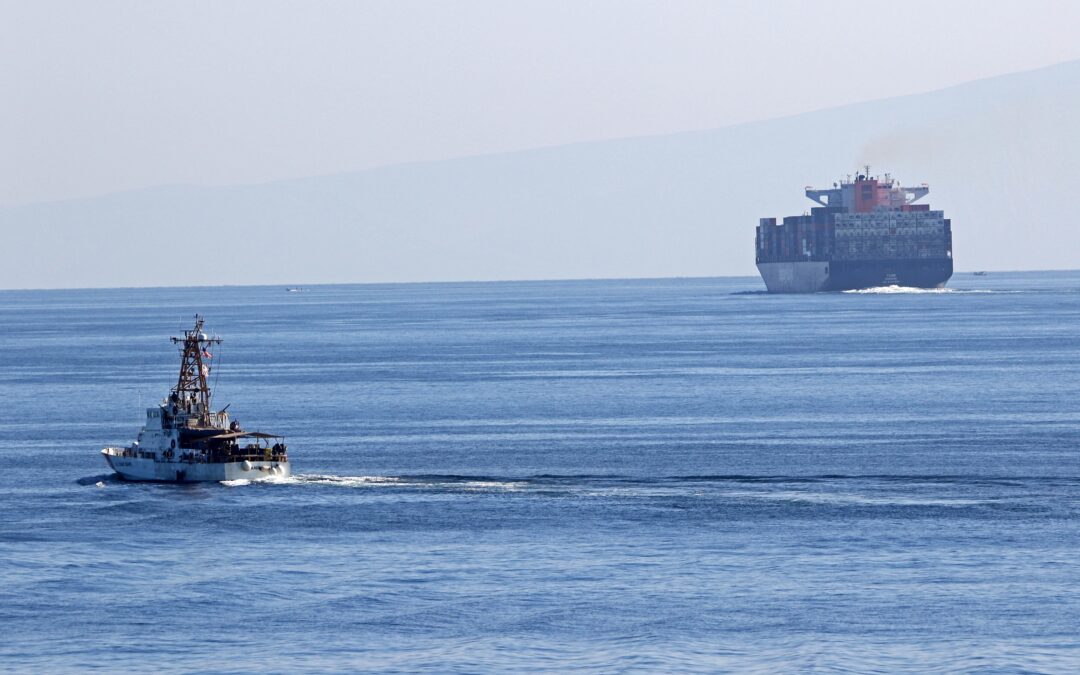
Poland is among a group of countries at particular economic risk if the Strait of Hormuz remains closed due to the ongoing conflict in the Middle East, according to a new report. It notes that Warsaw’s “triple deficit” in energy, public finances and current account makes it especially vulnerable.
The research by Allianz, the world’s largest insurance company, looks at the potential effects on emerging economies of a continued closure of the Strait of Hormuz, where normally around 20% of the global oil supplies are transported out of the Middle East.
Allianz Trade: 🇵🇱 Polska wśród krajów najbardziej narażonych na skutki kryzysu w Cieśninie Ormuz
PAP – BiznesPolska jest jednym z krajów najbardziej zagrożonych skutkami zamknięcia Cieśniny Ormuz – ostrzegają analitycy Allianz Trade.
Wskazują, że jeśli będzie ona zablokowana…
— Daniel Kostecki, CAI (@Dan_Kostecki) March 22, 2026
The authors identified 11 countries “most at risk” if the strait remains closed for more than three months. One of them was Poland, alongside Bangladesh, Egypt, Ethiopia, Jordan, Kenya, Morocco, Pakistan, Romania, Sri Lanka and Tunisia.
That is because they have a combination of large fiscal deficits (i.e. their governments spend more than they receive), structurally negative energy balances (i.e. they consume more energy than they produce), and negative current account balances (i.e. they spend more abroad than they receive).
Higher oil prices would not only widen their existing current account deficits, but also strain public finances by encouraging governments to spend more on energy subsidies. Their currencies would meanwhile further weaken as the terms of trade deteriorate, the report says.
Allianz calculates that, in a “baseline” scenario, Poland could see GDP fall by around 0.2 percentage points (pp) and inflation rise by around 1.5 pp. However, in a more pessimistic “downside” scenario, GDP could fall by around 0.4 pp, with inflation increasing by around 3.5 pp.
On Friday, Polish fuel industry analysis group Reflex predicted that average diesel prices in Poland may this week surpass the record levels seen in October 2022 amid the fallout from Russia’s war in Ukraine. Petrol prices have also risen sharply.
The spike in fuel costs has prompted some Poles in the south of the country to cross into Slovakia in search of cheaper fuel, while German drivers have been travelling to Poland for the same reason.
Poland’s energy minister, Miłosz Motyka, said he is in talks with finance minister Andrzej Domański to possibly introduce tax and excise measures to reduce fuel prices. He noted that state-owned energy giant Orlen has already lowered its profit margins on fuels.
Large numbers of German drivers are crossing into Poland to buy cheaper fuel amid price rises stemming from the ongoing conflict in the Middle East.
That has led to reports of local shortages in some areas along the border https://t.co/Q5gyY0owq2
— Notes from Poland 🇵🇱 (@notesfrompoland) March 12, 2026
The government has also reiterated statements by infrastructure operators PERN and Gaz-System that Poland does not face the threat of fuel shortages, thanks to diversified supply sources and substantial oil and gas reserves.
However, Poland’s right-wing opposition claims that the government has failed to secure adequate supplies and has submitted a bill to parliament that would seek to reduce VAT and excise tax on fuel.
In 2024, Poland imported most of its crude oil from Saudi Arabia (50.7%), Norway (31.2%), and the United States (7.9%), while liquefied natural gas (LNG) deliveries in 2025 mainly came from the United States (around 76%) and Qatar (20%).
In 2024, the European Union placed Poland under its excessive deficit procedure, requiring it to take steps to bring the deficit, which stood at 6.5% of GDP that year, to below the EU target of 3%. In the second quarter of last year, Poland’s public debt rose at the second-fastest annual rate in the EU.
PM @donaldtusk has accused the opposition of “attempting to destabilise the situation” in Poland by falsely suggesting the country may suffer energy shortages as a result of the government's inadequate response to the conflict in the Middle East https://t.co/mYJfxCkjRl
— Notes from Poland 🇵🇱 (@notesfrompoland) March 3, 2026
Notes from Poland is run by a small editorial team and published by an independent, non-profit foundation that is funded through donations from our readers. We cannot do what we do without your support.
Main image credit: MC2 Indra Beaufort/Wikimedia Commons (under public domain)

Olivier Sorgho is senior editor at Notes from Poland, covering politics, business and society. He previously worked for Reuters.