
Keep our news free from ads and paywalls by making a donation to support our work!

Notes from Poland is run by a small editorial team and is published by an independent, non-profit foundation that is funded through donations from our readers. We cannot do what we do without your support.
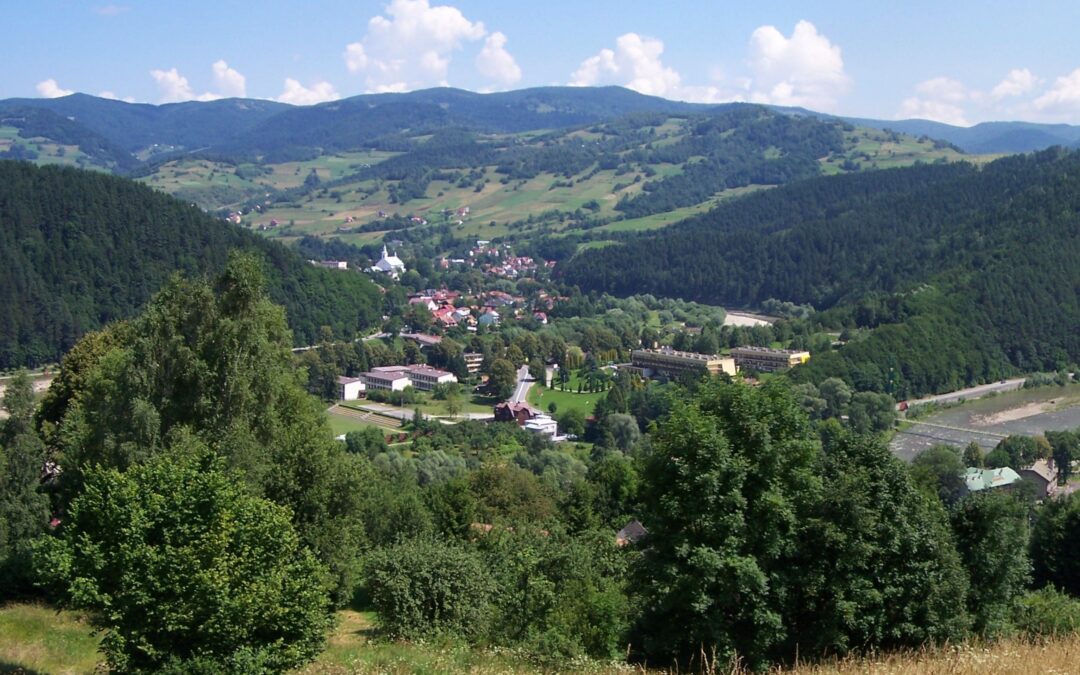
Piwniczna-Zdrój, a town of around 5,000 residents in Poland’s southern Beskidy mountains, has been named the most climate-change-resistant place in the European Union in a new ranking.
COOLCITY, a platform that seeks to help cities enhance their adaptation to climate change, this week published an index that ranks 11,041 municipalities across the EU based on their performance in five categories: land permeability, vegetation state, biodiversity, water conditions and thermal conditions.
Each factor was assessed using data from remote sensors, including the Sentinel and Landsat satellites, that were analysed with the help of artificial intelligence.
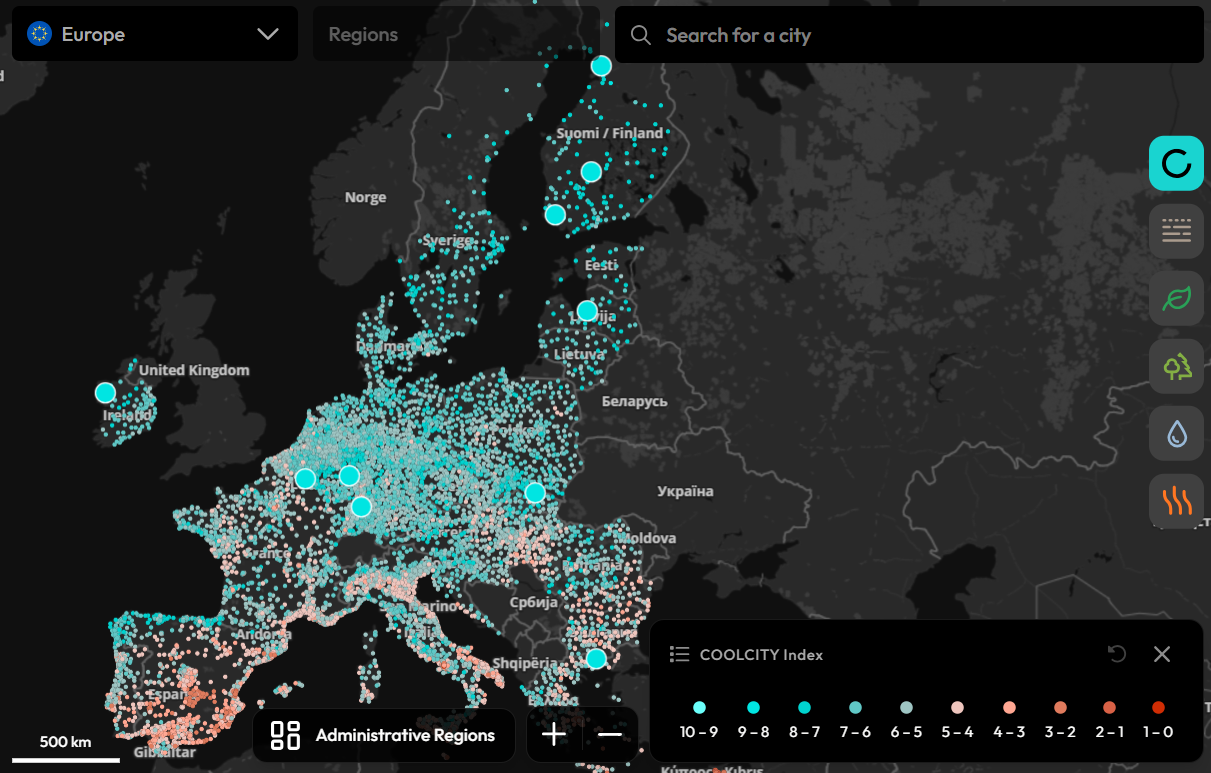
All towns and cities included in the COOLCITY Index, with the top 10 places highlighted (source: COOLCITY Index)
Piwniczna-Zdrój, a spa town located around 5 kilometres from the border with Slovakia, achieved the highest average score across all categories, with 8.5 out of 10. It was followed in the ranking by Echinos in Greece and Ii in Finland.
Piwniczna-Zdrój received a perfect score of 10 for surface permeability, which measures how concrete and other structures reduce water retention and increase urban heating.
It also scored highly (9.6) in the state of vegetation category, which looks at the presence of greenery, such as trees and shrubs, that can help with cooling down the microclimate. The town has over 2,000 m2 of greenery per resident, notes COOLCITY.
“Piwniczna-Zdrój’s result clearly shows how much local natural conditions influence a city’s resilience to climate change and how important it is to protect these resources,” said Dominik Kopeć of MGGP Aero, a Polish company specialising in aerial surveying and remote sensing that leads the COOLCITY project.
The town’s mayor, Tomasz Michałowski, welcomed the results of the ranking, saying that Piwniczna-Zdrój has prioritised eco-friendly investments, promoted responsible tourism and combated illegal rubbish dumping with monitoring.
In comments to local newspaper Gazeta Krakowska, he also noted that his town has never suffered from what many call “concretitis” (“betonoza”), referring to a trend in recent decades for many places around Poland to replace green areas with concrete.
In 2023, Poland’s former government launched an initiative to provide small towns with funding to “de-concrete” public spaces, increase greenery, and improve water retention.
The COOLCITY index also found that, among the largest cities in the EU (with a population of more than 500,000), Kraków in southern Poland was the joint-sixth most resistant to climate change. Stockholm and Gothenburg in Sweden were first and second, respectively.
“We wanted to create a tool that not only shows data, but above all helps to understand and use it in practice,” said the COOLCITY project’s strategic director, Łukasz Sławik.
The initiative is run by a consortium led by MGGP Aero, a Polish company specialising in aerial surveying and remote sensing, and which also includes the University of Warsaw and the University of Lodz.
The government will provide funds to help small towns reduce concrete spaces, increase greenery, and improve water retention.
Recent years have seen many municipalities replace greenery with concrete, a trend labelled betonoza ("concretitis") by critics https://t.co/GF2XZWqixD
— Notes from Poland 🇵🇱 (@notesfrompoland) July 23, 2023
According to scientists, climate change is increasing the frequency and intensity of extreme weather events, including heatwaves, droughts, storms and floods.
In 2024, after Poland was hit by catastrophic flooding that claimed nine lives, climate scientists calculated that the severe rainfall which caused it had been made twice as likely and 7% more intense due to climate change.
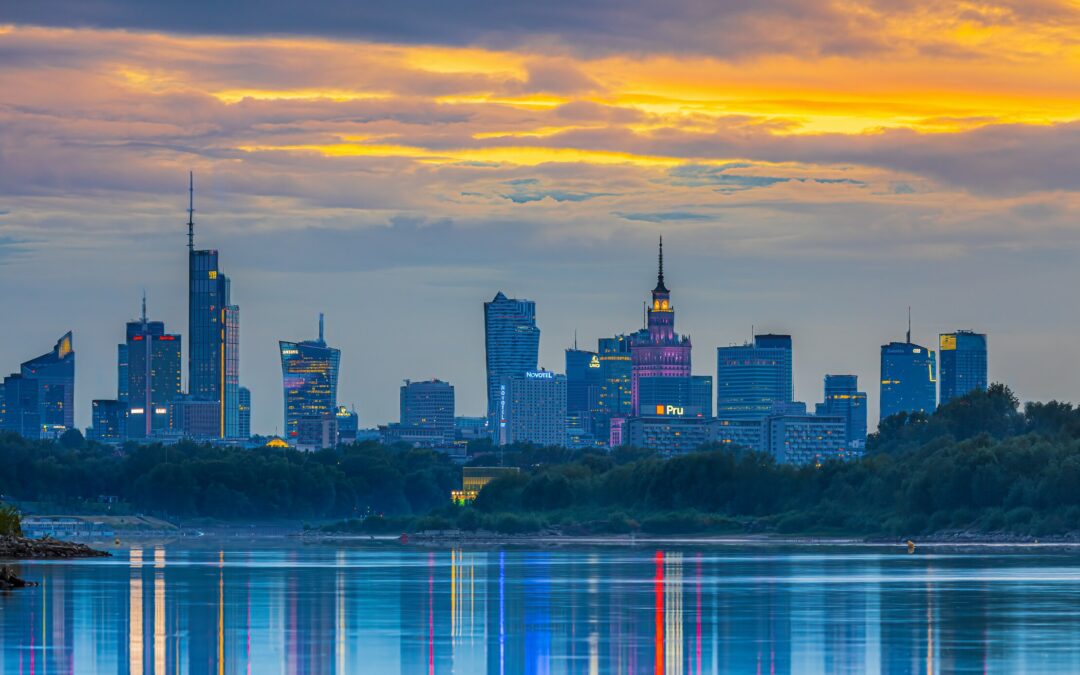
At the same time, Poland has also suffered increasingly common and severe droughts. Last year, the water level in the Vistula, Poland’s longest river, fell to a record low of 7cm in Warsaw.
Human-induced climate change made the extreme rainfall that caused recent deadly floods in Central Europe twice as likely and 7% more intense, a group of scientists has found
They warn that rising global temperatures will make such events even more common https://t.co/CKG0oU9EeW
— Notes from Poland 🇵🇱 (@notesfrompoland) September 26, 2024
Notes from Poland is run by a small editorial team and published by an independent, non-profit foundation that is funded through donations from our readers. We cannot do what we do without your support.
Main image credit: Jerzy Opioła/Wikimedia Commons (under CC BY-SA 4.0)

Olivier Sorgho is senior editor at Notes from Poland, covering politics, business and society. He previously worked for Reuters.
















.jpg)