Keep our news free from ads and paywalls by making a donation to support our work!

Notes from Poland is run by a small editorial team and is published by an independent, non-profit foundation that is funded through donations from our readers. We cannot do what we do without your support.
Credit rating agency Fitch has issued a further warning about Poland’s public finances, saying that the “political gridlock” between the government and opposition-aligned President Karol Nawrocki will continue to hinder policymaking, including tackling “large fiscal deficits and rapidly rising debt”.
It cited Nawrocki’s decision last week to veto a government bill intended to facilitate Poland’s receipt of almost €44 billion in loans for defence spending from the EU’s SAFE programme, with Fitch saying the standoff reinforces its decision last year to shift Poland’s credit outlook to negative.
🇵🇱 Wg Fitch zawetowanie SAFE uwypukla wszystkie ryzyka stojące za negatywną perspektywą ratingu Polski.
– udział w SAFE mógłby obniżyć koszty obsługi długu;
– propozycja NBP rodzi niepewność co do roli banku centralnego.➡️ https://t.co/gRIek0laFk pic.twitter.com/OeMMZIdQWI
— macroNEXT (@Macronextcom) March 17, 2026
Last Thursday, Nawrocki announced that he was vetoing the SAFE bill, arguing that the programme would indebt Poles on uncertain terms for decades and threaten Polish sovereignty by handing Brussels influence over defence spending decisions.
However, in a statement issued on Tuesday, Fitch echoed the Polish government’s argument that the EU loans are on favourable terms, “especially under current volatile market conditions”, and “could help ease debt service pressures”.
The agency also cast doubt on Nawrocki’s alternative proposal for a “sovereign” version of SAFE that would rely on generating money for defence spending from the central bank’s gold reserves.
Fitch warned that the plan “could be exposed to gold price volatility and risk creating uncertainty about the role of the central bank in funding government spending priorities”.
More broadly, Fitch said that “the politically charged debate about SAFE reflects key challenges that underpin the negative outlook” the agency issued for Poland last year.
“Heightened political polarisation and the risk [of] a prolonged period of political gridlock will limit Poland’s capacity to implement policies”, including those needed to “address wider fiscal pressures leading to large fiscal deficits and rapidly rising debt”, they added.
In response to the agency’s warning, finance minister Andrzej Domański said that it highlights the “growing costs of the presidential veto against SAFE”. He also claimed that the agency has acknowledged that government efforts to improve public finances are being blocked.
However, in response, Jacek Sasin, a senior figure from the opposition Law and Justice (PiS) party, said that if Domański was arguing that foreign loans were needed to ensure Poland’s credit rating, then the government must be mismanaging public finances.
Czy pan właśnie potwierdził, że SAFE jest wam potrzebny głównie do rolowania zadłużenia? Skoro bez zagranicznej pożyczki pojawia się ryzyko dla ratingu, to znaczy, że finanse państwa są prowadzone w sposób wymagający ciągłego zasilania z zewnątrz.
To nie jest argument za SAFE -… https://t.co/3cLgcXR5q2
— Jacek Sasin (@SasinJacek) March 17, 2026
In 2024, the European Union placed Poland under its excessive deficit procedure, requiring it to take steps to bring the deficit, which stood at 6.5% of GDP that year, to below the EU target of 3%.
In the second quarter of last year, Poland’s public debt rose at the second-fastest annual rate in the EU. That prompted Fitch to, for the first time since 2007, assess Poland’s credit outlook as negative, citing concern over “deteriorating public finances” and growing “political polarisation”.
Moody’s, another of the so-called Big Three rating agencies, also downgraded Poland’s outlook from stable to negative later the same month. Such agencies assess governments’ ability to repay their debts, helping lenders and investors gauge the risk of allocating their funds in a given country.
Despite Nawrocki’s veto, the government says that Poland will still be able to receive the SAFE funds. However, it warns that it will now be harder to spend all of the money.
Poland's debt has been growing at the second-fastest rate in the EU this year, and is set to continue rising.
What is behind this trend – and should we be worried – asks Alicja Ptak in the latest of her series of articles and podcasts on Poland’s economy https://t.co/1pvnb2ZxoY
— Notes from Poland 🇵🇱 (@notesfrompoland) November 30, 2025
Notes from Poland is run by a small editorial team and published by an independent, non-profit foundation that is funded through donations from our readers. We cannot do what we do without your support.
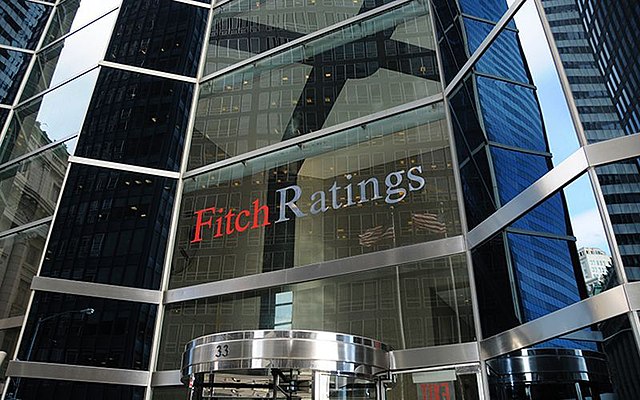
Main image credit: Shashank457/Wikimedia Commons (under CC BY-SA 4.0)

Olivier Sorgho is senior editor at Notes from Poland, covering politics, business and society. He previously worked for Reuters.