Keep our news free from ads and paywalls by making a donation to support our work!

Notes from Poland is run by a small editorial team and is published by an independent, non-profit foundation that is funded through donations from our readers. We cannot do what we do without your support.
The United States would “strenuously oppose” European countries such as Poland, Germany or the Scandinavian states seeking to develop their own nuclear weapons, says a senior Pentagon official.
However, Elbridge Colby, the under secretary of defence for policy, also noted that Washington has not seen credible signs that such countries are seriously considering building their own nuclear arsenals.
USA stanowczo sprzeciwiły się rozwijaniu zdolności atomowych przez Polskęhttps://t.co/mNP4KtWqLT
— Fakty RMF FM (@RMF24pl) March 4, 2026
His comments came amid growing debate in Europe about nuclear deterrence. This week, Poland confirmed that it is in talks with France over President Emmanuel Macron’s idea of extending the French “nuclear umbrella” across the continent.
The following day, Polish Prime Minister Donald Tusk even appeared to hint that Poland could in future seek its own independent nuclear deterrent.
“Poland takes nuclear security very seriously,” he said at a cabinet meeting. “We will cooperate with our allies, including France, and as our own autonomous capabilities increase, we will also strive to prepare Poland for the most autonomous actions possible in this matter in the future.”
Last year, Tusk also said that it may be better for Poland to develop its own nuclear capabilities rather than rely on those of others. “It is clear that we would be safer if we had our own nuclear arsenal,” said the prime minister. “If we decide to do it, it is worth being sure that it is in our hands and we make the decisions.”
Poland has confirmed that it is in talks with France over joining its new nuclear deterrence programme, which would see Paris increase the size of its nuclear arsenal and cooperate with European allies, who would be able to host French nuclear assets https://t.co/iDXCfjE79r
— Notes from Poland 🇵🇱 (@notesfrompoland) March 2, 2026
On Wednesday, Colby spoke about the issue at an event hosted by the Council on Foreign Relations, a think tank. He noted that he has not “heard credible reporting of European governments really thinking about independent acquisition in violation of their nuclear nonproliferation treaty obligations”.
But he added that “a greater European complexion to NATO nuclear deterrence” would be “perfectly appropriate and reasonable”.
Colby pointed to the fact that the UK and France – the only two European nuclear-armed powers in NATO – have been contributing “to the deterrence and defence of the alliance” for the past 50 years.
But the US official also expressed scepticism about the idea of France expanding its nuclear umbrella, noting that “the French nuclear deterrent is designed for the defence of France”.
“It is one thing to change declaratory policy; it is another to have a credible nuclear deterrent that you can extend to countries that are hundreds of miles away”.
An audience member later asked Colby to clarify his position, saying, “If the German government, the Polish government, and/or Scandinavian countries were to come to you and say, ‘We want to develop our own nuclear capabilities,’ would you try to talk them out of it, or would you encourage them?”
“I think we’d more than try to talk them out of it,” Colby said. “We’d obviously at a minimum strenuously oppose it…It’s hypothetical, but we’re against such an eventuality.”
The issue of nuclear deterrence in Poland has also become caught up in domestic politics, where Tusk’s more liberal, pro-EU government regularly clashes with conservative President Karol Nawrocki, who is aligned with the right-wing opposition and is an ally of Donald Trump.
Earlier this week, Nawrocki’s chief foreign-policy advisor claimed that the government had not informed the president, who is commander-in-chief of the armed forces, about the discussions with France on joining its nuclear deterrence programme.
He cast doubt on the viability of the idea and suggested that Poland would be better off seeking a nuclear sharing arrangement with the United States. Last month, Nawrocki himself also expressed his strong support for Poland seeking a nuclear deterrent.
The president has not been informed by the government about its talks on joining France's nuclear deterrence programme, says his chief foreign policy aide.
He cast doubt on the idea and suggested it would be better to discuss nuclear sharing with the US https://t.co/HNKMsYeHHO
— Notes from Poland 🇵🇱 (@notesfrompoland) March 3, 2026
Responding to Colby’s remarks, presidential spokesman Rafał Leśkiewicz told Polsat News that “a single statement by a representative of the American administration does not prove anything”.
Leśkiewicz reiterated that “we want to develop our capabilities when it comes to possessing nuclear weapons” and that “we have very good relations with the United States, and I believe that we will continue to discuss these matters with our key ally in the field of security and defence”.
Meanwhile, foreign minister Radosław Sikorski called for cool heads in the nuclear debate. “I reiterate my appeal to politicians to stop grandstanding about nuclear weapons,” he wrote on social media in response to a report on Colby’s remarks.
Ponawiam apel do polityków aby nie gwiazdorzyć o broni atomowej. https://t.co/8Ds6ipLhDw
— Radosław Sikorski 🇵🇱🇪🇺 (@sikorskiradek) March 5, 2026
Notes from Poland is run by a small editorial team and published by an independent, non-profit foundation that is funded through donations from our readers. We cannot do what we do without your support.
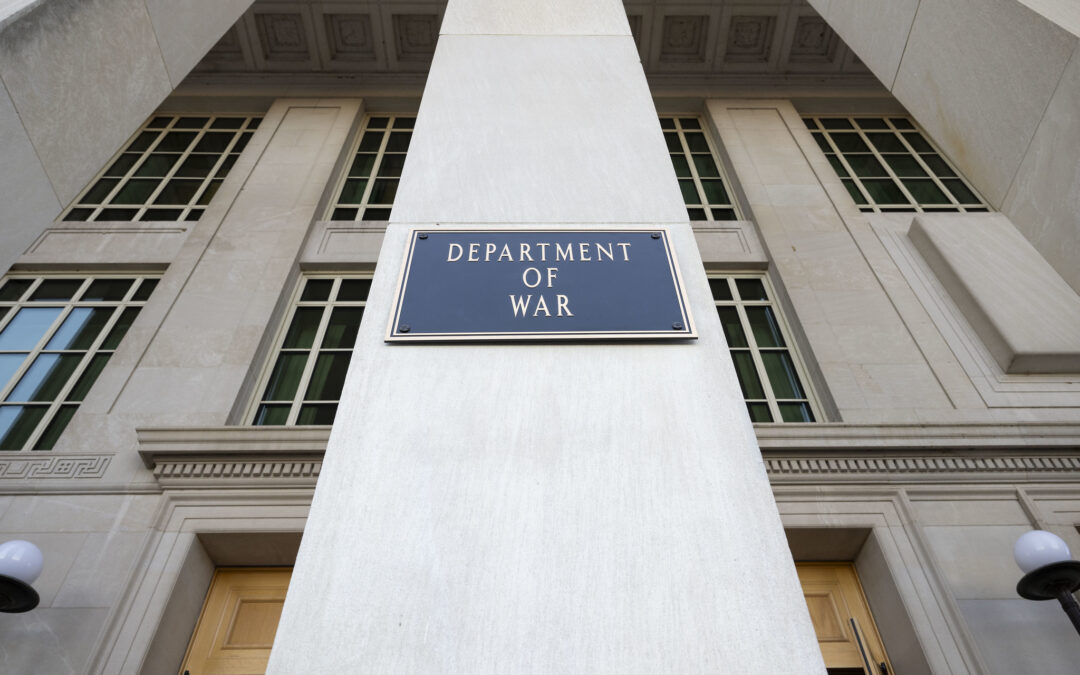
Main image credit: US Secretary of War/Flickr (under public domain)

Alicja Ptak is deputy editor-in-chief of Notes from Poland and a multimedia journalist. She has written for Clean Energy Wire and The Times, and she hosts her own podcast, The Warsaw Wire, on Poland’s economy and energy sector. She previously worked for Reuters.