Keep our news free from ads and paywalls by making a donation to support our work!

Notes from Poland is run by a small editorial team and is published by an independent, non-profit foundation that is funded through donations from our readers. We cannot do what we do without your support.
The European Union has given final approval to almost €44 billion (185 billion zloty) in loans for Poland to support defence spending.
However, the so-called Security Action for Europe (SAFE) financial instrument has been mired in domestic political controversy in Poland, where the right-wing opposition has urged conservative President Karol Nawrocki to try to block the funds.
Państwa członkowskie UE ostatecznie zatwierdziły program SAFE. Pierwsze środki mogą trafić do Polski już w marcu.
Inwestujemy w bezpieczeństwo i polski przemysł obronny. #RobimyNieGadamy 🇵🇱
— Adam Szłapka (@adamSzlapka) February 17, 2026
Last September, Poland was allocated a €43.7 billion share of SAFE, more than any other country has from the fund, which totals €150 billion for all member states. In January this year, the European Commission approved Warsaw’s formal request for the funds.
The final step was approval from the Council of the European Union, made up of representatives of national governments. Today, a meeting of finance ministers issued that approval for eight member states, including Poland, after also approving eight others last week.
The decisions mean that SAFE funds have now been made available to Belgium, Bulgaria, Cyprus, Denmark, Estonia, Finland, Greece, Italy, Latvia, Lithuania, Poland, Slovakia, Spain, Croatia, Portugal and Romania. Three other countries, the Czech Republic, France and Hungary, are still awaiting approval.
“These implementing decisions will pave the way for affordable, long-term loans to be released by the commission under the SAFE instrument, demonstrating that the EU is delivering when it comes to defence,” said a spokesperson for the Cypriot presidency of the Council of the European Union.
The decision was also welcomed by the Polish government’s spokesman, Adam Szłapka, who wrote on social media that “the Polish arms industry will benefit greatly from the SAFE programme”. The government claims that around 80% of SAFE money will be spent domestically.
Poland’s application for the funds includes a 300-page dossier outlining 139 projects that will be financed from SAFE. The list remains classified for security reasons, though the Polish government has said it will try to release further information to the public as soon as possible.
One particular project that is known to be among those being funded by SAFE is the development, in cooperation with Norwegian partners, of a new anti-drone system to protect Poland’s eastern borders.
Poland has signed an agreement for a new anti-drone system that it claims will be the first of its kind in Europe.
The network is intended to protect Poland’s eastern borders, where last year around 20 Russian drones crossed in an unprecedented incursion https://t.co/WhWhJxDwXA
— Notes from Poland 🇵🇱 (@notesfrompoland) January 30, 2026
However, the lack of transparency on where and how the money will be spent has prompted criticism from the opposition Law and Justice (PiS) party, which also argues that the EU will have the right to arbitrarily block funds if it wishes.
PiS has also expressed concern that the fact that the majority of the SAFE funds must be spent within Europe could damage Poland’s relations with the United States, its most important security partner and the source of much of its military hardware (as well as of loans to pay for it).
Last week, the government’s majority in the Sejm, the more powerful lower house of parliament, approved a bill that would set up a mechanism for Poland’s National Development Bank (BGK) to receive the SAFE funds. PiS and the far-right Confederation (Konfederacja), another opposition group, voted against it.
The government's majority in parliament has approved Poland's receipt of €44bn in loans for defence spending under the EU's SAFE programme.
However, the opposition voted against the bill, which faces a potential veto from the opposition-aligned president https://t.co/Dmi9K0T7Yg
— Notes from Poland 🇵🇱 (@notesfrompoland) February 13, 2026
The bill still needs to pass through the Senate, where the government has pledged to add some amendments in response to opposition concerns. But on Monday, PiS leader Jarosław Kaczyński appealed to President Nawrocki to veto the legislation once it reaches his desk.
At a press conference, he said the SAFE was created “to push Europe, but especially Poland, away from the United States” and to bring “Poland under German rule”.
Nawrocki himself has also raised similar doubts about SAFE, which was one of the main issues on the agenda of a National Security Council meeting he called with the government and parliamentary leaders last week.
The president has regularly clashed with the government, including vetoing an unprecedented number of its bills. However, on national security issues, the two sides have generally sought to present a more united front.
.@OficjalnyJK rozjeżdża pytanie TVN o program SAFE: Polska niepodległość nie ma ceny. Proponowana nam jest Polska pod niemieckim butem, my ten niemiecki but odrzucamy! 🇵🇱 pic.twitter.com/FycWSQDxr0
— Sebastian Kaleta (@sjkaleta) February 16, 2026
Today, Prime Minister Donald Tusk reiterated the importance of SAFE and appealed to PiS and Nawrocki to support the programme.
He said the EU-backed loans are on “very favourable terms”, with interest rates almost half of those taken by the former PiS government from South Korea to purchase large amounts of Korean military equipment.
“I honestly cannot understand the motivations of those who are currently deciding to try to block this money,” said Tusk. “Even if they veto it, we will find ways to save at least some of these funds, but it will take time, and it will also cost some unnecessary money and stress.”
On Monday, the government’s plenipotentiary for SAFE funds, Magdalena Sobkowiak-Czarnecka, likewise told news website Money.pl that, even if Nawrocki vetoes the SAFE bill, the government can still sign an agreement with the European Commission to receive the funds.
Czy prezydent może zablokować gigapożyczkę dla Polski? Jest odpowiedź z rządu https://t.co/3OrMfqdnHk pic.twitter.com/jhN3JYPfir
— Money.pl (@Money_pl) February 16, 2026
Notes from Poland is run by a small editorial team and published by an independent, non-profit foundation that is funded through donations from our readers. We cannot do what we do without your support.
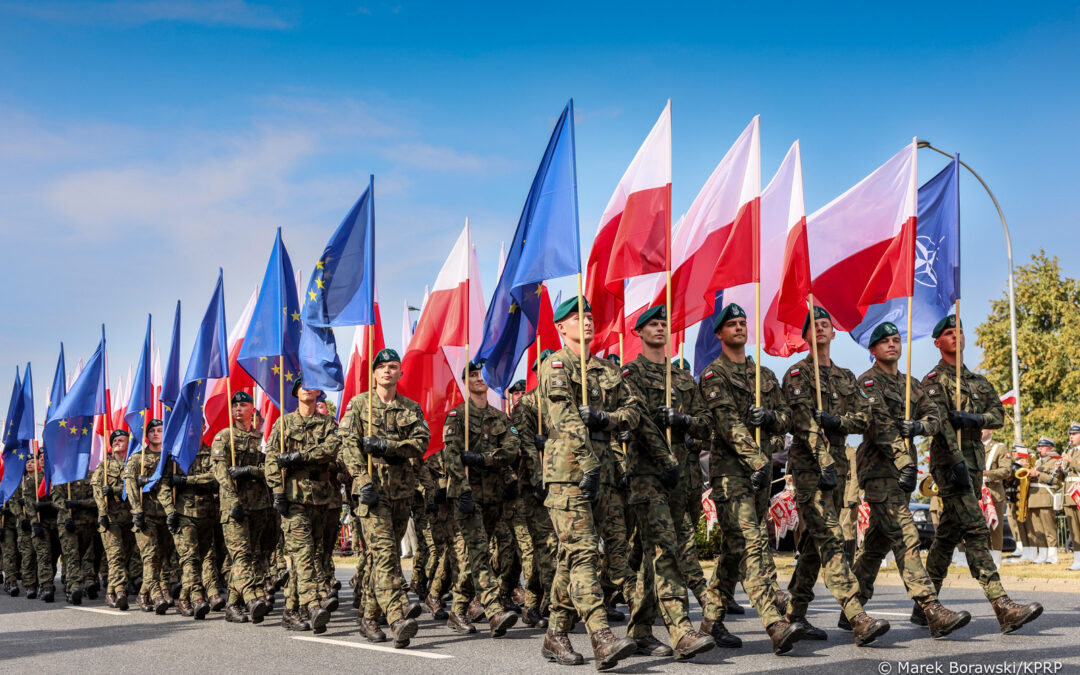
Main image credit: Marek Borawcki/KPRP

Daniel Tilles is editor-in-chief of Notes from Poland. He has written on Polish affairs for a wide range of publications, including Foreign Policy, POLITICO Europe, EUobserver and Dziennik Gazeta Prawna.