Keep our news free from ads and paywalls by making a donation to support our work!

Notes from Poland is run by a small editorial team and is published by an independent, non-profit foundation that is funded through donations from our readers. We cannot do what we do without your support.
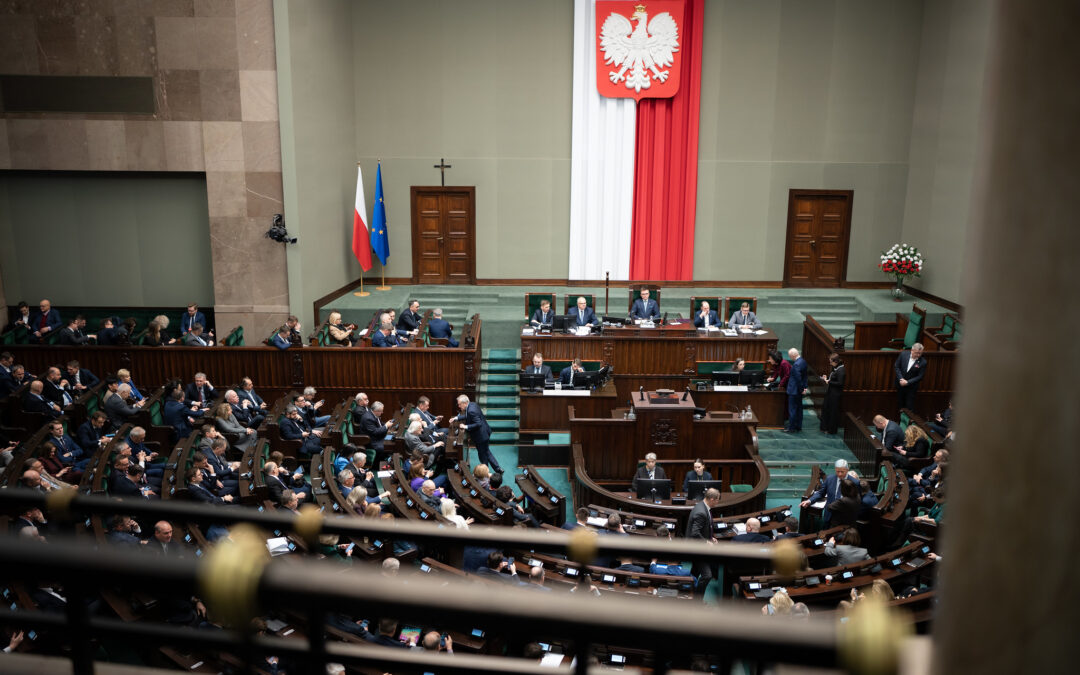
The government’s majority in the Sejm, the more powerful lower house of parliament, has approved a bill that would allow Poland to receive almost €44 billion (185 billion zloty) in loans through the European Union to fund defence spending.
However, the right-wing opposition voted against the legislation, arguing that the funds would leave Poland more dependent upon Brussels. The bill still faces a potential veto from opposition-aligned President Karol Nawrocki, who already voiced concern over the loans.
Maski opadły. PiS i Konfederacja zagłosowały przeciwko programowi SAFE, czyli przeciw bezpieczeństwu Polski, przeciw nowoczesnej armii, przeciw polskiemu przemysłowi zbrojeniowemu. To już nie jest opozycja, to są wrogowie polskiej niepodległości.
— Donald Tusk (@donaldtusk) February 13, 2026
The funds are part of the EU’s SAFE programme, which is offering €150 billion in loans to help member states boost defence spending. Poland has been assigned by far the largest share, at €43.7 billion. The EU Council is set to give final approval for the funds next week.
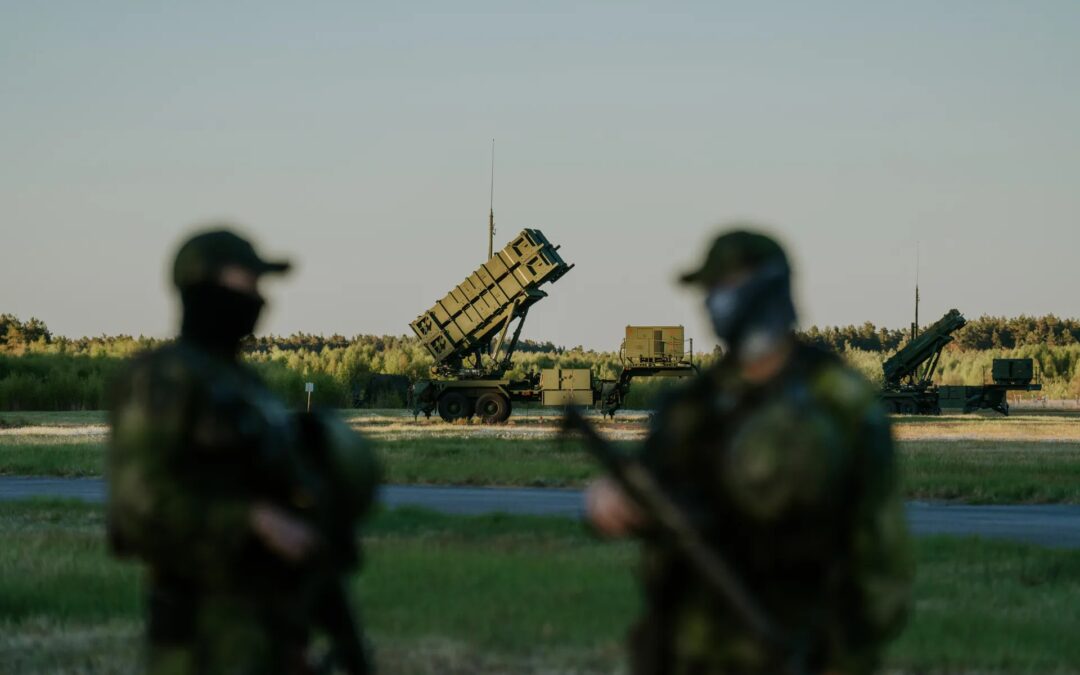
The government says the loans are at highly preferential rates and will strengthen national security at a time of growing threats on Poland’s eastern borders. They also say that over 80% of the funds will be spent domestically, bolstering the Polish defence industry.
On Wednesday this week, the government submitted a bill to parliament that would facilitate the receipt and spending of the SAFE loans. A key element of the legislation is the creation of a special financial instrument managed by Poland’s National Development Bank (BGK), through which the money will be channelled.
For Poland to access the funds as planned, the law must enter into force by March 2026, when Warsaw plans to sign a loan agreement with the European Commission.
On Friday, the government’s bill passed with a majority of 236 votes in the Sejm – which mainly came from the ruling coalition, which ranges from left to centre right – and 199 against, mainly from the opposition national-conservative Law and Justice (PiS) and the far-right Confederation (Konfederacja).
On Thursday, PiS leader Jarosław Kaczyński had announced his opposition to the SAFE programme, which he said would lead to “many years of financial dependence on a catalogue of products specified by the European Commission”.
He also claimed that it would open up Poland to “political blackmail” because “the EU has the right to suspend payments at any time, and there are no legal guarantees that the money will go to the Polish arms industry”.
However, Prime Minister Donald Tusk criticised the opposition after the vote, writing that PiS and Confederation had voted “against Poland’s security, against a modern army, against the Polish arms industry”. They are “no longer the opposition; they are enemies of Polish independence”, he declared.
Pożyczki z SAFE nie są dodatkowymi środkami na obronność. Mają zastąpić część już istniejących funduszy. Wejście w ten program w takim kształcie to wieloletnie finansowe uzależnienie się od katalogu produktów, który został wskazany przez Komisję Europejską. To tak naprawdę…
— Jarosław Kaczyński (@OficjalnyJK) February 12, 2026
The bill now passes to the upper-house Senate, where the government also has a majority. The Senate cannot block legislation but can suggest amendments to it, which are then accepted or rejected by the Sejm.
Once the legislation is given final approval by parliament, it passes to President Nawrocki, who has already voiced concern about the loans.
“There are increasing signs, including from abroad, that the SAFE programme is primarily designed to benefit the largest western European arms manufacturers, rather than countries that are still building their defence capabilities and are closest to armed conflict, such as Poland,” he said this week.
Both PiS and Nawrocki’s chancellery have also warned that the programme could damage relations with the United States because most of the loans must be spent on European equipment, whereas up until now Poland has relied in large part on American supplies.
"Poland will not be a vassal" of America, says PM @donaldtusk. "Allied relations cannot consist of constantly saying yes to everything."
He suggested that President Nawrocki, a Trump ally, favours Poland having such a subservient role to Washington https://t.co/PIILt1AOlB
— Notes from Poland 🇵🇱 (@notesfrompoland) February 12, 2026
Speaking after today’s vote, defence minister Władysław Kosiniak-Kamysz said that he was “disappointed with the attitude of the opposition, which does not want a strong Poland, a strong Polish army, or a strong Polish arms industry”, reports news service Defence24.
Kosiniak-Kamysz said that, in order to assuage some of the opposition’s “misguided” concerns, amendments to the bill would be added in the Senate, including ensuring that the SAFE loan repayments were not included in the defence ministry’s budget.
He also said that a list of potential purchases with the SAFE funds, something the opposition has been demanding, would soon be made more widely available. One such project that has already been announced is a new anti-drone system that will be produced by Polish and Norwegian firms.
Poland has signed an agreement for a new anti-drone system that it claims will be the first of its kind in Europe.
The network is intended to protect Poland’s eastern borders, where last year around 20 Russian drones crossed in an unprecedented incursion https://t.co/WhWhJxDwXA
— Notes from Poland 🇵🇱 (@notesfrompoland) January 30, 2026
Notes from Poland is run by a small editorial team and published by an independent, non-profit foundation that is funded through donations from our readers. We cannot do what we do without your support.
Main image credit: Mateusz Włodarczyk/MRPiPS (under CC BY-NC-ND 2.0)

Alicja Ptak is deputy editor-in-chief of Notes from Poland and a multimedia journalist. She has written for Clean Energy Wire and The Times, and she hosts her own podcast, The Warsaw Wire, on Poland’s economy and energy sector. She previously worked for Reuters.