Keep our news free from ads and paywalls by making a donation to support our work!

Notes from Poland is run by a small editorial team and is published by an independent, non-profit foundation that is funded through donations from our readers. We cannot do what we do without your support.
Poland saw the European Union’s second-fastest growth in tourism in 2025, behind only the Mediterranean island state of Malta. The figures come amid efforts by the Polish government to boost the role of tourism in the economy.
New data from Eurostat, the EU’s statistical agency, show that the estimated number of nights spent in tourist accommodation rose by 7% in Poland in 2025 compared to a year earlier. That placed it behind Malta (+9.9%) and ahead of Latvia (+6.2%), Lithuania and Luxembourg (both +6.1%).
Tourism in traditional powerhouses France (+3%), Italy (+2.1%) and Spain (+1.6%) rose modestly, while two countries experienced a decline: Romania (-1.4%) and Ireland (-1.8%).
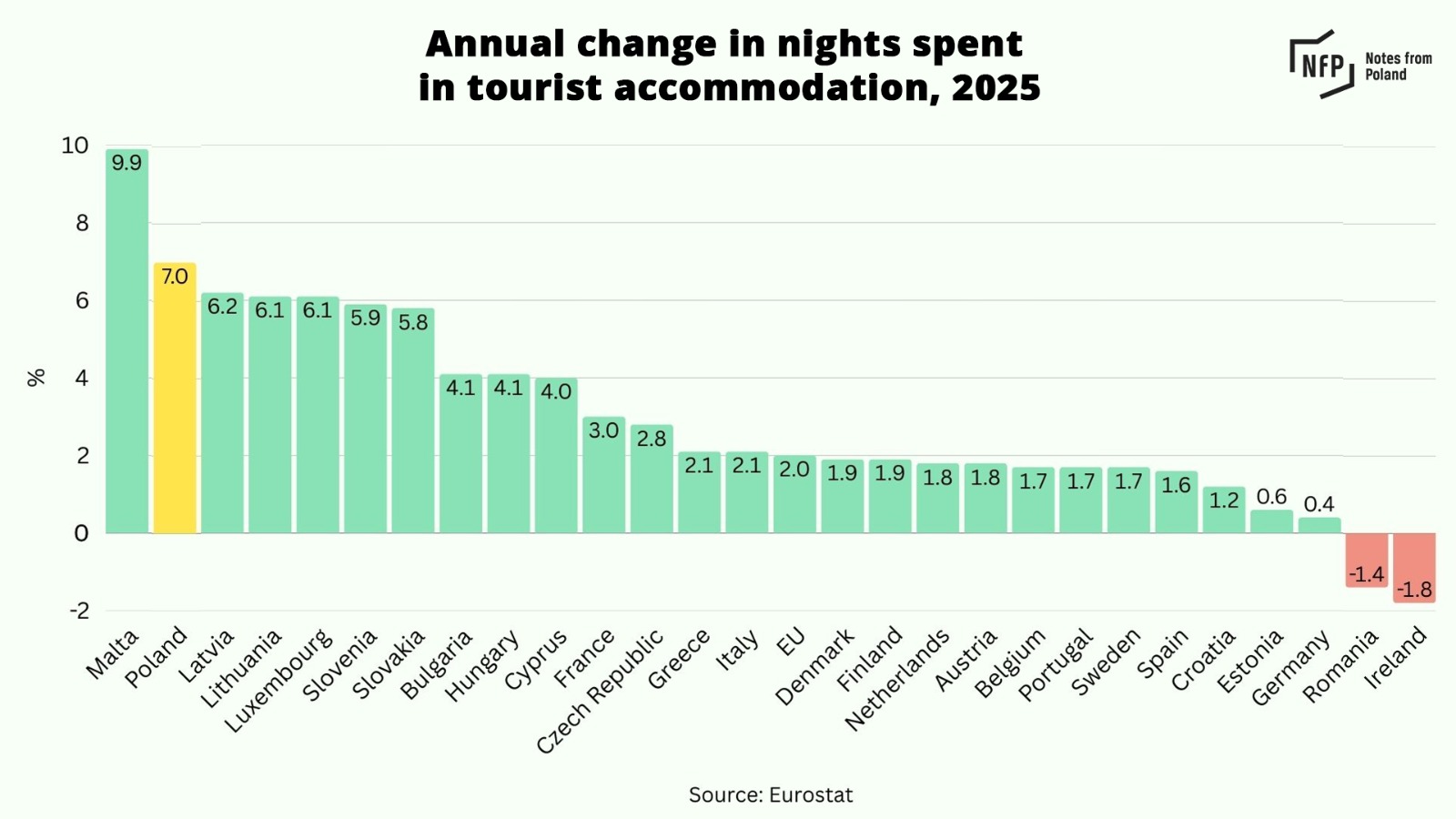
In absolute terms, however, Poland remains well behind other destinations. It had an estimated total of 104.5 million nights spent in tourist accommodation in 2025, well below leaders Spain (513.1 million), Italy (476.0 million) and France (471.3 million).
Poland also found itself behind the smaller countries of Greece (156.2 million), the Netherlands (148.0 million) and Austria (133.6 million).
Eurostat notes that Poland had one of the lowest proportions of international visitors. Just 19.2% of its tourist accommodation nights were accounted for by foreign guests. Only Germany (18.9%) and Romania (17.6%) had lower figures.
Malta (94.1%) had the highest proportion of foreign visitors, followed by Cyprus (92.7%), Croatia (90.3%) and Luxembourg (88.1%). Spain (64.2%) and Italy (55.5%) both had a majority of international guests, while in France (31.9%) they were a minority.
With its combination of historic cities and natural landscapes – including sandy beaches in the north, mountains in the south, ancient forests, and a lake district – Poland has many of the raw materials needed to attract tourists.
However, last year, the tourism sector accounted for only around 4% of GDP, well below the EU-wide figure of 10%. The current government is hoping to change that, launching plans in September for tourism to contribute 9% of GDP by 2030.
That same month, Kraków, Poland’s most popular tourist destination, was named as the best city break location in Europe for the fifth time by British consumer association and magazine Which?
Two major tourist destinations near Kraków – the UNESCO-listed Wieliczka Salt Mine and the former Nazi-German death camp of Auschwitz – both saw record visitor numbers last year.
With its historic cities, natural landscapes and growing culinary scene, Poland is hoping to boost the role of tourism in its booming economy, writes Olivier Sorgho
The government wants tourism to contribute 9% of GDP within a decade, up from 4% now https://t.co/3wfyIkZMHm
— Notes from Poland 🇵🇱 (@notesfrompoland) December 2, 2025
Notes from Poland is run by a small editorial team and published by an independent, non-profit foundation that is funded through donations from our readers. We cannot do what we do without your support.
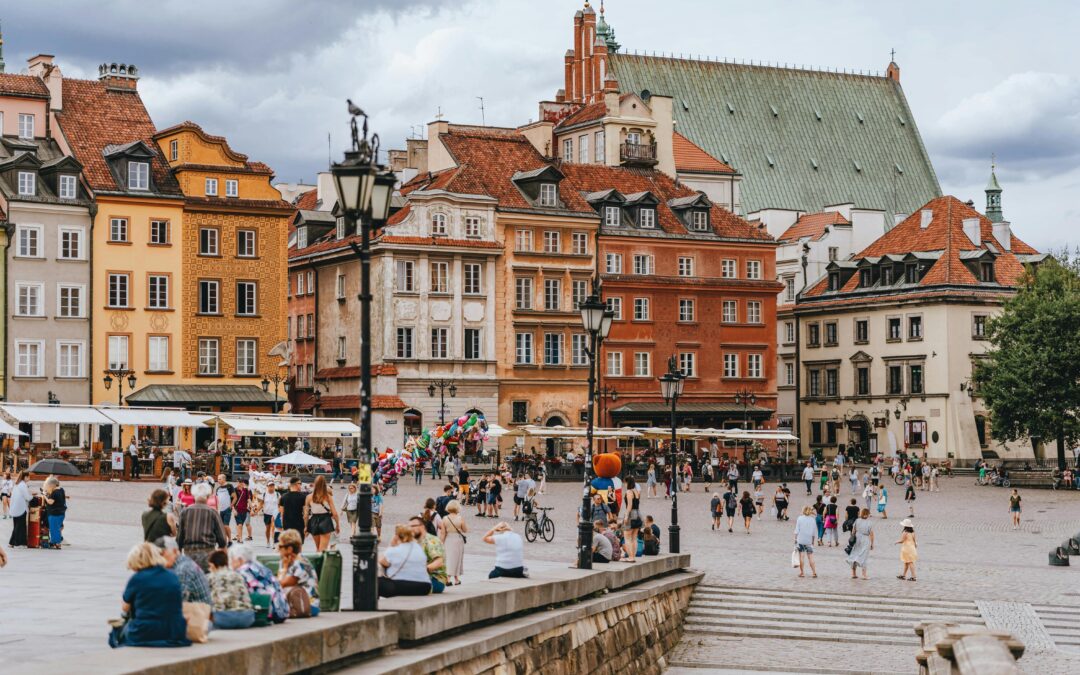
Main image credit: Egor Komarov/Pexels

Daniel Tilles is editor-in-chief of Notes from Poland. He has written on Polish affairs for a wide range of publications, including Foreign Policy, POLITICO Europe, EUobserver and Dziennik Gazeta Prawna.