
Keep our news free from ads and paywalls by making a donation to support our work!

Notes from Poland is run by a small editorial team and is published by an independent, non-profit foundation that is funded through donations from our readers. We cannot do what we do without your support.
Ukraine has granted permission for further searches to take place on its territory for the remains of Polish victims of massacres carried out by Ukrainian nationalists during World War Two.
The history of the Volhynia massacres – in which around 100,000 Polish civilians, mostly women and children, were killed – has long caused tension between two otherwise close allies.
But recent years have seen a diplomatic breakthrough on the issue, resulting in the exhumation of victims – previously banned by Ukraine – resuming.
Na skutek rozmów Prezydenta RP @NawrockiKn z Prezydentem Ukrainy @ZelenskyyUa z 19 grudnia 2025 r. strona ukraińska zdecydowała o wydaniu zgody na kontynuację prac w Puźnikach k. Tarnopola i rozpoczęcie poszukiwań w Ostrówkach i Woli Ostrowieckiej na Wołyniu.
Decyzje te należy… pic.twitter.com/7W8TymNfqV
— Marcin Przydacz (@marcin_przydacz) December 30, 2025
In a statement on Tuesday, Ukraine’s culture ministry announced that it had granted permits for search work to take place in three locations.
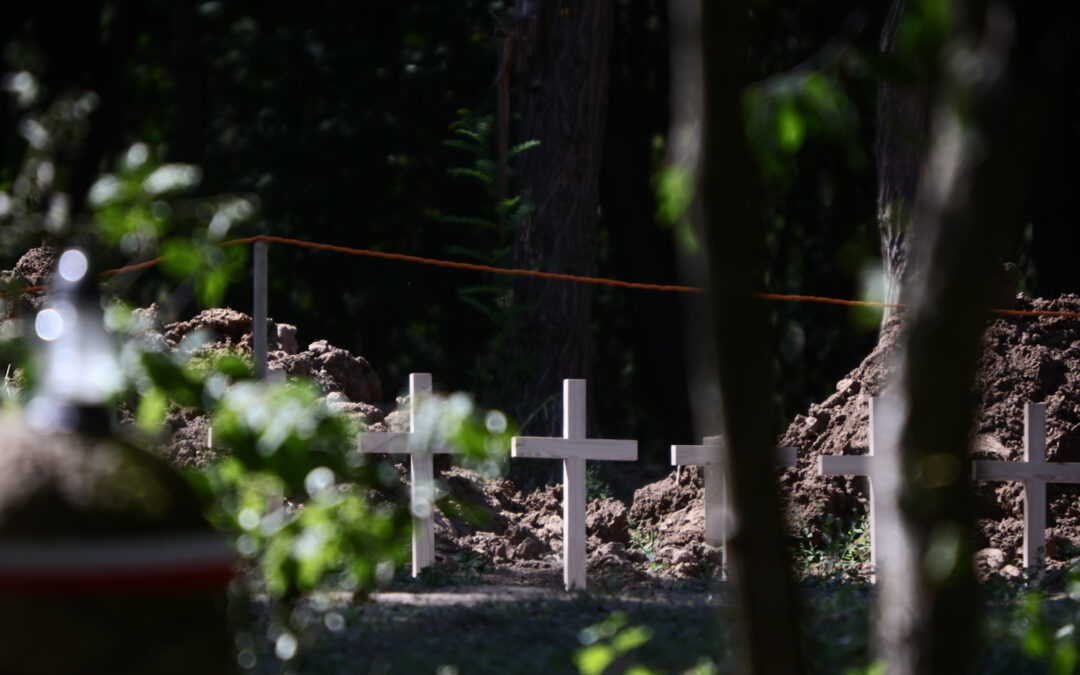
One is Puzhnyky (known as Puźniki in Polish), a depopulated former village in what is now western Ukraine but which, before the war, was part of Poland. Ukrainian nationalists are believed to have killed between 50 and 135 Poles there on the night of 12/13 February 1945.
That was the place where, in early 2025, Ukraine first gave permission for exhumations to resume. Subsequently, a joint Polish-Ukrainian team of researchers discovered the remains of at least 42 people, which were then buried in a ceremony attended by both countries’ culture ministers.
Polish victims of massacres committed by Ukrainian nationalists in WWII have been reburied in Ukraine at a ceremony attended by officials from both countries.
Their remains were exhumed this year following a diplomatic breakthrough between Kyiv and Warsaw https://t.co/FQwhjXOZDb
— Notes from Poland 🇵🇱 (@notesfrompoland) September 6, 2025
In its announcement this week, the Ukrainian culture ministry said that the newly authorised search will seek to identify another possible burial trench containing further remains. The news was also confirmed by Polish culture minister Marta Cienkowska.
According to the Freedom and Democracy Foundation, a Polish NGO that has led efforts to exhume victims in Puzhnyky, the remains of up to 90 more people may still be buried there.
Its president, Maciej Dancewicz, told broadcaster RMF that work in Puzhnyky will likely resume in the spring. Only once further potential burial sites are discovered can requests be made to Ukraine for further exhumations to take place.
Meanwhile, Ukraine has granted search permits for two other locations in the Volhynia region, also depopulated former villages that were previously part of Poland and known as Ostrówki and Wola Ostrowiecka.
The ministry did not provide further details about the aim of those searches, but Ostrówki and Wola Ostrowiecka were neighbouring villages where, on 30 August 1943, the Ukrainian Insurgent Army (UPA) massacred over 1,000 Poles.
Exhumation did previously take place in both places in the 1990s and again in 2011 and 2015, uncovering the remains of hundreds of victims.
It is believed that many more remain buried in unmarked graves. But, in 2017, Ukraine imposed a ban on searches for massacre victims on its territory in response to the dismantlement of a UPA monument in Poland.
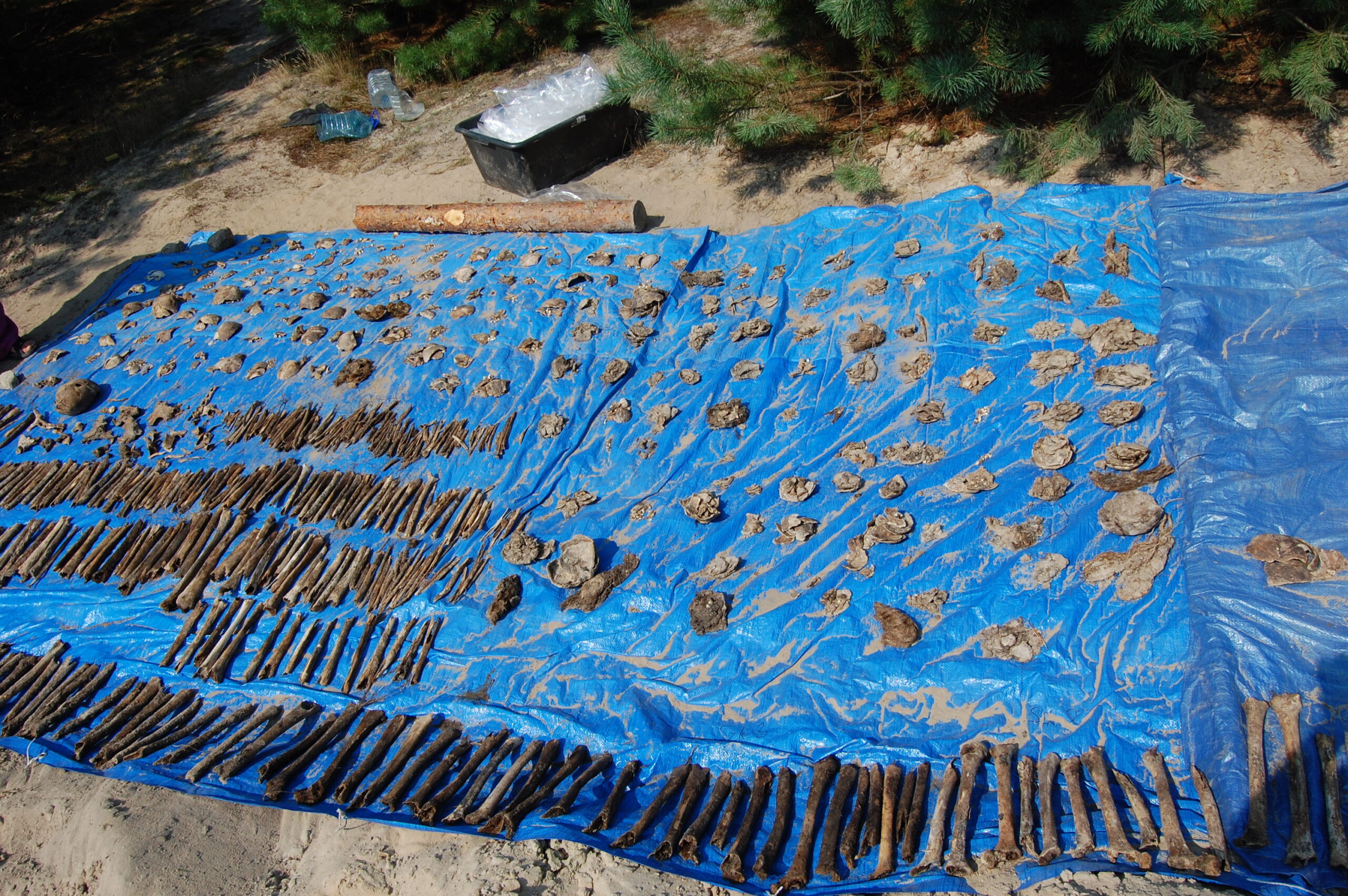
The remains of victims in Ostrówki recovered during exhumation work in 2011 (image credit: Leon Popek/Wikimedia Commons, under CC BY-SA 3.0)
In its statement this week, the Ukrainian culture ministry noted that “the tragic pages of the common history of the Ukrainian and Polish peoples in the 20th century remain sensitive for both societies”.
However, “consistent and responsible dialogue on these issues is necessary” because “shared memory strengthens the unity of our peoples” and helps move towards “a common future in the face of the Russian threat”.
It added that one of the impetuses behind the new permissions was the meeting in December between the two countries’ presidents, Volodymyr Zelensky and Karol Nawrocki.
Nawrocki’s chief foreign policy aide, Marcin Przydacz, on Tuesday welcomed the latest decisions as “a good step on the path to achieving a better state of neighbourly relations”. However, he also expressed hope that “procedures [for granting permission] will accelerate”.
Ukraine's @ZelenskyyUa says that he "feels very positive" after meeting Poland's @NawrockiKn for the first time
Nawrocki said that Zelensky's visit to Warsaw was “a sign that we are together” and was “bad news for Moscow”, their common enemy https://t.co/WxuJpQRxKd
— Notes from Poland 🇵🇱 (@notesfrompoland) December 19, 2025
While Ukraine’s decision last year to allow exhumations to resume has been welcomed in Poland, some, especially on the political right, have criticised the slow pace. Only in October did Ukraine grant permission for a second set of exhumations to take place.
In 2022, Poland’s Institute of National Remembrance (IPN) estimated that the remains of around 55,000 ethnic Polish victims and 10,000 Jewish ones “still lie in death pits in Volhynia, waiting to be found, exhumed and buried”.
Further tensions have been stoked by the fact that Ukraine continues to venerate some of the individuals and groups associated with the massacres, which Poland regards as a genocide. Meanwhile, last year Ukraine criticised Poland’s plans to create a new national holiday commemorating the victims of Volhynia.
Ukraine has criticised plans by Poland to create a "day of remembrance for Polish victims of the genocide" carried out by Ukrainian nationalists during WWII.
Kyiv says the idea “flies in the face of the spirit of good neighbourly relations” https://t.co/zkdebpw1G4
— Notes from Poland 🇵🇱 (@notesfrompoland) June 5, 2025
Notes from Poland is run by a small editorial team and published by an independent, non-profit foundation that is funded through donations from our readers. We cannot do what we do without your support.
Main image credit: IPN (under CC BY-SA 4.0)

Daniel Tilles is editor-in-chief of Notes from Poland. He has written on Polish affairs for a wide range of publications, including Foreign Policy, POLITICO Europe, EUobserver and Dziennik Gazeta Prawna.







.jpg)