Keep our news free from ads and paywalls by making a donation to support our work!

Notes from Poland is run by a small editorial team and is published by an independent, non-profit foundation that is funded through donations from our readers. We cannot do what we do without your support.
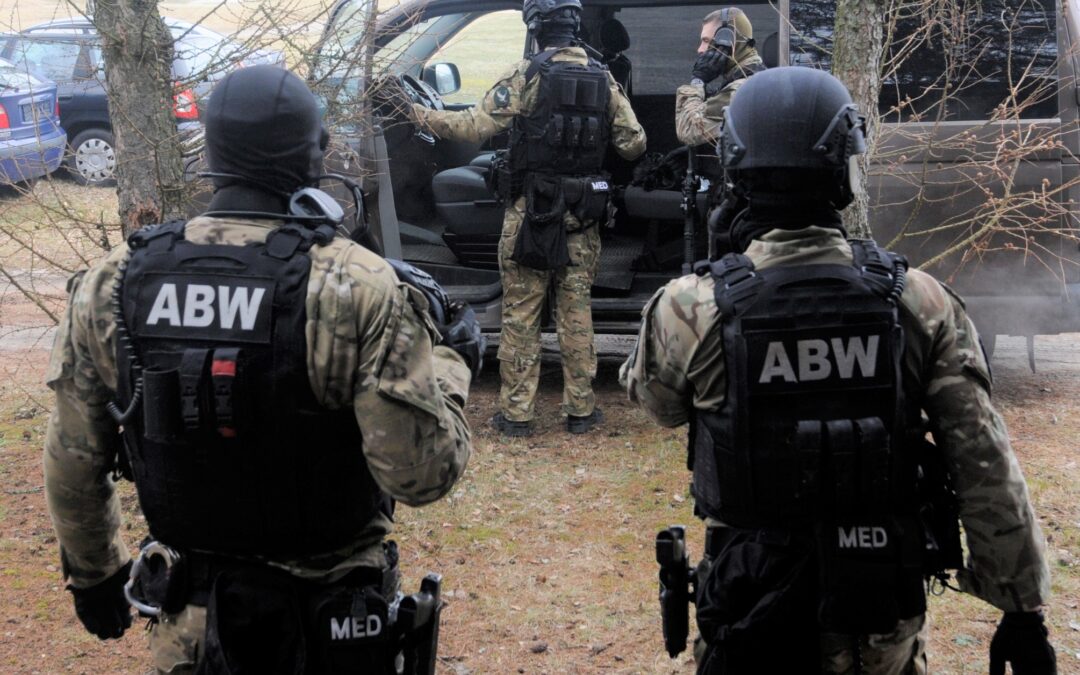
Poland has detained and charged six people – five Poles and one Russian – suspected of running an operation to illegally supply Russia with military components. Investigators say that over 2 million zloty (€450,000) worth of equipment was smuggled into the Russian exclave of Kaliningrad.
The arrests, which took place on 21 October and 2 November, were announced on Thursday morning by Poland’s Internal Security Agency (ABW) and National Prosecutor’s Office.
🚨 ROSYJSKI WYWIAD. PRZEMYT CZĘŚCI DO PRODUKCJI UZBROJENIA. 6 ZATRZYMANYCH.@ABW_GOV_PL rozbiła grupę podejrzaną o działalność na rzecz rosyjskich służb specjalnych.
🔴6⃣ osób zatrzymanych,
🔴2⃣1⃣przeszukanych lokalizacji,
🔴 4⃣osoby z zarzutami szpiegostwa – wszystkie trafiły… pic.twitter.com/L90n3rf5rY— ABW (@ABW_GOV_PL) November 5, 2026
Prosecutors report that all six suspects have been charged with participating in an organised criminal group that sought to export weapon components from Poland to Russia in violation of a ban on such trade.
Four of the suspects have also been charged under Poland’s espionage law, accused of acting on behalf of Russian intelligence in return for financial benefits. Those four individuals have been placed in pretrial detention. The other two were released with preventative measures put in place.
The ABW says that the criminal group “illegally supplied Russia with significant quantities of military components, including those used in the production of ammunition and weapons systems”.
“This type of activity may lead to the strengthening of the Russian arms industry and the military capabilities of the Russian Federation, and thus pose a serious threat to Poland’s security and interests,” wrote the agency.
Prosecutors say that the group operated at least between June 2023 and December 2025 in Poland, Lithuania and Russia. Members were responsible for procuring goods and transporting them to Kaliningrad, which borders Poland and Lithuania.
“Vehicles equipped with hidden compartments were used to transport the goods,” wrote the prosecutor’s office. “The suspects repeatedly crossed the Polish-Russian border, and some of the transports were intercepted by Polish border guards.”
Tomasz Siemoniak, the minister in charge of the security services, revealed that the six suspects include five Polish citizens, aged 25 to 52, and one Russian woman, aged 37.
Onet, a leading news website, reports, based on unnamed sources, that the Russian citizen acted as a liaison between the group and the foreign intelligence agency behind the operation.
Funkcjonariusze @ABW_GOV_PL zatrzymali 6 osób podejrzanych o udział w zorganizowanej grupie przestępczej działającej przeciwko Rzeczypospolitej Polskiej. Wśród zatrzymanych jest pięciu Polaków w wieku od 25 do 52 lat i 37-letnia Rosjanka.
🛑 Sąd – pod zarzutem szpiegostwa -…— Tomasz Siemoniak (@TomaszSiemoniak) November 5, 2026
Poland has seen a huge rise in espionage cases in recent years. The ABW launched 48 investigations related to espionage last year, more than twice as many as in 2024. In those two years taken together, there were more espionage investigations than over the previous three decades combined.
Last month, a Polish man was jailed for five and a half years for spying on behalf of Russia. The tasks assigned to him included reconnaissance of an airport as part of a possible plan to assassinate Ukrainian President Volodymyr Zelensky while he travelled through Poland.
In July, a Russian married couple with refugee status in Poland were convicted of working as spies on behalf of Moscow. In October, a member of Poland’s military reserve, who holds both Polish and Ukrainian citizenship, was detained on suspicion of espionage.
Notes from Poland is run by a small editorial team and published by an independent, non-profit foundation that is funded through donations from our readers. We cannot do what we do without your support.
Main image credit: Służby specjalne (under CC BY-SA 4.0)

Daniel Tilles is editor-in-chief of Notes from Poland. He has written on Polish affairs for a wide range of publications, including Foreign Policy, POLITICO Europe, EUobserver and Dziennik Gazeta Prawna.