Keep our news free from ads and paywalls by making a donation to support our work!

Notes from Poland is run by a small editorial team and is published by an independent, non-profit foundation that is funded through donations from our readers. We cannot do what we do without your support.
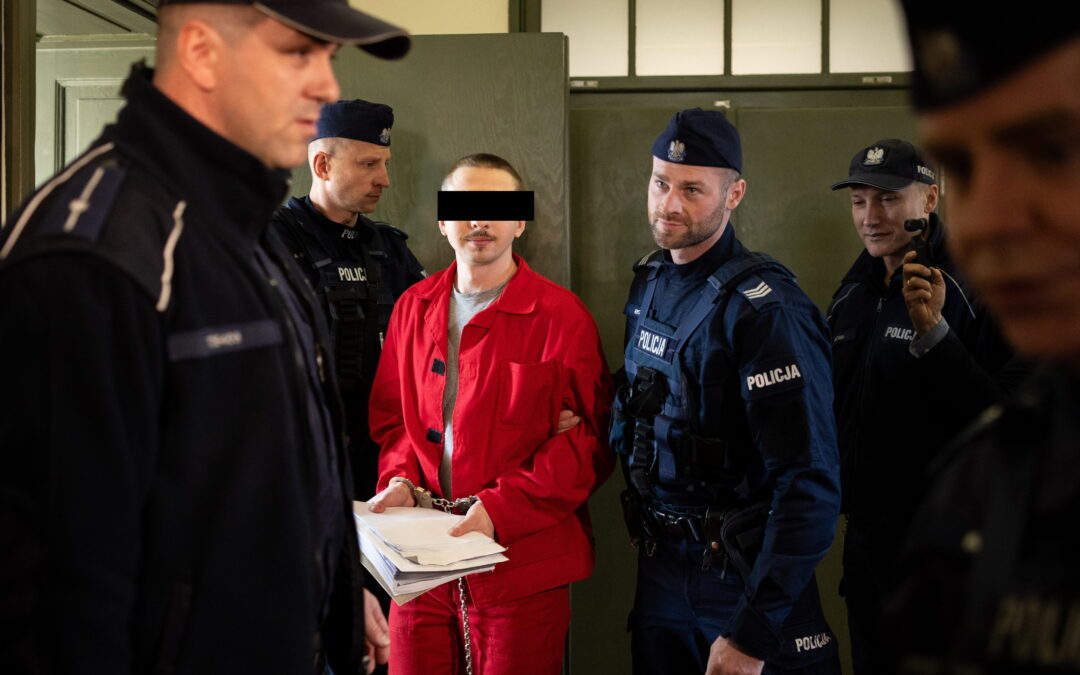
A Russian married couple who had refugee status in Poland have been convicted of working as spies for Moscow, including by gathering information on Russian opposition activists and sending a parcel bomb.
The husband, who can be named only as Igor R. under Polish privacy law, has been sentenced to seven years in prison for espionage and the bomb plot. His wife, Irina R., received a three-year jail term for aiding and abetting espionage.
🇷🇺🇵🇱Jest wyrok ws. małżeństwa Rosjan. Sąd w Sosnowcu skazał Igora R. na 7 lat więzienia za szpiegostwo i nadanie paczki z bombą, a Irinę R. na 3 lata więzienia za pomocnictwo w szpiegostwie. Igor R. współpracował z Federalną Służbą Bezpieczeństwa – https://t.co/FN7XLx2uBZ.…
— Radio ZET NEWS (@RadioZET_NEWS) July 9, 2026
Igor and Irina R. were students at the University of Silesia, where they had Polish government scholarships and lived in a dormitory in the city of Sosnowiec, reports the Gazeta Wyborcza daily.
Igor R. had been subject to criminal proceedings in Russia for evading military service and had participated in meetings of Russian opposition figures.
However, according to Polish prosecutors, he collected intelligence on Russian opposition activists in Poland on behalf of Russia’s Federal Security Service (FSB), as well as on individuals and institutions that assisted them, including employees of Poland’s foreign ministry.
Igor R. then passed those materials on to Irina R., who sought to transmit the information to the FSB on an electronic storage device.
Igor R. was additionally accused of working as part of a group – also containing another Russian and two Ukrainian citizens – to send a parcel containing explosives and a detonator. It was discovered in a warehouse belonging to InPost, the delivery firm they had used to send it.
The couple were detained in July 2024 and indicted in October 2025 on charges of espionage. Igor R. was additionally charged with causing a large-scale threat to the lives or health of other people or to property.
Their trial began in January this year at Sosnowiec’s district court but, due to national security concerns, was held completely behind closed doors. Today, the presiding judge, Ewelina Pałgan-Witek, announced that the couple had been found guilty.
Igor R. was sentenced to seven years in jail, and Irina three. The two years they have already been held in detention will count towards their sentences. The ruling can still be appealed by any of the parties involved.
Igor R.’s lawyer, Marta Smołka, told Gazeta Wyborcza that she “fundamentally disagrees with the judgement and will submit a request for its written justification in order to file an appeal”.
By contrast, prosecutor Krzysztof Kuk told broadcaster TVP that they “agree with the verdict issued in this case” and were glad that “the court agreed with the prosecution’s arguments”. However, he added that only once they had reviewed the written justification would they make a final decision on an appeal.
A Russian married couple accused of being spies have gone on trial in Poland.
They are alleged to have passed information to Moscow about Russian opposition figures in Poland, while the husband is also accused of sending a package containing explosives https://t.co/hOZCHprkUD
— Notes from Poland 🇵🇱 (@notesfrompoland) January 21, 2026
Poland has in recent years detained, charged and in some cases convicted dozens of agents accused of carrying out espionage, sabotage and other so-called “hybrid actions” on behalf of Russia.
In May, the Internal Security Agency (ABW) released figures showing that it launched twice as many espionage investigations in 2025 as in 2024. Over those two years combined, there were more investigations than across the previous three decades.
Earlier this year, Polish prosecutors indicted five people – four Ukrainian citizens and one Russian – accused of carrying out a plot on behalf of Russia to plant explosives in packages that were then dispatched by courier services across Europe.
In May, three Polish citizens were charged with working on behalf of Russian intelligence to spread disinformation and conduct reconnaissance of NATO troops. Earlier this month, two men – a Belarusian and a Pole – were charged with espionage on behalf of Russia’s ally Belarus.
Over the last two years, Poland has launched as many espionage investigations as in the previous three decades, new data show.
There has been an "unprecedented increase in threats", especially from Russia and Belarus, says the Internal Security Agency https://t.co/vl5027DnoU
— Notes from Poland 🇵🇱 (@notesfrompoland) May 7, 2026
Notes from Poland is run by a small editorial team and published by an independent, non-profit foundation that is funded through donations from our readers. We cannot do what we do without your support.
Main image credit: Grzegorz Celejewski / Agencja Wyborcza.pl

Daniel Tilles is editor-in-chief of Notes from Poland. He has written on Polish affairs for a wide range of publications, including Foreign Policy, POLITICO Europe, EUobserver and Dziennik Gazeta Prawna.