Keep our news free from ads and paywalls by making a donation to support our work!

Notes from Poland is run by a small editorial team and is published by an independent, non-profit foundation that is funded through donations from our readers. We cannot do what we do without your support.
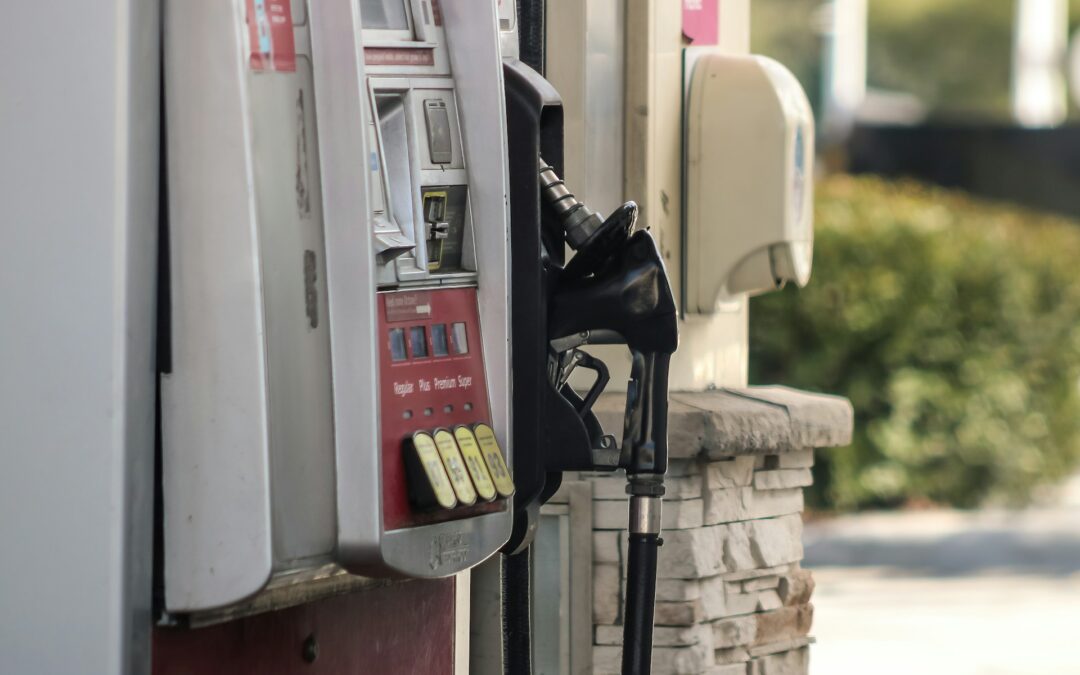
Poland’s inflation accelerated to an annual rate of 4.0% in September, up from 3.4% a month earlier, driven primarily by higher fuel prices amid the ongoing conflict in the Middle East and the end of Polish government subsidies that kept down prices at the pump.
The development means that inflation has now risen above the upper bound of 3.5% set by the National Bank of Poland (NBP), which aims to keep the figure at 2.5%, plus or minus one percentage point. Analysts say that an interest rate hike by the NBP is now more likely.
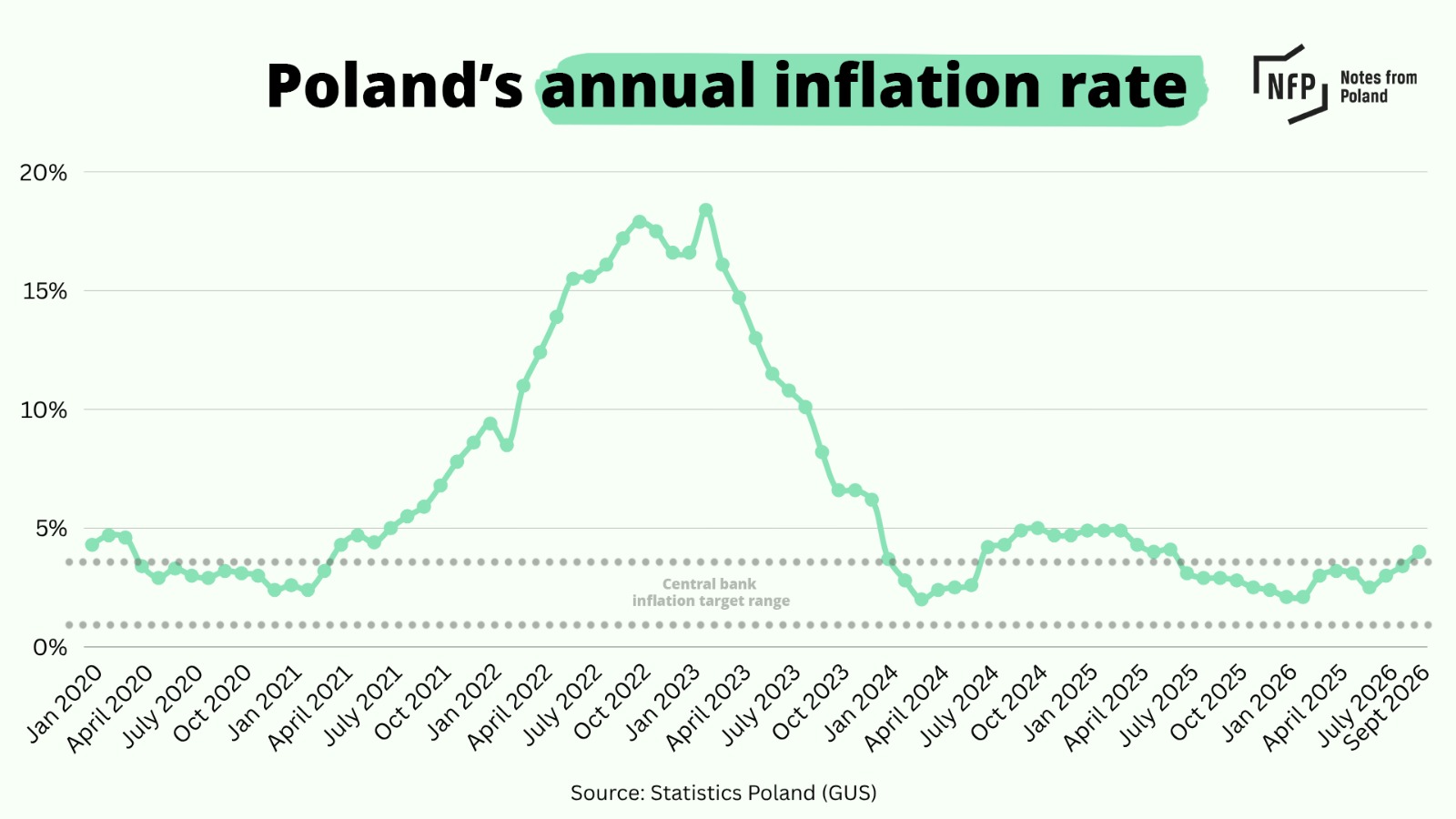
The new preliminary inflation figures from Statistics Poland (GUS), a state agency, show that prices in September were 4% higher than a year earlier, the fastest rise since June 2025. On a monthly basis, prices in September were up 0.7% from August.
The rise was caused in particular by the price of fuel for private transport, which was up 36.1% on a year earlier and 9.2% from the previous month. Energy prices also rose, with electricity, gas and other fuels up 4.9% year-on-year and 0.9% month-on-month.
To shield consumers from the energy crisis triggered by US and Israeli attacks on Iran, Poland has twice introduced temporary measures to curb petrol station prices, including daily price caps and cuts in VAT and excise duty. The system was in place from March to June and again during the the last two weeks of August.
The government has been under pressure from the opposition and opposition-aligned President Karol Nawrocki to reintroduce the subsidies. However, it argues that Nawrocki’s decision to block a proposed windfall tax on fuel companies makes the measures harder to fund
Food and non-alcoholic beverage prices provided some offset, falling 0.5% from a year earlier, although they edged up 0.1% from August. Analysts, however, expect food prices to rise later in the year to reflect lower agricultural yields.
According to GUS’s own estimates, also published on Wednesday, the grain harvest came in 5% lower compared to the last season. This will, in turn, “push the CPI index higher in the coming months”, wrote Erste Bank.
The breach of the upper end of the central bank’s inflation target and the 4% threshold could influence the stance of the NBP’s Monetary Policy Council (RPP), prompting it to hike rates, added Erste Bank analysts.
Inflacja CPI we wrześniu w górę do 4,0%r/r (ING: 4,2%; konsensus: 4,1%). Wyraźny wzrost cen paliw (36,1%r/r) odpowiada już za ok. połowę wzrostu cen w ujęciu rocznym. Zahamowanie spadków cen żywności m/m. Inflacja bazowa prawdopodobnie w dół do 3,0-3,1%r/r, co oznacza że wciąż… pic.twitter.com/AqdIXBthFl
— ING Economics Poland (@ING_EconomicsPL) September 30, 2026
Economists at ING Bank Śląski, meanwhile, expect the first rate hike – after a series of nine cautious cuts between September 2023 and March 2026 – to come in early 2027.
“The RPP may opt to wait, leaving interest rates unchanged in October, with discussions on potential monetary policy tightening beginning in November following the release of the NBP’s new projections,” they wrote on X.
Poland’s benchmark interest rate currently stands at 3.75%, down from a peak of 6.75% reached during the country’s last tightening cycle in 2021-2022, when policymakers were grappling with persistent inflation fuelled by the post-pandemic recovery and the war in Ukraine. Inflation peaked at 18.4% during that period.
Main image credit: Dawn McDonald / Unsplash

Alicja Ptak is deputy editor-in-chief of Notes from Poland and a multimedia journalist. She has written for Clean Energy Wire and The Times, and she hosts her own podcast, The Warsaw Wire, on Poland’s economy and energy sector. She previously worked for Reuters.