Keep our news free from ads and paywalls by making a donation to support our work!

Notes from Poland is run by a small editorial team and is published by an independent, non-profit foundation that is funded through donations from our readers. We cannot do what we do without your support.
A group of MPs from Poland’s main right-wing and far-right opposition parties have jointly called on the government to organise a march on Polish Independence Day in the Ukrainian city of Lviv, which was historically part of Poland.
The idea has been firmly rejected by figures from the ruling coalition, who have called it “gross stupidity” and “madness”. It is also unclear to what extent the leadership of the opposition parties support the proposal.
Pomysł zorganizowania "polskiego Marszu Niepodległości ulicami Lwowa" połączył polityków całej prawicy: PiS, Konfederacji, Rozwoju Plus i Konfederacji Korony Polskiej.
Odsłaniamy kulisy. Pisze @patrykmichalski, autor programu #NewsMichalskiego ⤵️
🔵 https://t.co/9L0M5lN0zY pic.twitter.com/1W3YxHdXHT— TVN24+ (@tvn24plus) September 15, 2026
The suggestion was made in a so-called parliamentary interpellation – through which MPs can ask questions and make suggestions to the government – submitted this month and signed by a group of 21 opposition MPs.
They called on the government to do more to support the ethnic Polish community that still lives in Lviv, arguing that neither the Polish nor the Ukrainian state does enough to help them preserve and celebrate their identity.
By contrast, argued the signatories, Polish state entities provide funding for Ukrainian organisations and events in Poland, including celebrations of Ukrainian Independence Day on 24 August.
As such, they called upon the government to “organise official celebrations of [Polish] Independence Day in Lviv, including a Polish Independence March through the streets of the city” on 11 November. This would be “a concrete sign of remembrance and solidarity with Poles living in Ukraine”.
Among the 21 signatories, 14 are from the caucus of the national-conservative Law and Justice (PiS), Poland’s ruling party between 2015 and 2023 and now the largest opposition group.
A further three are from Confederation (Konfederacja), a far-right opposition group. One is from Development Plus (Rozwój Plus), a group that broke away from PiS earlier this year; another is from Confederation of the Polish Crown (KKP), a radical-right, pro-Russian party led by Grzegorz Braun.
The final two are an independent, Janusz Kowalski, who recently quit PiS; and Jarosław Sachajko, who was elected in 2023 on the PiS party list but is part of the small Direct Democracy (Demokracja Bezpośrednia) group associated with Paweł Kukiz, a right-wing, anti-establishment figure.
Interpelacja do Prezesa Rady Ministrów w sprawie zorganizowania 11 listopada polskiego Marszu Niepodległości ulicami Lwowa
11 listopada Rzeczpospolita Polska obchodzi Narodowe Święto Niepodległości. Jest to święto wszystkich Polaków, również tych, którzy mieszkają poza granicami… pic.twitter.com/7m6yUg1iKZ
— Dariusz Matecki (@DariuszMatecki) August 25, 2026
It remains unclear to what extent the MPs have the backing of their parties in calling for the government to organise an Independence Day march in Lviv. Indeed, when Krzysztof Bosak, one of the leaders of Confederation, was asked about the idea on Wednesday, he appeared to know very little about it.
Speaking to broadcaster RMF, Bosak said that he had first heard about the proposal on Tuesday and that, after looking into it, he said it appeared to be a “stunt”, and one that he felt was “unnecessary”.
“I think the point is to draw attention to the fact that Polish institutions are participating in the celebration of Ukraine’s Independence Day in Warsaw, and that there should be some symmetry,” said Bosak. However, he added that he felt many people would not understand this intention.
“The appeal should be directed at Ukrainian institutions, not the Polish foreign ministry,” he said, adding that the MPs who came up with the idea should better explain it. “Frankly, I have more serious matters to attend to.”
Czy przemarsz Polaków ulicami Lwowa z okazji Dnia Niepodległości to dobry pomysł? Zdaniem @krzysztofbosak niepotrzebny, a traktować go należy w kategorii happeningu. Ale jeśli się trzymać zasady wzajemności, to już lepiej organizować coś podobnego… w Kijowie. pic.twitter.com/PxdqNKBlCC
— Ekonomat (@ekonomat_pl) September 16, 2026
Throughout much of history, Lviv (known in Polish as Lwów) was part of the Polish state, most recently during the period between the First and Second World Wars. However, amid postwar border movements, it became part of Ukraine along with some other former Polish territories.
Many in Poland still feel a sense of attachment to the former Polish “borderlands” (kresy) that are now located in Ukraine, Lithuania and Belarus, and which are still home to at least hundreds of thousands of ethnic Poles (though the exact number is a matter of dispute).
In Lviv itself, the most recent Ukrainian national census, taken in 2001, showed just under 10,000 people declaring Polish ethnicity in the city (around 1% of the population), though some estimates put the figure higher.
Poland's culture minister has condemned Russia's attacks on the historic centre of Lviv in Ukraine, a UNESCO World Heritage site.
She noted that Lviv, which was once part of Poland, represents the "shared history of Ukraine, Poland and all of Europe" https://t.co/qPhqXMAZ9r
— Notes from Poland 🇵🇱 (@notesfrompoland) March 25, 2026
Last year, Confederation’s other main leader, Sławomir Mentzen, clashed with the mayor of Lviv, Andriy Sadovyi, after visiting the city and criticising a monument commemorating nationalist leader Stepan Bandera, a figure seen as a hero by many in Ukraine but regarded as a war criminal in Poland.
Followers of Bandera were responsible for the so-called Volhynia massacres during World War Two, in which Ukrainian nationalists massacred around 100,000 ethnic Polish civilians. Poland regards the killings as a genocide but Ukraine rejects that label.
The issue has caused renewed tension this year after President Volodymyr Zelensky named a Ukrainian military unit after the “heroes of the Ukrainian Insurgent Army”, which led the massacres. Any Polish attempt at a state-backed Independence Day march in Ukraine would likely stir further controversy.
A leading candidate in Poland’s presidential election has clashed with a Ukrainian mayor after visiting his city and criticising the presence of a monument to Stepan Bandera, who is seen as a hero by many in Ukraine but regarded as a war criminal in Poland https://t.co/nA9JzMmBcg
— Notes from Poland 🇵🇱 (@notesfrompoland) February 26, 2025
Although the Polish government has not yet officially responded to the opposition MPs’ interpellation, a number of figures from the ruling coalition – which ranges from left to centre right – criticised the idea on Wednesday.
Deputy defence minister Cezary Tomczyk called it “gross stupidity” to think of organising such a march in Ukraine, especially at a time of war. He asked how Poles would feel if Germany tried to organise a similar march in Poland (some of whose current territory was part of Germany before World War Two).
Both Dariusz Wieczorek, an MP from The Left (Lewica), and Marek Biernacki from the centre-right Polish People’s Party (PSL) told broadcaster TVN that the idea was “madness”.
Próba zorganizowania we Lwowie prawicowej prowokacji z udziałem PiS-u, Rozwój Plus i Brauna to jednoznaczne działanie na rzecz Rosji i przeciwko polskiej racji stanu.
— Witold Zembaczyński🇵🇱 (@WZembaczynski) September 16, 2026
Notes from Poland is run by a small editorial team and published by an independent, non-profit foundation that is funded through donations from our readers. We cannot do what we do without your support.
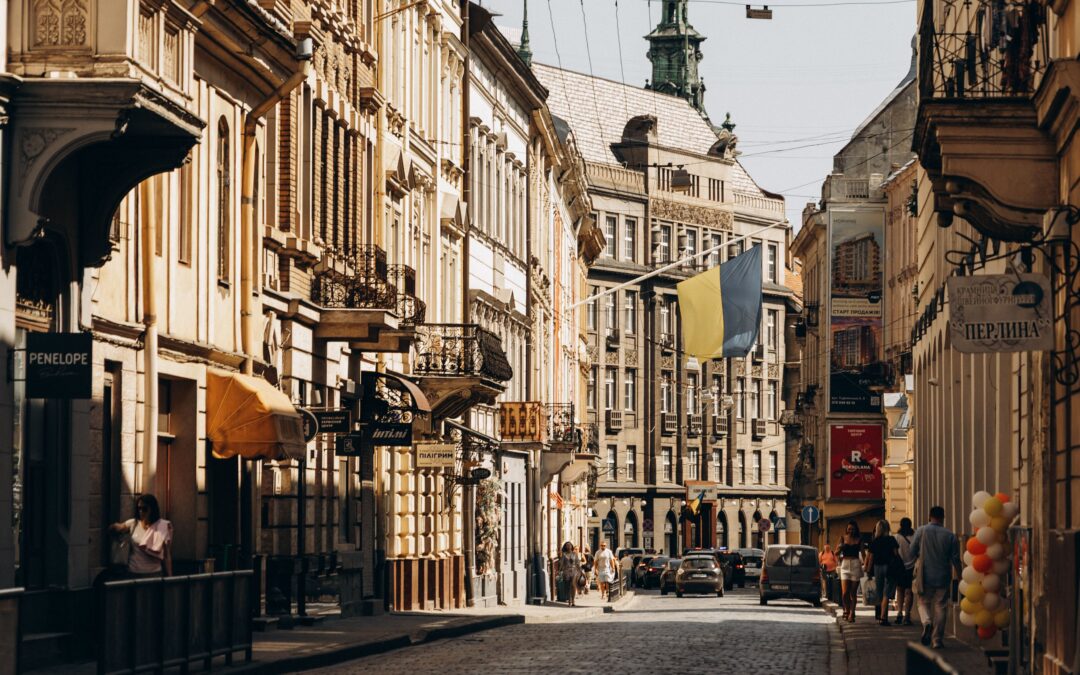
Main image credit: Tanita Lupa/Pexels

Daniel Tilles is editor-in-chief of Notes from Poland. He has written on Polish affairs for a wide range of publications, including Foreign Policy, POLITICO Europe, EUobserver and Dziennik Gazeta Prawna.