Keep our news free from ads and paywalls by making a donation to support our work!

Notes from Poland is run by a small editorial team and is published by an independent, non-profit foundation that is funded through donations from our readers. We cannot do what we do without your support.
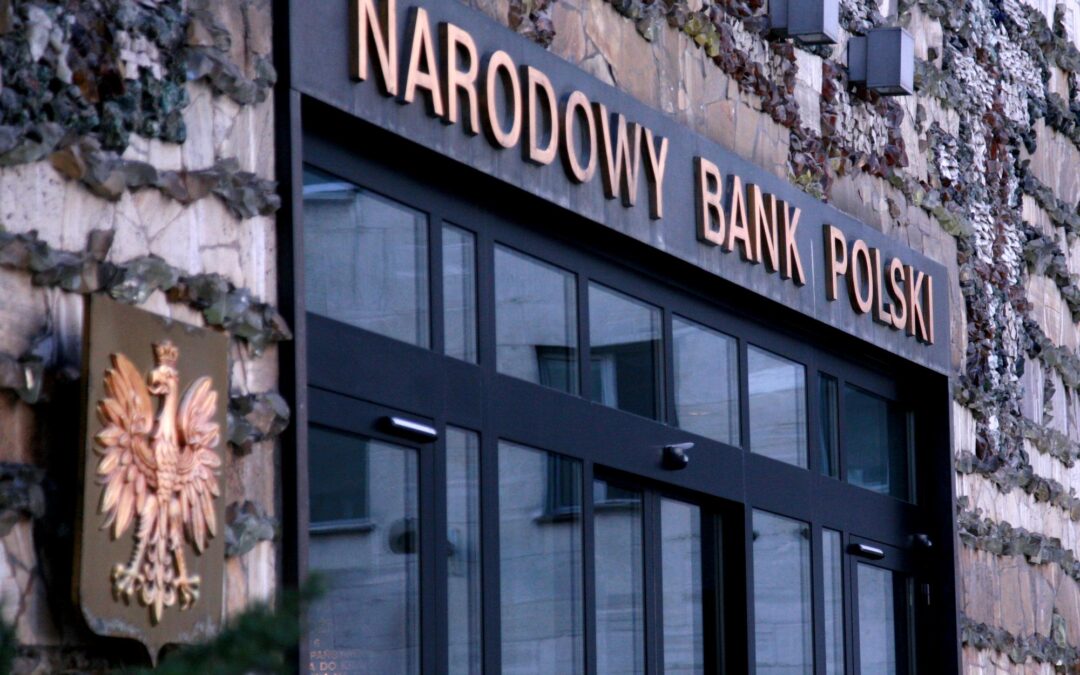
Poland’s central bank has frozen outgoing transfers from the bank accounts of the Constitutional Tribunal (TK), citing conflicting claims over who has the authority to manage the court following a disputed takeover by a group of judges backed by the government.
The National Bank of Poland (NBP), which holds the tribunal’s accounts and is headed by a governor appointed under the former government, said it was not the bank’s role to determine which side was legally entitled to represent the institution.
Narodowy Bank Polski wstrzymał realizację zleceń płatniczych Trybunału Konstytucyjnego. Powodem jest spór o to, kto jest uprawniony do reprezentowania TK i dysponowania środkami zgromadzonymi na jego rachunkach bankowych – poinformował NBP.https://t.co/KXwEBL6j9k pic.twitter.com/0h90bPdTLO
— Rzeczpospolita (@rzeczpospolita) November 16, 2026
Last month, eight judges elected to the TK this year by the government’s parliamentary majority – but five of whom the opposition-aligned president, Karol Nawrocki, has refused to swear in – took control of the court.
They declared that the chief justice, Bogdan Święczkowski, and his deputy, Bartłomiej Sochański, both of whom were appointed to the TK under the former government, had been suspended for failing to fulfil their duties and launched disciplinary proceedings against them.
Święczkowski denounced the move as an illegal “coup d’état”. He has been backed by the court’s other six judges, also appointed under the former government. A few days later, Święczkowski submitted a statement to the NBP identifying himself as the sole person authorised to manage the TK’s accounts.
Later that week, after the newly elected judges held their first meeting and made several key decisions, the NBP said it had also received documents “indicating, in principle, other persons authorised to dispose of the funds held in the Constitutional Tribunal’s bank accounts”.
Meanwhile, Święczkowski also issued a legal challenge against the TK takeover at the Supreme Court, which on 10 November issued a ruling revoking the order to suspend Święczkowski and Sochański.
However, the validity of that ruling is disputed. Anna Korwin-Piotrowska, the judge who has claimed leadership of the TK, said that only the tribunal itself can decide on the issue. Disciplinary hearings for Święczkowski and Sochański are due to begin later this week.
Święczkowski, nevertheless, sent the Supreme Court ruling to the national bank as evidence that he remained the person legally entitled to manage the tribunal.
The dispute around Poland's constitutional court risks entrenching a system of legal dualism in which judicial authority depends on political allegiance rather than broad constitutional consent, writes @AleksSzczerbiak https://t.co/mtgutqSTQh
— Notes from Poland 🇵🇱 (@notesfrompoland) November 10, 2026
The NBP’s governor by Adam Glapiński, who was appointed under the former Law and Justice (PiS) government and is a longtime associate of PiS leader Jarosław Kaczyński.
On Monday, the NBP announced that it would suspend all payment orders relating to funds held in the TK’s accounts, citing “a set of documents, which mutually cancel each other out”.
“This means that payment orders are not executed, regardless of who initiates them,” the NBP said in a statement. “The National Bank of Poland has no authority to decide who is legally entitled to control the Constitutional Tribunal.”
Komunikat NBP (uzupełnienie) https://t.co/jkL8RmbXIr pic.twitter.com/M09O1KpDW6
— Narodowy Bank Polski (@nbppl) November 16, 2026
Finance minister Andrzej Domański criticised the decision, accusing the central bank of becoming embroiled in the political dispute. “The National Bank of Poland should safeguard its independence, including its political independence,” Domański said.
He added that the government would “explore all available options” to secure funding for the TK and ensure that it can continue functioning.
Justice minister Waldemar Żurek also condemned the NBP’s move, saying its “invocation of a non-existent document [the disputed Supreme Court ruling] to block funding for a constitutional body is…an attempt to protect an entrenched system”.
Święczkowski expressed satisfaction that the NBP had denied access to the “usurpers” trying to take over the court but argued that he, as the legitimate chief justice, should be given control over the accounts, reports news website Onet.
Prezes Narodowego Banku Polskiego próbuje paraliżować Trybunał Konstytucyjny, powołując się na rzekome orzeczenie Sądu Najwyższego z 10.11.2026 r.. Problem w tym, że ten papier wygląda jak wydany z pieczątką z ziemniaka, a w obiegu są już jego trzy różne wersje.
Najpierw Bogdan… pic.twitter.com/7rWELZFIF0
— Waldemar Żurek (@w_zurek) November 16, 2026
Recent events follow a decade-long crisis surrounding the TK. Since the current government – a coalition ranging from left to centre right led by Prime Minister Donald Tusk – came to power in 2023, it has refused to recognise the court’s legitimacy.
That is because three of its judges were unlawfully appointed under the former national-conservative PiS government, which was widely seen to have brought the court under political control.
As a result, Tusk’s government has ignored the TK’s rulings and, until this year, refused to even nominate new judges to fill vacancies that arose on the court’s 15-person bench.
That changed in March, when the ruling coalition began filling the backlog of empty seats. However, Nawrocki has refused to accept the oath of most of those judges, citing concerns over how they were chosen or their qualifications.
Notes from Poland is run by a small editorial team and published by an independent, non-profit foundation that is funded through donations from our readers. We cannot do what we do without your support.
Main image credit: NBP/Flickr (under CC BY-ND 2.0)

Alicja Ptak is deputy editor-in-chief of Notes from Poland and a multimedia journalist. She has written for Clean Energy Wire and The Times, and she hosts her own podcast, The Warsaw Wire, on Poland’s economy and energy sector. She previously worked for Reuters.