Keep our news free from ads and paywalls by making a donation to support our work!

Notes from Poland is run by a small editorial team and is published by an independent, non-profit foundation that is funded through donations from our readers. We cannot do what we do without your support.
Two Turkish men suspected of carrying out last month’s arson attack on a satellite internet ground station in Poland used by Starlink have been detained in Germany. The Polish authorities say that the sabotage was carried out on behalf of Russia.
On Monday evening, Polish Prime Minister Donald Tusk first announced that the pair had been taken into custody “at the request of the Polish security services”.
He said that the Turkish men’s actions had been “a further act of hybrid warfare” – the term used for sabotage and other hostile activity carried out in Europe by Russia – and that “the perpetrators will answer before the Polish justice system”.
Na zlecenie polskich służb niemiecka policja zatrzymała dwóch obywateli tureckich podejrzanych o podpalenie stacji Starlink na Mazowszu. To kolejny akt wojny hybrydowej. Sprawcy sabotażu odpowiedzą przed polskim wymiarem sprawiedliwości.
— Donald Tusk (@donaldtusk) October 12, 2026
Shortly afterwards, interior minister Marcin Kierwiński revealed that the arrests had taken place in cooperation between Poland’s police and Internal Security Agency (ABW) and Germany’s Federal Criminal Police Office (BKA).
He said that the charge the suspects are likely to face in Poland would be “sabotage on behalf of a foreign intelligence service”, a crime that carries a minimum prison sentence of 10 years, ranging up to life.
Later on Monday, Tomasz Siemoniak, the minister in charge of the security services, confirmed that Poland believes the attack was carried out “on behalf of the Russian security services”.
The incident in question took place on 23 September at a ground station in Poland used by Starlink, Elon Musk’s satellite internet company. The facility is used to provide internet services across the region, including in Ukraine, which has relied heavily on Starlink connections since Russia’s full-scale invasion.
Firefighters were called out that evening to a fire at the facility, which is owned by Polish state telecommunications operator Exatel. The next day, digital affairs minister Krzysztof Gakowski revealed that the blaze had been started deliberately and “the modus operandi is clearly Russian”.
Poland has been one of the primary targets for Russian sabotage operations in Europe. Those have included a series of arson attacks, including one that burned down Warsaw’s largest shopping centre and another at a drone factory that is used to supply the Ukrainian military.
A fire last night at a Starlink ground station in Poland that is used to provide internet services to Ukraine was caused deliberately and "the modus operandi is clearly Russian", says digital affairs minister @KGawkowski https://t.co/p2DEn7XexF
— Notes from Poland 🇵🇱 (@notesfrompoland) September 24, 2026
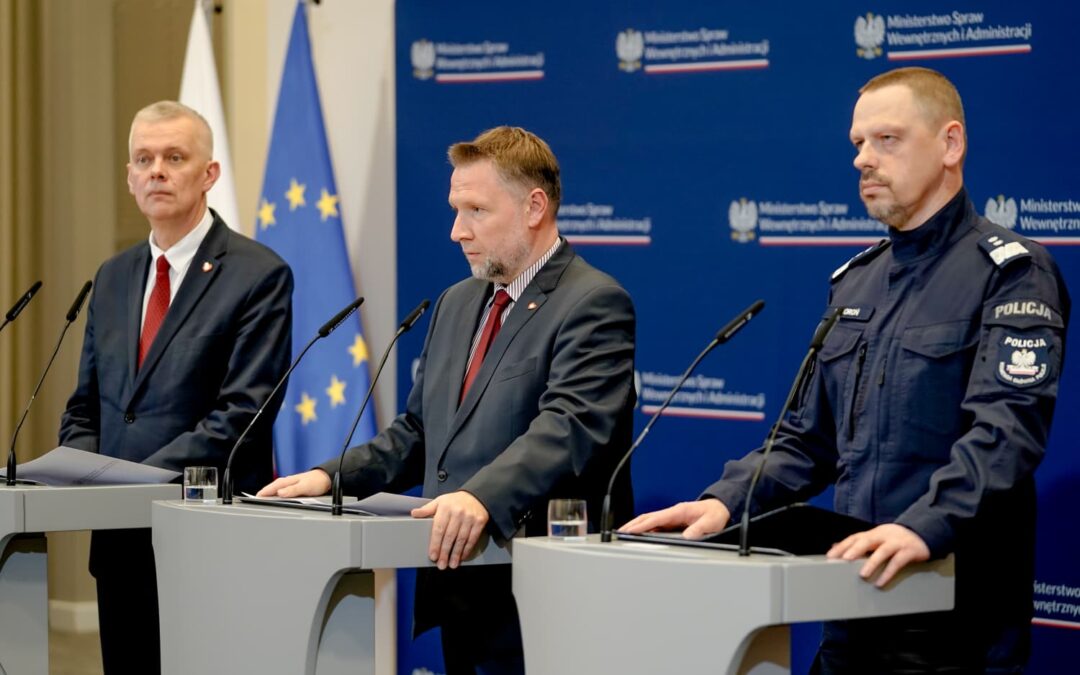
On Monday evening, at a press conference alongside Kierwiński and Siemoniak, the commander of Poland’s police, Marek Boroń, revealed that one of the two Turkish suspects had resident status in Germany while the other did not.
He said that the Polish authorities had been able to document their movements in Poland, and had recordings, fingerprints and DNA of the suspects.
Simoniak added that there was a “high probability” that other individuals were involved in the attack, but that he could not divulge further information about them currently. He also thanked the German authorities for their cooperation.
“We have no doubt that Russian intelligence services are behind this act of sabotage,” said the minister, quoted by the Gazeta Wyborcza daily. “And it’s worth adding that Russian intelligence services are increasingly using people connected to the criminal world. They never use their own citizens.”
Russia uses individuals already present in Europe – and often already involved in criminal activity – to carry out most of its hybrid operations. On Monday, in a separate case, three Ukrainians and one Belarusian went on trial in Warsaw accused of being behind a series of arson attacks in Poland and Lithuania.
Four men – three Ukrainians and a Belarusian – have gone on trial in Warsaw accused of being part of a criminal group that carried out a series of arson attacks in Poland and Lithuania on behalf of Russia https://t.co/i4czRb9DYZ
— Notes from Poland 🇵🇱 (@notesfrompoland) October 12, 2026
On Tuesday morning, German newspaper Handelsblatt reported confirmation from the State Criminal Police Office (LKA) in Baden-Württemberg that two Turkish men had been detained on Monday in the town of Nürtingen at the request of the Polish authorities.
The office did not provide further details, but Handelsblatt reports that the two suspects are due to be brought before a judge today.
Notes from Poland is run by a small editorial team and published by an independent, non-profit foundation that is funded through donations from our readers. We cannot do what we do without your support.
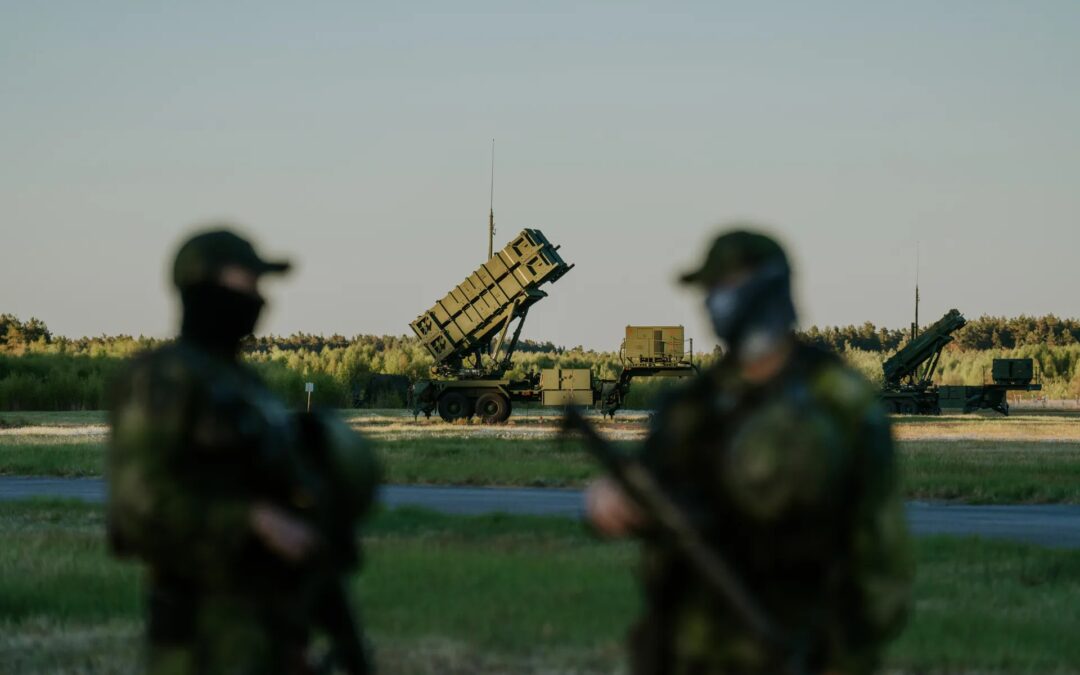
Main image credit: MSWiA (under CC BY-SA 4.0)

Daniel Tilles is editor-in-chief of Notes from Poland. He has written on Polish affairs for a wide range of publications, including Foreign Policy, POLITICO Europe, EUobserver and Dziennik Gazeta Prawna.