Keep our news free from ads and paywalls by making a donation to support our work!

Notes from Poland is run by a small editorial team and is published by an independent, non-profit foundation that is funded through donations from our readers. We cannot do what we do without your support.
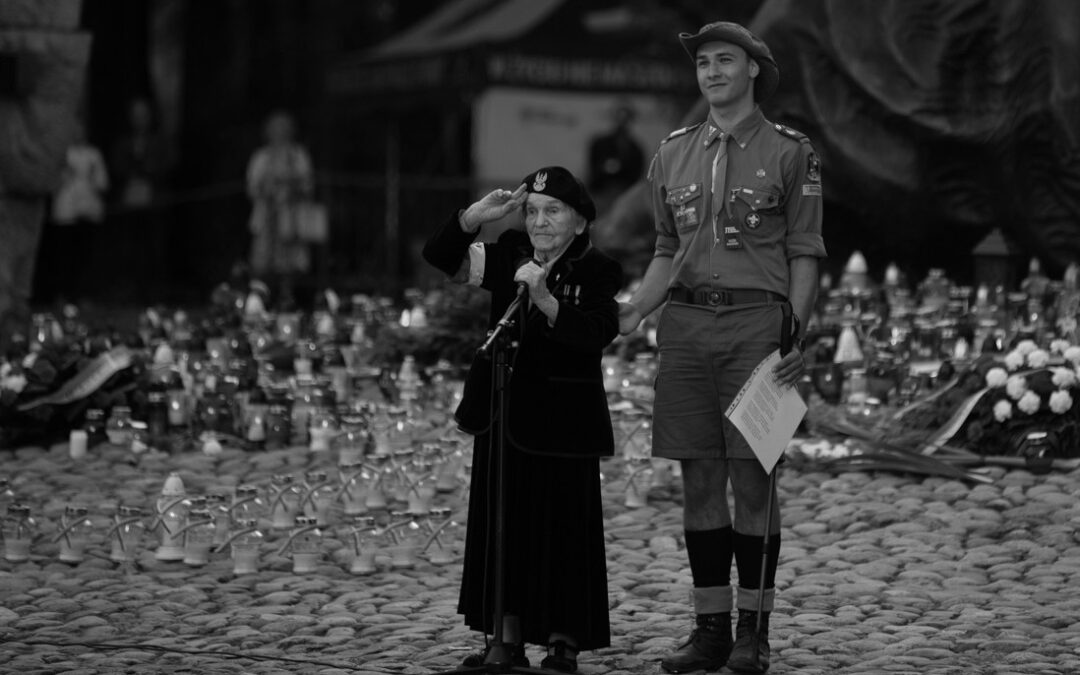
Wanda Traczyk-Stawska, a veteran of the Warsaw Uprising against Nazi-German occupation during World War Two, has died aged 99. Traczyk-Stawska, who survived imprisonment in German camps after the uprising, in her later years became a vocal advocate for the rights of women and disabled people.
“Warsaw has lost someone extraordinary,” wrote Warsaw’s mayor, Rafał Trzaskowski, announcing her death on Wednesday. “A heroine, a soldier…but above all a teacher who, throughout her life, taught us what matters most: courage, dignity, and responsibility for our fellow human beings.”
Odeszła Pani Wanda. Trudno w to uwierzyć.
Warszawa straciła kogoś wyjątkowego – Bohaterkę, żołnierkę Powstania Warszawskiego, Honorową Obywatelkę miasta. Ale przede wszystkim nauczycielkę, która przez całe życie uczyła nas tego, co najważniejsze: odwagi, godności i… pic.twitter.com/uSNcsZ7c1P
— Rafał Trzaskowski (@trzaskowski_) August 19, 2026
Traczyk-Stawska, born in Warsaw in 1927, was only 12 years old when Nazi Germany invaded Poland. She initially became involved in the Grey Ranks (Szare Szeregi), an underground resistance movement associated with the Polish scouting movement, participating in sabotage operations.
She later joined the Home Army (AK), Poland’s main resistance force, and, at the age of 17, served as a riflewoman and liaison during the Warsaw Uprising, taking the nom de guerre “Pączek” (meaning “Bud”).
Traczyk-Stawska was seriously injured while fighting in the uprising. After the revolt was defeated, she was taken prisoner and subsequently held in various prisoner-of-war camps in Germany until the end of the war.
After returning to Poland, Traczyk-Stawska earned a degree in psychology and began working as a teacher of disabled children in Warsaw. At the same time, she became an active figure in commemorating the uprising and its participants.
In her final years, Traczyk-Stawska also became politically active. In 2018, she visited parliament to support a protest by disabled people and their carers, who were seeking more state support.
Two years later, at the age of 93, she and another female uprising veteran, Hanna Stadnik, joined the mass Women’s Strike protests that broke out in response to the introduction of a near-total ban on abortion under the national-conservative Law and Justice (PiS) government.
“We women will not relent this time,” she told broadcaster TVN at the time. “In the uprising, we fought for our freedom, because there is no dignity without freedom. If we are currently treated like incubators, we have the right to fight for our dignity…We will fight – unarmed, but to the last woman – not to be treated like objects.”
Traczyk-Stawska was also among a group of female Uprising veterans who that year criticised PiS leader Jarosław Kaczyński for wearing, during a speech condemning the Women’s Strike protests, a badge featuring the anchor symbol that was used by the Home Army during the war.
She was also an advocate for women’s rights more broadly. In 2023, in a speech at the 79th anniversary of the uprising, Traczyk-Stawska noted that, “at the beginning, the generals shouted: ‘Why do we need so many women?'”
But, by the time the uprising ended, “we had been given the same rights as boys. And we won’t get rid of these rights. Because everyone, whether a man or a woman, is a citizen of this country and has equality written into the constitution”.
Her speech then became overtly political, saying that “this [PiS] government needs to be completely changed, as it doesn’t remember that women have their own position enshrined in the constitution. That we are equal to men.”
In both the 2020 and 2025 presidential elections, Traczyk-Stawska expressed support for the candidacy of Trzaskowski, who is a deputy leader of the centrist Civic Coalition (KO) party that is PiS’s main opponent. However, in both elections, Trzaskowski lost to PiS-backed candidates.
Odeszła Wanda Traczyk-Stawska ps. „Pączek” – Bohaterka, Patriotka, wzór odwagi i niezłomności. Pokazywała, że prawdziwy patriotyzm to budowanie wspólnoty, empatia i otwartość na świat.
Cześć Jej pamięci! 🕯️🤍 Najgłębsze wyrazy współczucia dla Bliskich. pic.twitter.com/nY0ijDSBlJ— Monika Sikora ⚡️ (@Moni_Sikora) August 19, 2026
Following news of Traczyk-Stawska’s death, many prominent figures paid tribute to her, in particular from the current KO-led ruling coalition.
“Farewell, heroine,” wrote KO leader and Prime Minister Donald Tusk, sharing a photo of himself with Traczyk-Stawska and quoting one of her statements: “Do not stand, do not watch when evil happens, but react immediately, for that is your duty.”
While she had fought against German occupation, Traczyk-Stawska later called for reconciliation. In her 2023 speech, she called Germany “our best neighbour” and said that the two countries must now “stand together”, including supporting Ukraine against Russian aggression.
Today, Germany’s ambassador to Poland, Miguel Berger, expressed his “great sadness” at Traczyk-Stawska’s death, calling her an “advocate of dialogue in the process of Polish-German reconciliation and a passionate champion of peace, freedom, and human dignity”.
„Nie stój, nie patrz, gdy się zło dzieje, tylko reaguj natychmiast, bo to jest twój obowiązek." – Wanda Traczyk-Stawska
Żegnaj, Bohaterko. pic.twitter.com/MhfqlszVcI
— Donald Tusk (@donaldtusk) August 19, 2026
Notes from Poland is run by a small editorial team and published by an independent, non-profit foundation that is funded through donations from our readers. We cannot do what we do without your support.
Main image credit: MSWiA (under CC BY-NC-ND 4.0)

Daniel Tilles is editor-in-chief of Notes from Poland. He has written on Polish affairs for a wide range of publications, including Foreign Policy, POLITICO Europe, EUobserver and Dziennik Gazeta Prawna.