Keep our news free from ads and paywalls by making a donation to support our work!

Notes from Poland is run by a small editorial team and is published by an independent, non-profit foundation that is funded through donations from our readers. We cannot do what we do without your support.
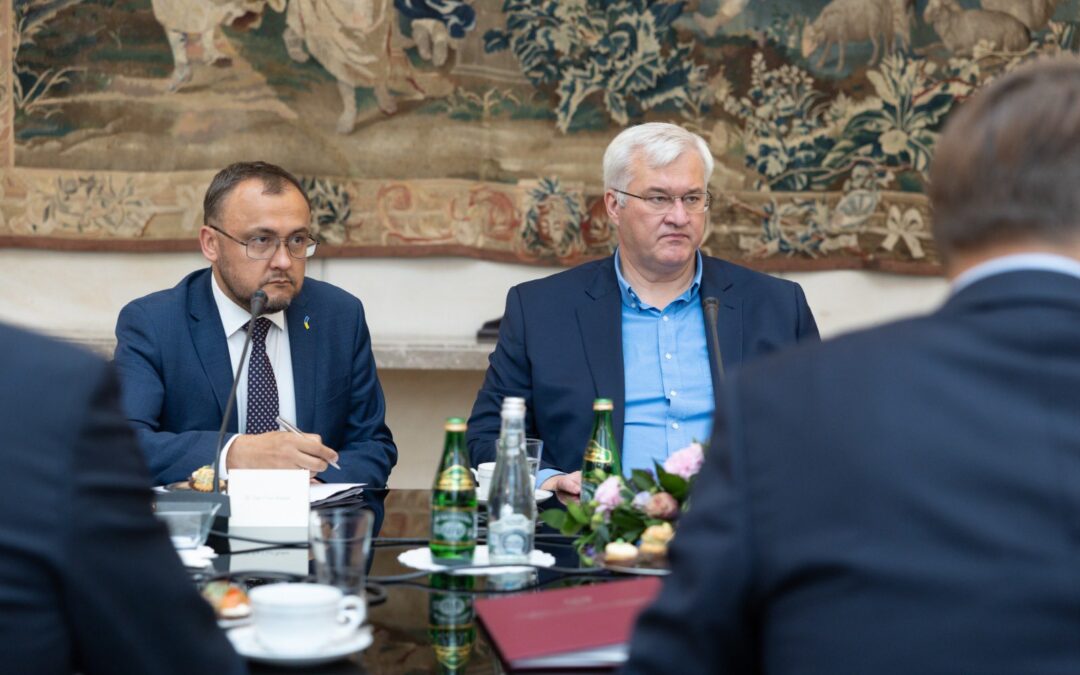
Ukraine’s foreign minister, Andrii Sybiha, says he has proposed an “anti-crisis package” to Poland following a meeting in Warsaw with his Polish counterpart, Radosław Sikorski.
The measures are intended to resolve an ongoing diplomatic dispute sparked by President Volodymyr Zelensky’s decision to name a military unit after a group that led massacres of Poles during World War Two.
Polish Prime Minister Donald Tusk welcomed the move towards de-escalation, but one of his deputy foreign ministers made clear that Poland wants to see concrete action, including a “correction” of the decision to name the unit.
I held a meeting with @sikorskiradek today in Warsaw.
Poland is vital for Ukraine, just as Ukraine is for Poland. We share a common enemy—Russia—and a common challenge: Russian aggression. Today, Ukraine is defending not only its own security, but also the security of Poland and… pic.twitter.com/J62KYUESyq
— Andrii Sybiha 🇺🇦 (@andrii_sybiha) July 3, 2026
In a statement following his meeting with Sikorski, Sybiha declared that Poland and Ukraine are “vital” for one another, especially as they “share a common enemy, Russia”. He expressed gratitude for the “unprecedented support” Warsaw provided to Kyiv after the full-scale Russian invasion in 2022.
Referring to the current diplomatic crisis, Sybiha said that “Ukraine remains open to an equal and honest dialogue” and that he had “proposed a package of anti-crisis steps” to the Polish side.
The measures include consultations between foreign ministries, organising a meeting of historians, and “reaching out to the religious leaders of both nations to leverage their authority in our bilateral dialogue”.
Sybiha reiterated that “the Ukrainian military’s choice of unit name carried no anti-Polish intent”. However, he offered no suggestion it would be changed, instead saying “we respect the history of others, and we expect the same approach toward our own history and independence from our partners.”
Minister @sikorskiradek rozmawiał dziś w Warszawie z szefem MSZ 🇺🇦 @andrii_sybiha o konieczności prowadzenia konstruktywnego dialogu, który będzie służył rozwojowi relacji między naszymi państwami, a nie będzie wykorzystywany przez państwa i osoby temu nieprzyjazne.
Głównymi… pic.twitter.com/rIkUUv2c2f
— Ministerstwo Spraw Zagranicznych RP 🇵🇱 (@MSZ_RP) July 3, 2026
In late May, Zelensky named a military unit after the “heroes of the Ukrainian Insurgent Army (UPA)”. In Ukraine, the UPA is remembered primarily for its role in fighting for Ukrainian independence from Moscow-imposed Soviet rule during and after World War Two.
In Poland, however, it is associated with the Volhynia massacres, in which the UPA led the slaughter of around 100,000 ethnic Polish civilians, mostly women and children. Poland has officially recognised the massacres as a genocide, but Ukraine rejects that label.
In response to Zelensky’s decision, Polish President Karol Nawrocki – who is aligned with the right-wing opposition – stripped Zelensky of Poland’s highest honour. That then prompted Zelensky to cancel plans to attend the Ukraine Recovery Conference that took place in Poland last week.
Speaking after Sikorski’s meeting with Sybiha, Tusk welcomed the fact that there are now “signals that Ukrainian politicians have realised that the escalation of tension caused by Kyiv sparked this conflict, which is detrimental to the interests of Poland and Ukraine”.
He added that he now “expects a de-escalation resulting from a change in attitude on the part of some Ukrainian politicians”, among whom it has “finally dawned…that it’s worth seeking ways to have an honest conversation about the past, and not to escalate this tension”.
Sikorski himself, speaking at a press conference, refused to divulge what specific measures were being discussed with Ukraine, saying that “diplomacy prefers silence…and requires that emotions subside”.
💬 Premier @donaldtusk w #KPRM:
Mam sygnały, że ukraińscy politycy zrozumieli, że eskalacja napięcia między Polską a Ukrainą jest szkodliwa dla obydwu stron. Dobre relacje między nami są w interesie wszystkich, ale wymagają dobrej woli Kijowa. Nie będzie już tak, że tylko…— Kancelaria Premiera (@PremierRP) July 3, 2026
In a further statement, the Polish foreign ministry said that Sikorski and Sybiha had “emphasised their shared commitment to developing tools for historical dialogue based on truth and mutual respect for the past”.
However, speaking later to broadcaster Polsat, deputy foreign minister Marcin Bosacki, who took part in the talks, made clear that the Polish side “expects a correction of the decision” to name a military unit after the UPA.
“The Ukrainians keep telling us that there was no intentional aim to annoy Poland,” added Bosacki. “[But] for now, there are only declarations…We are waiting for action.”
Polish and Ukrainian media have widely quoted Poland's deputy PM as saying: “With Bandera, Ukraine will not enter the EU.”
However, he did not actually speak those words.
We explain what @KosiniakKamysz actually said and how it came to be misinterpreted https://t.co/S3bozRIJTA
— Notes from Poland 🇵🇱 (@notesfrompoland) July 1, 2026
Notes from Poland is run by a small editorial team and published by an independent, non-profit foundation that is funded through donations from our readers. We cannot do what we do without your support.
Main image credit: MSZ/X

Daniel Tilles is editor-in-chief of Notes from Poland. He has written on Polish affairs for a wide range of publications, including Foreign Policy, POLITICO Europe, EUobserver and Dziennik Gazeta Prawna.