Keep our news free from ads and paywalls by making a donation to support our work!

Notes from Poland is run by a small editorial team and is published by an independent, non-profit foundation that is funded through donations from our readers. We cannot do what we do without your support.
Poland has recorded the largest improvement among all 163 countries included in the Global Peace Index (GPI), an annual ranking of nations according to their “state of peace”. Poland’s score improved by about 9%, more than any other country, while its ranking rose from 45th to 22nd.
Poland’s improvement was driven mainly by stronger relations with its neighbours as well as greater domestic safety and security, including less violence at demonstrations and political repression, according to the Institute for Economics and Peace, the think tank behind the index.
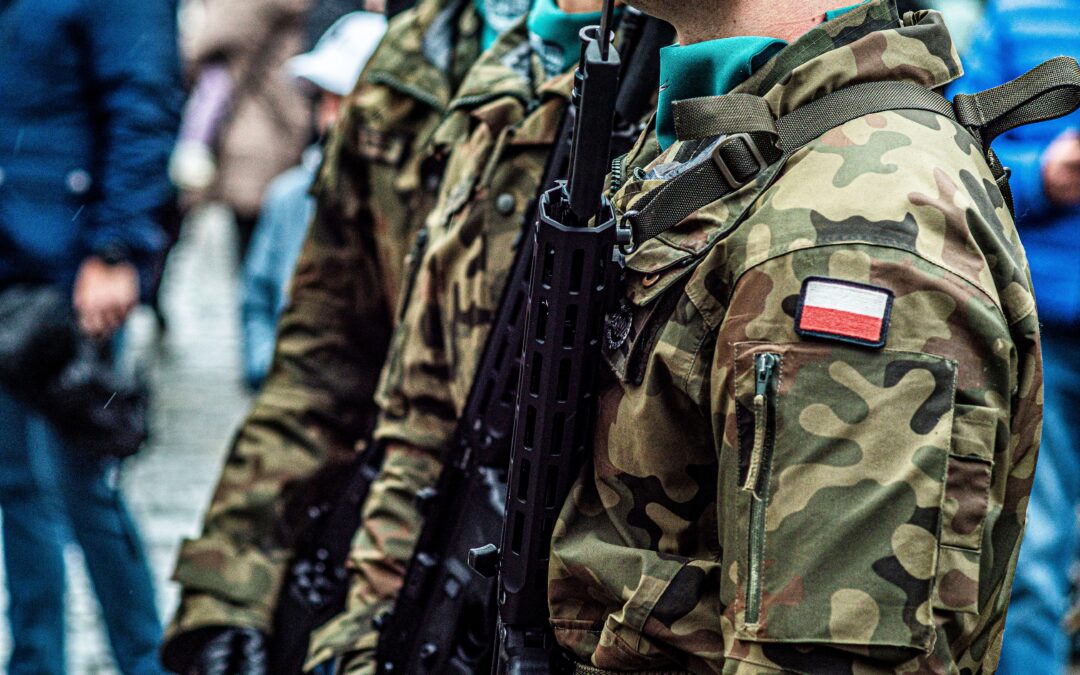
However, the authors also note that Poland has been pushed into a large-scale military build-up by the threat of Russia and its war in neighbouring Ukraine.
The 10 most peaceful countries in the world (GPI 2026):
🇮🇸 Iceland
🇳🇿 New Zealand
🇨🇭 Switzerland
🇸🇮 Slovenia
🇮🇪 Ireland
🇦🇹 Austria
🇵🇹 Portugal
🇸🇬 Singapore
🇫🇮 Finland
🇯🇵 Japan🗺️ Explore how each country performs across the 23 Global Peace Index indicators:… pic.twitter.com/rm0PvqTaUk
— Global Peace Index (@GlobPeaceIndex) June 9, 2026
The GPI has been published annually since 2007 by the Institute for Economics and Peace. This year’s ranking placed Iceland, New Zealand and Switzerland at the top, while Russia was in last place, behind Sudan, the Democratic Republic of the Congo and Ukraine.
The report measures countries’ peacefulness using 23 indicators – including crime rates, relations with neighbours and military spending – grouped into three domains: ongoing domestic and international conflict, societal safety and security, and militarisation.
Each indicator is scored on a scale from 1 to 5 and weighted according to its relative importance. Poland recorded a final total score of 1.615 on that scale, which was 9.1% better than last year, note the authors.
Poland’s improvement was attributed mainly to progress in the ongoing conflict domain, which looks at factors like involvement in armed conflicts and relations with neighbouring countries.
Since Russia’s full-scale invasion of Ukraine in 2022, Poland has sought to deepen security ties with regional allies, including the Nordic and Baltic states.
In 2024, Poland signed a strategic defence agreement with Sweden, followed in 2025 by a new treaty with France that includes mutual security guarantees.
Last month, it signed another treaty with the UK that will see both countries jointly developing a new air-defence missile, hold large-scale military exercises, and cooperate on the response to Russian hybrid attacks. A defence agreement with Germany is due to be signed later this month.
Poland and the UK have signed a major new defence and security treaty.
The agreement includes plans to jointly develop a new air-defence missile, hold large-scale military exercises, and cooperate on countering Russian hybrid attacks https://t.co/cXeYT2u1lw
— Notes from Poland 🇵🇱 (@notesfrompoland) May 27, 2026
Poland’s score also improved in the safety and security domain. That was in part due to less violence at demonstrations, “as the large-scale political protests that characterised the final years of” the former Law and Justice (PiS) administration “subsided under the new government”, note the authors.
The rule of the national-conservative PiS in the years 2015-2023 saw many large-scale protests, including against the government’s judicial reforms and the introduction of a near-total abortion ban. In some cases, the protests led to violence.
The Institute for Economics and Peace also notes that Poland has made improvements on its political terror scale, which measures levels of political violence and repression based on reports from human rights organisations.
The think tank says this is likely linked to the efforts of the current government to restore the rule of law and reverse the politicisation of judicial institutions that had previously drawn criticism from the European Union.
More Poles (35%) think that the rule of law has got worse under Tusk's government than believe it has improved (24%).
A further 28% think there has been no change, finds a new poll https://t.co/KkiuY2vDSW
— Notes from Poland 🇵🇱 (@notesfrompoland) January 5, 2025
Under PiS’s rule, various legal experts, international organisations, as well as Polish and European courts pointed to the party’s numerous violations of the rule of law and other democratic standards.
However, in its efforts to address those violations, Tusk’s administration has itself been accused of violating laws and democratic norms, in particular by PiS but also in some cases by courts and independent experts.
Finally, the GPI’s authors note that violent crime is falling in Poland, while perceptions of criminality are improving. “Poland’s homicide rate is among the lowest in Europe, and survey data indicate that nearly nine in 10 Poles consider the country a safe place to live,” reads the report.
The government says that Poland is experiencing a growing wave of crime committed by immigrants and has taken tough action in response, including mass arrests and deportations.
But official data show that the story is not so simple, writes @Gosia_Tomczak https://t.co/smHyp6lkyG
— Notes from Poland 🇵🇱 (@notesfrompoland) April 16, 2025
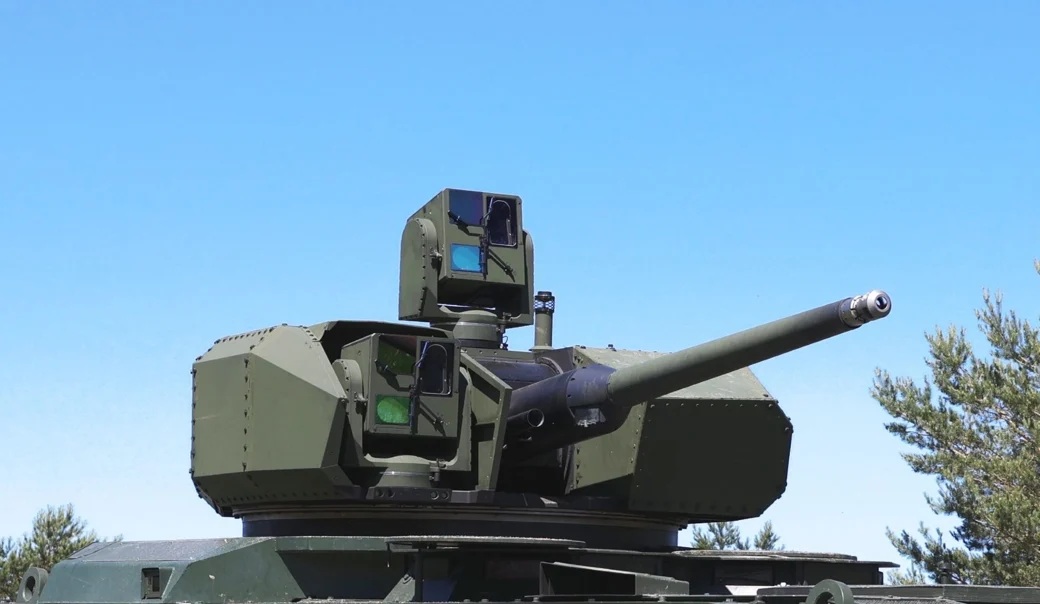
Poland’s large-scale military build-up in response to the war in Ukraine, however, has weighed down its overall score, lowering its result in the militarisation category, which the report identifies as an indicator that reduces a country’s overall level of peacefulness.
The authors note that this is a trend seen in many European countries facing rising geopolitical tensions, particularly since Russia’s invasion of Ukraine, adding that it is “unlikely to reverse soon due to the increasing level of conflict and the fragmentation of global power”.
Poland is now NATO’s biggest relative defence spender, with its defence budget reaching 4.8% of GDP this year. The government notes, however, that this outlay is for deterrence purposes, intended to reduce the possibility of Russian military action against Poland.
A recent report by the International Centre for Counter-Terrorism found that Poland is the “primary focus” of Russian sabotage actions. Last year, around 20 Russian drones entered Polish airspace in an unprecedented violation of NATO territory.
Poland is the "primary focus" of Russia's sabotage campaign in Europe, finds a new report by the International Centre for Counter-Terrorism.
Among 151 incidents identified since 2022, 31 of them took place in Poland – more than in any other country https://t.co/QXfSI00FD6
— Notes from Poland 🇵🇱 (@notesfrompoland) March 3, 2026
Notes from Poland is run by a small editorial team and published by an independent, non-profit foundation that is funded through donations from our readers. We cannot do what we do without your support.
Main image credit: SHOX ART/Pexels

Olivier Sorgho is senior editor at Notes from Poland, covering politics, business and society. He previously worked for Reuters.