Keep our news free from ads and paywalls by making a donation to support our work!

Notes from Poland is run by a small editorial team and is published by an independent, non-profit foundation that is funded through donations from our readers. We cannot do what we do without your support.
President Karol Nawrocki has signed into law a government bill ending the special status granted in 2022 to Ukrainian refugees, who will now instead be treated on the same legal basis as other foreigners.
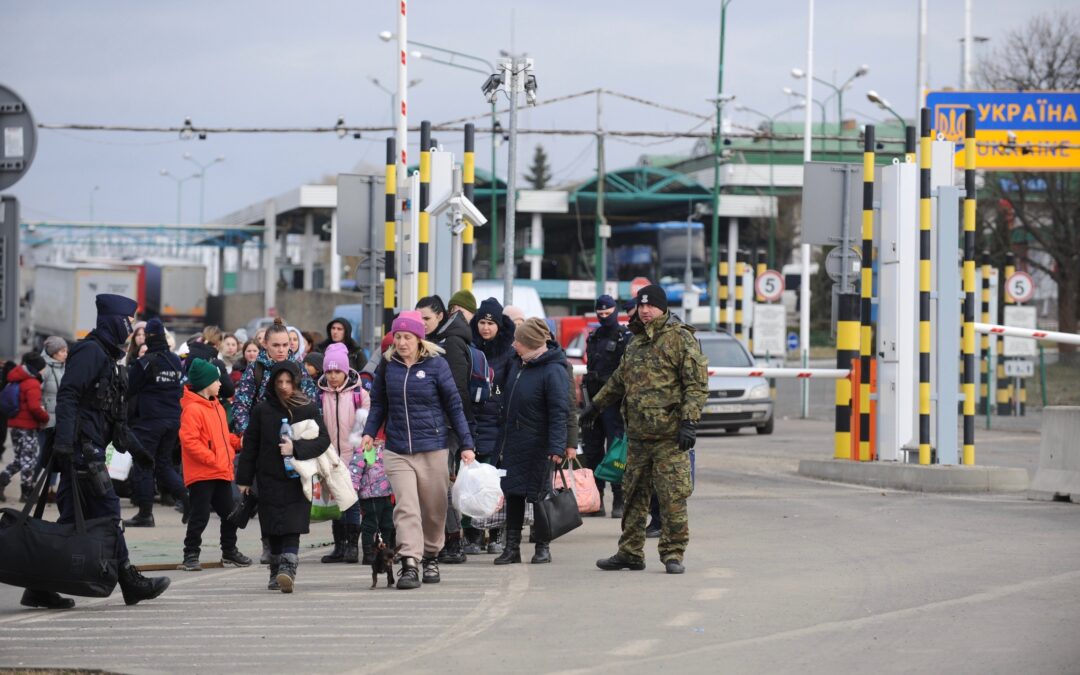
The special measures now being abolished were put in place after Russia’s full-scale invasion in 2022 forced millions of Ukrainians to flee their country and seek refuge in Poland. Almost one million Ukrainian refugees remain in Poland today, and the government argues that it is time to normalise their status.
Ustawy podpisane przez Prezydenta RP Karola Nawrockiego. pic.twitter.com/9zdUuOYxlD
— Kancelaria Prezydenta RP (@prezydentpl) February 19, 2026
Announcing his signature on the bill, Nawrocki, who is aligned with the right-wing opposition and regularly clashes with the more liberal ruling coalition, claimed credit for pushing the government towards ending the “unconditional privileges” granted to Ukrainians.
“We have consistently stood by Ukraine in its fight against imperial Russia,” said the president. “In the first months of the war, Poland passed the test of solidarity like no other country.”
“But what was justified at the time of difficulty, over time began to breed a sense of inequality towards Polish citizens,” he continued. “I promised to end the era of unconditional privileges. Today, I am fulfilling this commitment.”
The previous special act on Ukrainian refugees simplified rules on residence, work, benefits and education. However, the government said last month that it now wants to introduced a “single, coherent support system for all foreigners covered by temporary protection in the EU, regardless of citizenship”.
The new law, which comes into force on 5 March, extends the legal stay of people fleeing the war and Ukrainian citizens whose residence permits were prolonged because of the conflict, allowing them to apply for legal residence until 4 March 2027.
Under the new rules, Ukrainian refugees without healthcare insurance will be treated the same as uninsured Polish citizens. There are exceptions for children, pregnant women, victims of violence, and wounded soldiers.
Additionally, special measures put in place to help Ukrainian children adapt to Polish schools – such as Polish language classes, preparatory courses and simplified rules for hiring intercultural assistants – will be removed at the end of the current academic year.
Tens of thousands of new Ukrainian pupils are beginning school in Poland today after the government made it compulsory for refugee children from Ukraine to be in the Polish education system in order to receive benefits https://t.co/tbqbQ6U13i
— Notes from Poland 🇵🇱 (@notesfrompoland) September 2, 2024
Meanwhile, the provision of accommodation and food will be restricted to particularly vulnerable groups, such as the elderly or people with disabilities.
The current right of Ukrainians to establish a business under special rules – i.e. the same conditions applicable to Polish citizens – will also be terminated.
Those seeking temporary protection will be required to register for a Polish personal identification number (PESEL) within 30 days of entry. Failure to register will be treated as an implied waiver of temporary protection.
Ukrainian refugees boosted Poland’s GDP by 2.7% last year while not raising unemployment or lowering wages, finds a report by the UN @Refugees agency and @Deloitte
"Whoever thinks refugees are a burden on the economy should think again," says @UNHCRPoland https://t.co/rOvtOvBNwG
— Notes from Poland 🇵🇱 (@notesfrompoland) June 12, 2025
Speaking after signing the bill on Thursday, Nawrocki said that the new measures mean continued support for Ukrainians but an end to “privileges at the expense of Poles”.
“Assistance must be coupled with responsibility and contribution to our community,” he declared. “We are creating fair rules for those who want to work here, while also protecting the Polish labour market and the state budget.”
Last August, shortly after taking office, Nawrocki vetoed an attempt by the government to extend support for Ukrainian refugees on the previous terms. Instead, a different law was introduced in September that made elements of that support conditional.
At that time, the president made clear it would be the last time he would sign a law extending special support for Ukrainians. That then prompted the bill that was signed this week.
Notes from Poland is run by a small editorial team and published by an independent, non-profit foundation that is funded through donations from our readers. We cannot do what we do without your support.
Main image credit: EU Civil Protection and Humanitarian Aid (under CC BY-NC-ND 2.0)

Alicja Ptak is deputy editor-in-chief of Notes from Poland and a multimedia journalist. She has written for Clean Energy Wire and The Times, and she hosts her own podcast, The Warsaw Wire, on Poland’s economy and energy sector. She previously worked for Reuters.