Keep our news free from ads and paywalls by making a donation to support our work!

Notes from Poland is run by a small editorial team and is published by an independent, non-profit foundation that is funded through donations from our readers. We cannot do what we do without your support.
The city of Kraków has stepped in to ensure the survival of an iconic cafe near its central market square that has existed since the 1950s and was once the haunt of local cultural luminaries.
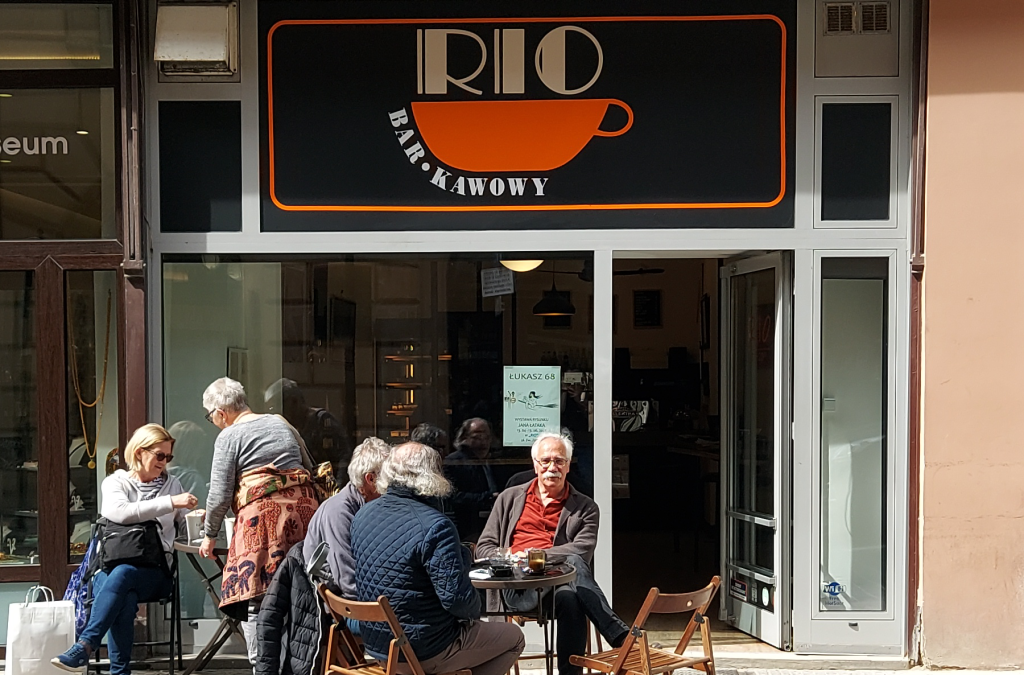
The Rio coffee bar, located at number 2 Sw. Jana Street, has remained largely unchanged since it was established, a remnant of a bygone age with its distinctive sign featuring an orange coffee cup and white lettering.
However, it has been closed since September, when its previous owner decided to end operations. Subsequently, Kraków’s mayor, Aleksander Miszalski, decreed that whoever took over the premises would have to continue operating it as a cafe and “maintain its current character”.
“One of Kraków’s most important features is its unique atmosphere, which is made up of such places as the Rio coffee bar,” said Miszalski. “I decided that a cafe will continue to be run on these premises, preserving the existing character of the place.”
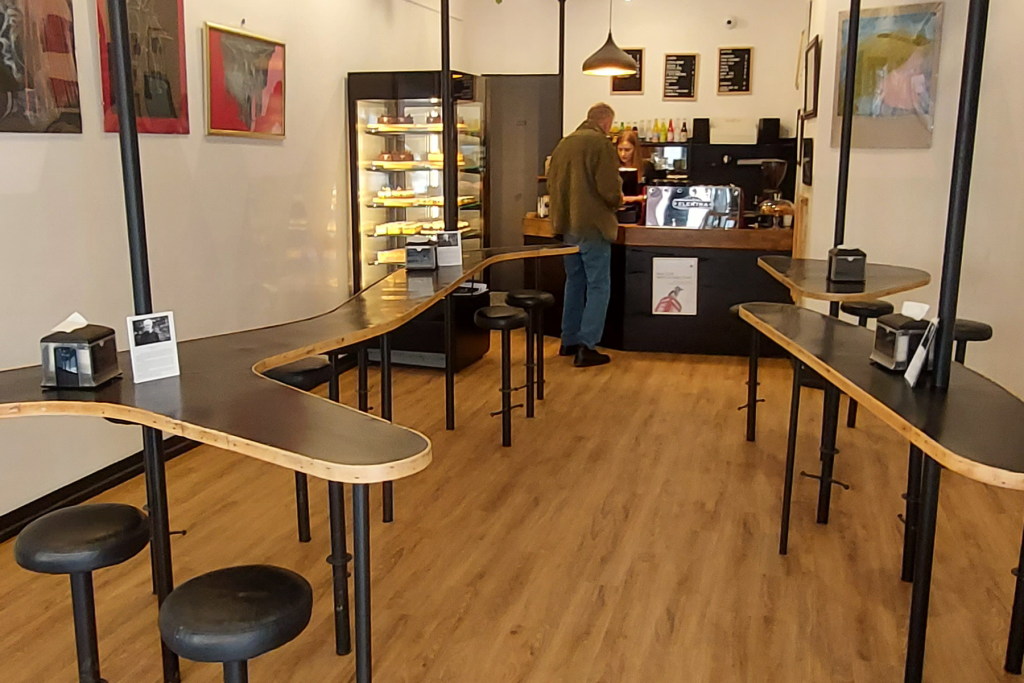
The bar’s interior while it was still operating.
To help ease that process, the previous owner agreed to sell the rights to the cafe’s name and logo for a symbolic price of 1 zloty.
Now, Kraków’s Municipal Building Authority (ZBK) has announced that it will hold an auction on 20 February to lease the 50-square-metre (538-square-foot) bar.
“The auction winner will be obligated to preserve the original furnishings and unique interior design, which contribute to the authenticity of the space,” says the city. The bar will also continue to showcase work by local artists.
First opened in 1945, the cafe in the Feniks building on the northern side of the main market square, was at first called the Wschodni Targ (Eastern Bazaar) pastry shop, serving cakes from the former Polish city of Lwów (which after World War Two became Lviv in Ukraine).
After renovation, it gained the Rio moniker in 1959, along with avant-garde interiors by Leopold Pędziałek, who also designed the sign.
A press advert at the time boasted that it would be Kraków’s “first Italian-style self-service bar, in which you’ll be able to get all kinds of coffee – regular, extra-strong, Turkish and ‘Nesca’”.
A “35-litre, modern, Hungarian coffee maker”, “good ventilation” and a “nicely arranged interior” would ensure customers had “a pleasant time with good coffee”, it promised.
A famous milk bar in Kraków has closed after decades of providing cheap, hearty meals to locals
The decision was mourned by residents and politicians, who called on the authorities to do more to support such traditional eateries, many of which are closing https://t.co/x9RAekYyCu
— Notes from Poland 🇵🇱 (@notesfrompoland) March 1, 2024
Over the decades, Rio has been frequented by numerous prominent figures from Kraków’s cultural scene, including the artist Tadeusz Kantor and cabaret impresario Piotr Skrzynecki.
“Black coffee is slowly sipped in Rio,” sang rock musician Maciej Maleńczuk in his song “Miasto Kraków” (City of Kraków).
Skrzynecki is honoured at another iconic bar nearby, Vis-à-vis, located on Kraków’s market square, where he often used to drink. A statue of him permanently sits outside, though in 2024 city councillors had to remind people that they are not legally allowed to drink at the table that forms part of the statue.
Councillors in Kraków have called on the mayor to put up a sign reminding people they are legally not allowed to drink at a table that is part of a statue of a famous Polish director located outside his regular bar on the city’s main square https://t.co/NLb7GjSi2n
— Notes from Poland 🇵🇱 (@notesfrompoland) August 5, 2024
Notes from Poland is run by a small editorial team and published by an independent, non-profit foundation that is funded through donations from our readers. We cannot do what we do without your support.
Image credits: Krzysztof Żwirski / Urząd Miasta Krakowa
Ben Koschalka is a translator, lecturer, and senior editor at Notes from Poland. Originally from Britain, he has lived in Kraków since 2005.