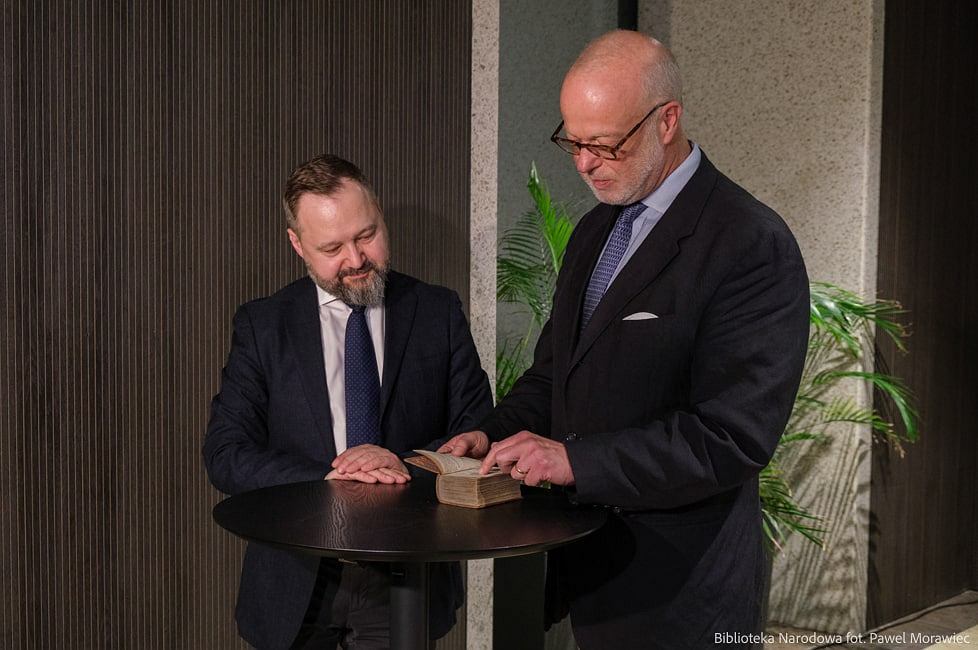
George Windsor, the Earl of St Andrews and a member of the British royal family, has returned a 16th-century book to Poland’s National Library that previously belonged to its collection in the 18th century.
The library has, like Poland itself, experienced a tumultuous and often tragic history. It was founded in the mid-18th century, when Poland was one of Europe’s largest states. At the time, the library held one of the biggest collections of books in the world.
However, it later saw large parts of its holdings taken by the Russians, who transferred them to St Petersburg in the 19th century. Many of those collections were returned to Warsaw when Poland regained its independence in 1918, but much was then destroyed by the Germans in World War Two.
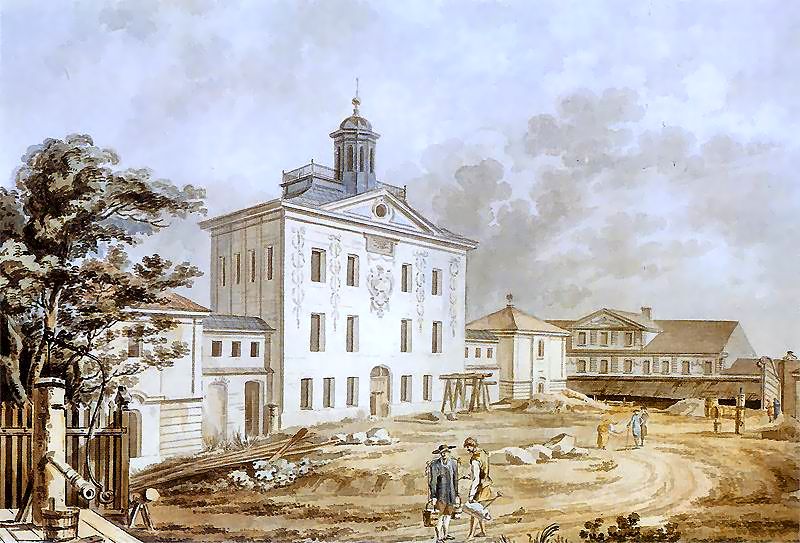
The original home of the library, Daniłowicz Palace (now named Dom Pod Królami) in Warsaw.
“It was a historic moment, one of the scattered objects returning to its home library,” said the institution’s director, Tomasz Makowski, of yesterday’s donation. “I convey my deepest gratitude and emotion to Earl George Windsor. We will forever remember this gift.”
The book in question is L’histoire de Primaleon de Grece, published in 1572, a French translation of the chivalric romance Primaleón by Spanish author Francisco Vázquez.
Speaking in Warsaw, the earl told the Polish Press Agency (PAP) that he came across the book by accident more than 30 years ago while studying at Cambridge University. He purchased the copy at a book market as at the time he was interested in chivalric romances and Renaissance literature.
“It wasn’t until many years later that I discovered its origin, as a book belonging to the former collection of the great 18th-century bishop and bibliophile Józef Andrzej Załuski,” he explained.
Yesterday the @bn_org_pl in Warsaw was visited by George Windsor, Earl of St Andrews. HRH gave the Library a very valuable early printed work which belonged to the first Polish National Library in the eighteenth century, opened in Warsaw in 1747 by Józef and Andrzej Załuski. pic.twitter.com/I3EBEa0m0P
— Polish Embassy UK 🇵🇱 (@PolishEmbassyUK) May 16, 2023
It was Załuksi who founded the library along with his brother, Andrzej Stanisław, also a bishop. The book donated by the earl features a stamp on an inside page saying “ZALVSKI”.
“Today, after the book has accompanied me on my bookshelf for many years, I am happy to contribute by ensuring that it returns to its home,” said Windsor. “Let it be my modest contribution to the restoration of Polish cultural heritage.”
The earl noted that the book’s binding suggests it had been in Britain since the 19th century. It is known that many of the books transferred from Warsaw to St Petersburg by Russia went missing and ended up being sold privately to collectors.
Windsor also disclosed that he himself had learned Polish many years ago due to his interest in languages, culture and literature, and that he can still read the language.
Dyrektor Biblioteki Narodowej Tomasz Makowski i George Windsor Hrabia St Andrews podpisali umowę o przekazaniu starodruku w poniedziałek w Bibliotece Narodowej w Warszawie.https://t.co/bL3Tsc4KhK
— TVN Warszawa (@tvnwarszawa) May 15, 2023
In 1944, almost 800,000 items in the National Library’s holdings were lost forever when the German occupiers burned the building in the wake of the Warsaw Uprising.
The library’s special collections were almost completely destroyed, including an estimated 50,000 manuscripts, 2,500 incunabula, 80,000 early printed books, and 100,000 drawings and engravings. Some items from the library’s collection were able to survive the war by being evacuated out of the country.
During the earl’s visit, the library showed him one of its holdings, a gospel book published around 1000 A.D. in France with Anglo-Saxon influences. The item was purchased by the Załuskis in the 18th century, later taken to St Petersburg, returned to Poland after 1918, then moved to Canada in 1939 before again returning to Warsaw.
Najstarszy zachowany anglosaski ewangelistarz. Rękopis z przełomu X i XI w. Należał już do pierwszej BN w XVIII w. Został pokazany podczas wizyty członka brytyjskiej rodziny królewskiej Jerzego Windsora, hrabiego St Andrews, następcy księcia Kentu.https://t.co/o8RBWhD7u4 pic.twitter.com/egVORf7SRX
— Biblioteka Narodowa (@bn_org_pl) May 15, 2023

Anna Hackett is an assistant editor at Notes from Poland. She is a recent graduate of European Studies from Trinity College Dublin and has had previous journalistic experience with the Irish Independent News & Media group.