Keep our news free from ads and paywalls by making a donation to support our work!

Notes from Poland is run by a small editorial team and is published by an independent, non-profit foundation that is funded through donations from our readers. We cannot do what we do without your support.
Poland has summoned Russia’s ambassador in response to recent hostile actions against Germany.
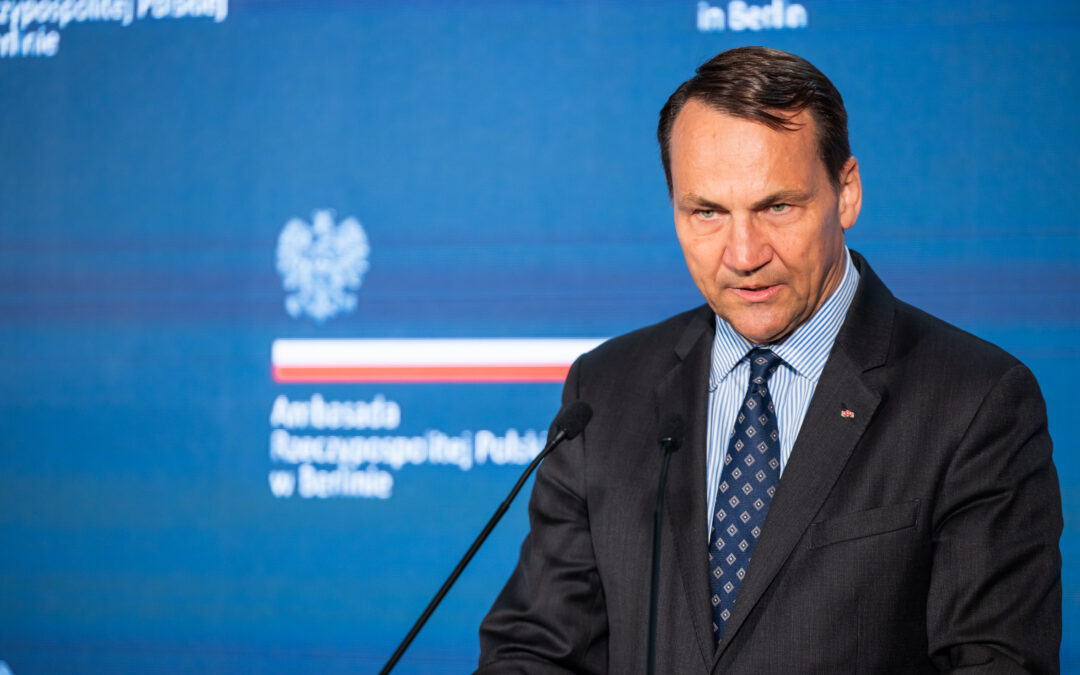
“[We] expressed our strong condemnation of state terrorism perpetrated by Russia – because what is a problem for one ally is a problem for the entire alliance,” said Polish foreign minister Radosław Sikorski.
“Putin’s Russia remains one of the most serious security threats – not just for Europe, but for the entire world order,” he added. “Its goal is to permanently destroy the European security architecture.”
💬 Nie ma zgody na podpalenia, ataki na kolej, morderstwa i inne prowokacje.
Polska też wezwała ambasadora Rosji po to, aby wyrazić nasze stanowcze potępienie dla terroryzmu państwowego autorstwa Federacji Rosyjskiej.
| wicepremier, minister spraw zagranicznych @sikorskiradek… pic.twitter.com/LChAjwsX8H
— Ministerstwo Spraw Zagranicznych RP 🇵🇱 (@MSZ_RP) September 3, 2026
On Tuesday, the German government announced that it held Russia responsible for an attempted drone attack on Leipzig airport last month. In response, it ordered the closure of Russia’s consulate in Bonn and a Russian cultural centre in Berlin.
This week also saw attempts to sabotage Germany’s electricity network in two locations. While they are still being investigated, on Wednesday, Polish Prime Minister Donald Tusk suggested that they may also be part of “Russia’s escalatory actions throughout the region”.
On Thursday, the spokesman for Poland’s foreign ministry, Maciej Wewiór, confirmed to the Polish Press Agency (PAP) that Russia’s ambassador to Warsaw, Georgy Mikhno, had been summoned to the ministry.
Wewiór said that Poland wanted to convey “our firm opposition to the escalation of Russia’s aggressive actions” as well as to show solidarity with Germany.
A number of other European leaders have also this week expressed solidarity with Germany, including European Commission President Ursula von der Leyen and NATO Secretary General Mark Rutte.
Poland has itself been a major target for Russia. Earlier this year, a report by the International Centre for Counter-Terrorism found that Poland was the “primary focus” of Russian sabotage. It has also suffered cyberattacks, disinformation campaigns, and “weaponised migration” on its eastern border.
In response, Poland has successively closed down all of Russia’s consulates in the country, with Moscow responding by doing the same with Polish consulates operating on its territory.
This week, after a fire broke out at a drone factory in Poland, Tusk said that there is “no doubt” it was caused deliberately and suggested it was also likely carried out on behalf of Russia.
There is now “no doubt” that a fire this week at a drone factory in Poland was caused deliberately, says Prime Minister @donaldtusk, who also suggested it was carried out on behalf of Russia https://t.co/fLdRcCLkgw
— Notes from Poland 🇵🇱 (@notesfrompoland) September 2, 2026
Speaking today following a meeting with his German and French counterparts, Sikorski said that, “in these difficult moments, we counted on our allies, and our allies can count on us”.
“Poland supports the German government’s reactions and decisions regarding Russia’s aggressive actions in Germany, including decisions similar to ours, such as closing the Russian consulate,” he added. “We do not consent to unpunished testing of our borders or hostile actions on our territories.”
Russia has denied responsibility for the drone incident in Leipzig, calling it a “fabricated provocation”. It this week announced that it would close German cultural centres in Moscow, St. Petersburg and Yekaterinburg in response to Berlin’s move to close Russian facilities in Germany.
Russia is “waging a full-scale cognitive war against us”, Polish foreign minister @sikorskiradek has warned.
He also said that there is a “Russian fifth column” operating in Poland https://t.co/wsmZSvYnzN
— Notes from Poland 🇵🇱 (@notesfrompoland) June 9, 2026
Notes from Poland is run by a small editorial team and published by an independent, non-profit foundation that is funded through donations from our readers. We cannot do what we do without your support.
Main image credit: PolandMFA/Flickr (under CC BY-NC 2.0)

Daniel Tilles is editor-in-chief of Notes from Poland. He has written on Polish affairs for a wide range of publications, including Foreign Policy, POLITICO Europe, EUobserver and Dziennik Gazeta Prawna.