
Keep our news free from ads and paywalls by making a donation to support our work!

Notes from Poland is run by a small editorial team and is published by an independent, non-profit foundation that is funded through donations from our readers. We cannot do what we do without your support.
There is now “no doubt” that a fire this week at a drone factory in Poland was caused deliberately, says Prime Minister Donald Tusk, who also suggested it was carried out on behalf of Russia.
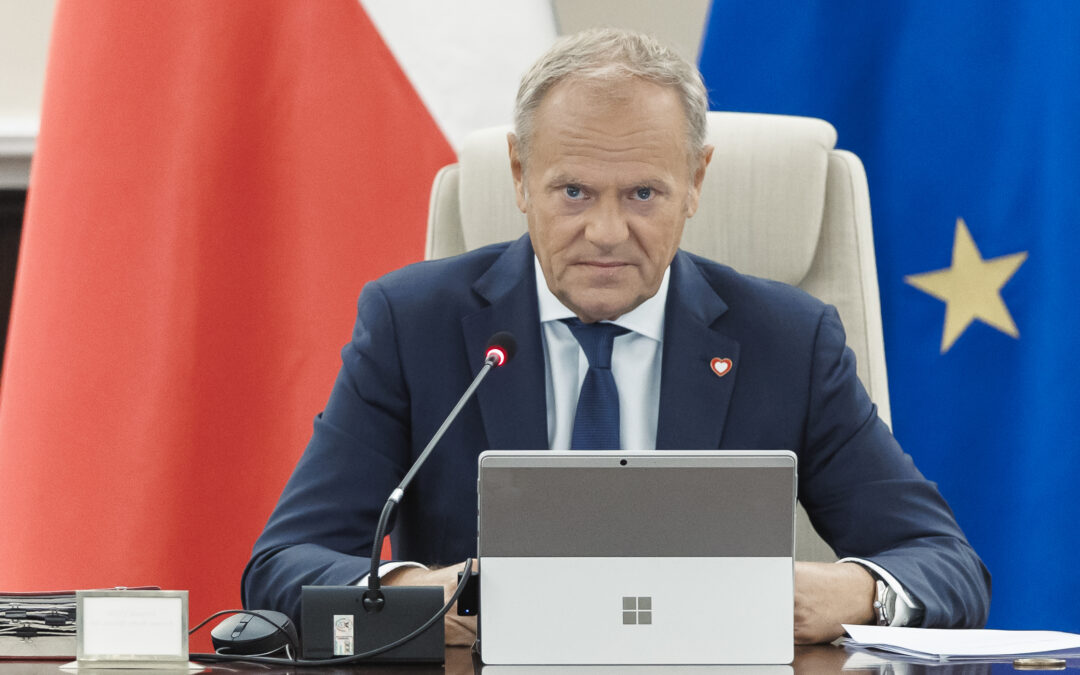
Speaking ahead of a cabinet meeting on Wednesday, Tusk noted that there had been “some very disturbing incidents and events in Poland and Germany over the past few [days]”.
“This is a continuation of Russia’s escalatory actions throughout the region,” he continued. “Unfortunately, these are not the first cases and, even worse, they certainly won’t be the last.”
💬 Premier @donaldtusk ⤵️
Najbliższe tygodnie i miesiące będą krytyczne nie tylko jeśli chodzi o zdarzenia na froncie i w ogóle całą wojnę rosyjsko-ukraińską, ale te tygodnie i miesiące będą także bardzo dużym wyzwaniem dla wszystkich państw w tej części Europy, ze względu na… pic.twitter.com/ZcjVMjhWc0— Kancelaria Premiera (@PremierRP) September 2, 2026
Tusk was referring to three incidents that have taken place in Poland and Germany in recent days. On Sunday, a fire broke out at a production facility in the Polish city of Lublin belonging to JFG Composites, a company that produces components for the aerospace industry, including for military helicopters.
Then, in the early hours of Monday morning, another fire occurred at a plant in Skarżysko-Kamienna, south-central Poland, belonging to WB Electronics, a Polish firm that is the largest producer of drones in the European Union. It supplies the armed forces of Ukraine and Poland, among others.
By Monday afternoon, Polish prosecutors and the security services had confirmed that they were investigating the Skarżysko-Kamienna fire as a potential “crime of a terrorist nature” carried out with the involvement of “foreign intelligence”.
On Tuesday, a number of improvised explosive devices were found at a power plant in Germany near the border with Poland. That discovery came on the same day that Germany announced it held Russia responsible for a drone attack on Leipzig airport last month.
Polish prosecutors have launched an investigation into whether a fire last night at a facility belonging to WB Electronics, the EU's largest drone maker, was a “crime of a terrorist nature” committed with the “participation of foreign intelligence” https://t.co/rBKmy2A13V
— Notes from Poland 🇵🇱 (@notesfrompoland) August 31, 2026
In his remarks on Wednesday, Tusk said that “there is no doubt” that the incident in Skarżysko-Kamienna “was deliberate arson, meaning an act of sabotage”.
“In the case of Lublin, we do not have such evidence but, considering the nature of the production, it cannot be ruled out that deliberate arson occurred there as well,” he added.
“I am in constant contact with the leaders of the countries in our region, and everyone realises that the coming weeks and months will be critical, not only in terms of events on the front and the entire Russian-Ukrainian war,” continued the prime minister.
“These weeks and months will also pose a very, very significant challenge for all countries in this part of Europe, precisely because of Russia’s plans to escalate tensions and destabilise.”
On Tuesday, a deputy interior minister, Czesław Mroczek, told broadcaster RMF that surveillance cameras had recorded a masked person entering the WB Electronics plant in Skarżysko-Kamienna.
He said it was “obvious” that Russian involvement was suspected, pointing to previous similar cases in which agents working on behalf of Russia have carried out acts of sabotage in Poland.
A report by the International Centre for Counter-Terrorism published earlier this year found that Poland is the “primary focus” of Russia’s growing campaign of sabotage in Europe.
Last year, Poland confirmed that Russia was behind the fire that in 2024 destroyed Warsaw’s largest shopping centre. The Polish authorities are also seeking to detain two men believed to have sabotaged a rail line last year on Russian orders.
Poland is the "primary focus" of Russia's sabotage campaign in Europe, finds a new report by the International Centre for Counter-Terrorism.
Among 151 incidents identified since 2022, 31 of them took place in Poland – more than in any other country https://t.co/QXfSI00FD6
— Notes from Poland 🇵🇱 (@notesfrompoland) March 3, 2026
At a press conference on Tuesday, interior minister Marcin Kierwiński warned that Poland’s “security services and society must be prepared for the possibility of an increase in Russian acts of sabotage”.
“There are many, many signals that Russia is changing its strategy and intensifying its activities, including terrorist and sabotage activities,” he added, quoted by broadcaster Radio Lublin.
However, in contrast to Tusk’s remarks on Wednesday, Kierwiński said that the fires in Lublin and Skarżysko-Kamienna are “two separate incidents and likely unrelated” to one another.
“Regarding the Lublin incident, with the information currently available, I’m not so convinced that we were dealing with sabotage,” he explained. “In the case of Skarżysko[-Kamienna], all signs point to an act of terror and sabotage.”
Minister @MSWiA_GOV_PL @MKierwinski: Jeżeli chodzi o kwestię pożaru hali w Lublinie, z dostępnymi obecnie informacjami nie mam takiego twardego przekonania, że mieliśmy do czynienia z sabotażem.https://t.co/cspYL5Bn0w
— Radio Lublin (@RadioLublin) September 1, 2026
Notes from Poland is run by a small editorial team and published by an independent, non-profit foundation that is funded through donations from our readers. We cannot do what we do without your support.
Main image credit: KPRM/Flickr (under CC BY-NC-ND 4.0)

Daniel Tilles is editor-in-chief of Notes from Poland. He has written on Polish affairs for a wide range of publications, including Foreign Policy, POLITICO Europe, EUobserver and Dziennik Gazeta Prawna.