Keep our news free from ads and paywalls by making a donation to support our work!

Notes from Poland is run by a small editorial team and is published by an independent, non-profit foundation that is funded through donations from our readers. We cannot do what we do without your support.
A decision to designate an entire village as a protected monument has sparked fierce opposition from residents, who have vowed to “fight until the end” against measures they say will limit their ability to renovate and build on their properties.
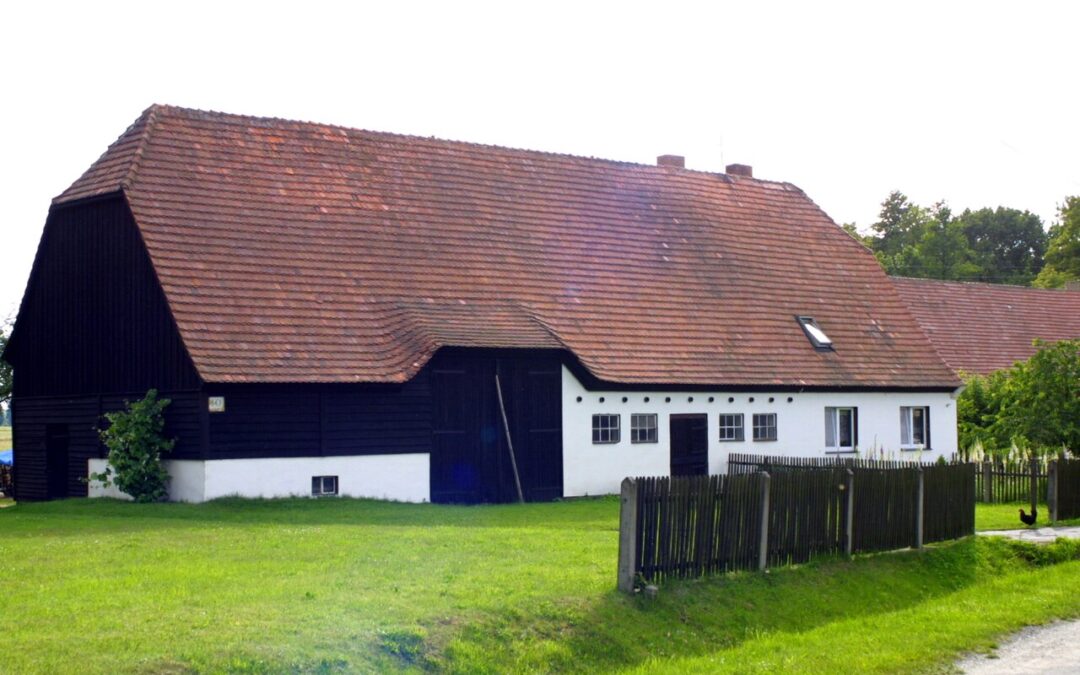
The village in question, Ostaszów in southwestern Poland’s Lower Silesia province, was established in 1936 by Nazi Germany as an agricultural settlement of around 42 farms. At the time, the region was part of Germany, but was transferred to Poland amid postwar border shifts.
The Lower Silesian Provincial Conservator of Monuments argues Ostaszów has “unique, homogeneous historical architecture” requiring state protection, but local officials say that the way the decision was made, despite opposition from residents, shows “the voice of local communities has no significance”.
After World War Two, most of Lower Silesia, including the village, became part of Poland. The village’s architecture has remained largely unchanged, with its residential buildings connected to barns, forming unique cohesive farmstead units. Around 250 people live there.
Earlier this year, the residents were told proceedings had begun to add the village to the register of protected monuments, reports the Gazeta Wyborcza daily. The provincial conservator said on Friday it had reached a decision.
“The unique, above-standard historical, scientific and artistic value of Ostaszów as a monument cannot be questioned,” it wrote in a statement. It noted that a study by a team working under the culture ministry had found that the village was the only preserved settlement of its kind in Lower Silesia.
Residents and local officials said they planned to appeal against the decision, arguing it would create additional bureaucracy and interfere with property owners’ ability to decide on building and renovation work.
“We have a years-long legal battle ahead of us, but we won’t give up. We will fight until the end. We believe that decisions about the 42 homes in Ostaszów should be made by their residents, not by harmful officials,” residents wrote in a statement quoted by the Polish Press Agency (PAP).
“In a cardboard state, the voice of local communities has no significance – only orders and bans count. Our future is to be decided by a heartless official from [the Lower Silesian capital of] Wrocław who does not even have time to meet with the victims of his decisions,” said the village head, Sylwia Mazur.
Wieś Ostaszów wpisana do rejestru zabytków. Mieszkańcy będą się odwoływaćhttps://t.co/ZxmH2lbHnb pic.twitter.com/cPdL73PXIH
— Dzieje.pl (@dziejepl) July 26, 2026
The conservator noted, however, that until the appeals process is concluded, construction works cannot proceed. It added that it planned to cooperate with locals to “develop principles of renovation and investment procedures in accordance with the regulations on the protection of monuments”.
It also urged residents not to spread “scandalous narratives” about the decision leading to an “open-air museum, the impossibility of renovation, and the blocking of investments”. It said other villages in Lower Silesia were subject to similar protections without hindering their development.
Gazeta Wyborcza cited some residents saying that the launch of proceedings in January had already forced them to pause work on their properties. Others complained that the decision will increase renovation costs due to strict conservation requirements.
The Opole Provincial Conservator of Monuments said that, as of 2021, some 86 villages across Poland had been added to the register of monuments because of their historic layouts.
A village in Poland has commemorated its long-lost Scottish community by restoring their former cemetery and launching an annual “Scottish Evening” featuring a bagpipe band.
In the 17th century, Poland was home to an estimated 30,000 Scots https://t.co/x9JyCyDm0Z
— Notes from Poland 🇵🇱 (@notesfrompoland) October 12, 2021
Notes from Poland is run by a small editorial team and published by an independent, non-profit foundation that is funded through donations from our readers. We cannot do what we do without your support.
Main image credit: Mzopw/Wikimedia Commons (public domain)

Olivier Sorgho is senior editor at Notes from Poland, covering politics, business and society. He previously worked for Reuters.