Keep our news free from ads and paywalls by making a donation to support our work!

Notes from Poland is run by a small editorial team and is published by an independent, non-profit foundation that is funded through donations from our readers. We cannot do what we do without your support.
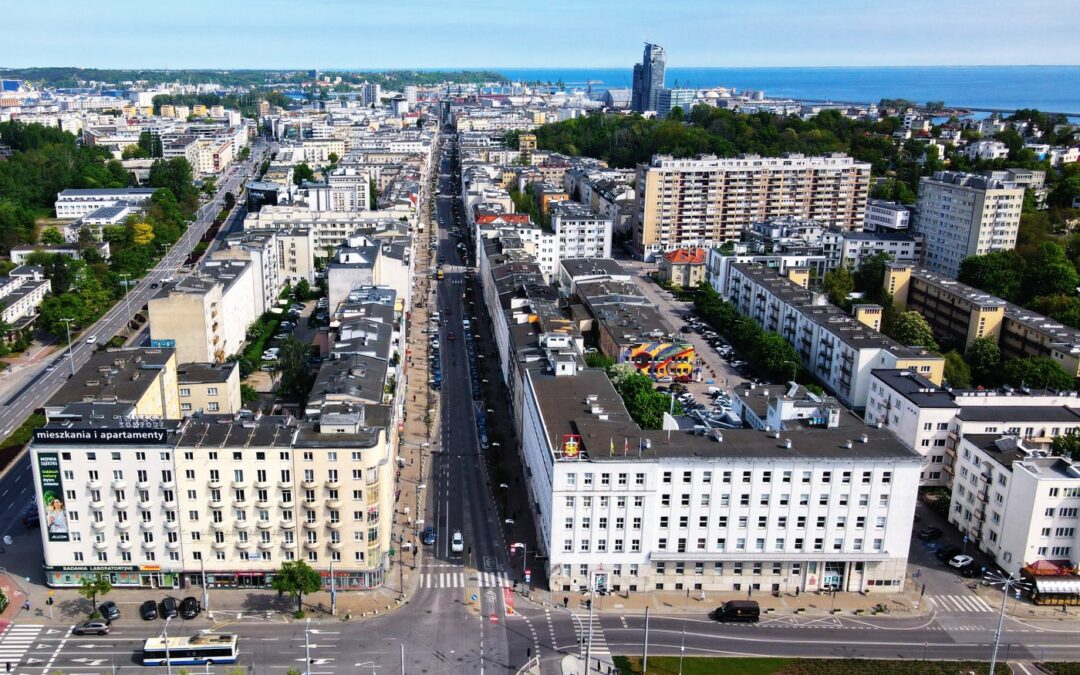
UNESCO has added the modernist city centre of the Polish port city of Gdynia to its World Heritage List, recognising its interwar urban planning and architecture.
The designation, approved during the World Heritage Committee’s 48th session in Busan, South Korea, is Poland’s 18th World Heritage site and comes as Gdynia marks the centenary of gaining city rights.
In its justification, UNESCO referred to “an urban organism that harnesses a building-block-based planning approach to develop a characteristic, compact complex of modernist architecture, with robust individual architectural expressions”.
🔴 BREAKING!
New inscription on the @UNESCO #WorldHeritage List: Gdynia Modernist City Centre, #Poland 🇵🇱.
➡️ https://t.co/iO4B0Cjg9u #48WHC pic.twitter.com/36IYPVOWny
— UNESCO (@UNESCO) July 27, 2026
Gdynia’s city centre “illustrates a critical break with historicism in the progression of turning the village of Gdynia into a new major sea gateway of the first Polish Republic between the First and Second World Wars”, it added.
Granted city status in 1926, Gdynia was rapidly developed by the newly independent Polish state from a small fishing village into a major Baltic seaport, growing to more than 100,000 residents in under 20 years and providing Poland with a modern maritime gateway.
It is now Poland’s 13th largest city by population, with just under 210,000 residents, and the third largest by area when including its maritime territory.
Nowy tydzień zaczynamy od dobrych wieści! Komitet Światowego Dziedzictwa UNESCO oficjalnie uznał modernistyczne centrum Gdyni za dobro o wyjątkowym znaczeniu dla całego świata. Nie ma lepszego momentu niż 100-lecie Gdyni na to wyjątkowe wyróżnienie!https://t.co/L3WZZCJCAz
— Gdynia (@MiastoGdynia) July 27, 2026
Oktawia Gorzeńska, Gdynia’s deputy mayor, who represented the city in Busan, celebrated the decision of the committee as “a wonderful gift for our anniversary and a tribute to the vision and determination of the people who created one of Europe’s great modernist cities”.
The city’s mayor, Aleksandra Kosiorek, added that the decision “confirms that the vision which launched the history of modern Gdynia over a century ago has retained its power and universal significance.”
Gdynia’s central district of Śródmieście was built largely between 1926 and 1939. Its rapid development at the time drew international attention, with a National Geographic reporter writing that “Poland dreams of building her New York”.
Unlike Warsaw and nearby Gdańsk, it escaped extensive destruction during World War Two, preserving much of its original street layout and interwar architecture.
According to the city authorities, UNESCO experts have recognised the Gdynia’s centre as one of the world’s most outstanding examples of early modernism in urban planning.
The nomination also highlighted Gdynia’s distinctive model of modernist urban planning, setting it apart from contemporaneous developments such as Germany’s Bauhaus, Berlin’s housing estates, Kaunas in Lithuania and Tel Aviv.
Gdynia’s modernist architecture is characterised by white façades and maritime-inspired details, including round windows and building forms resembling ship hulls.
Gdańsk in Poland has been named a global City of Literature by @UNESCO.
It is now one of only 63 such cities in the world, and the third in Poland to obtain the distinction https://t.co/QdMxlT65V4
— Notes from Poland 🇵🇱 (@notesfrompoland) November 3, 2025
Notable examples include the so-called “bank building”, a modernist tenement block, and the Museum of Emigration, housed in the former Maritime Station, which from the 1930s until 1979 was a transit building from which thousands of Polish emigrants left for their new homelands.
According to the city, the road to recognition took over 20 years, beginning in 2007, when the historic urban layout was entered into the regional register of monuments. It was designated a Monument of History in 2015, and Poland submitted the site to UNESCO’s Tentative List in 2019.
Two sites in Poland were included in the inaugural World Heritage List in 1978: the Historic Centre of Kraków and the nearby Wieliczka and Bochnia Royal Salt Mines. Gdynia’s inscription is the 18th for Poland overall and the first for a Polish modernist urban complex.
The most recent Polish additions before Gdynia were the Krzemionki Prehistoric Striped Flint Mining Region in 2019 and, in 2021, the beech forests in the Bieszczady Mountains.
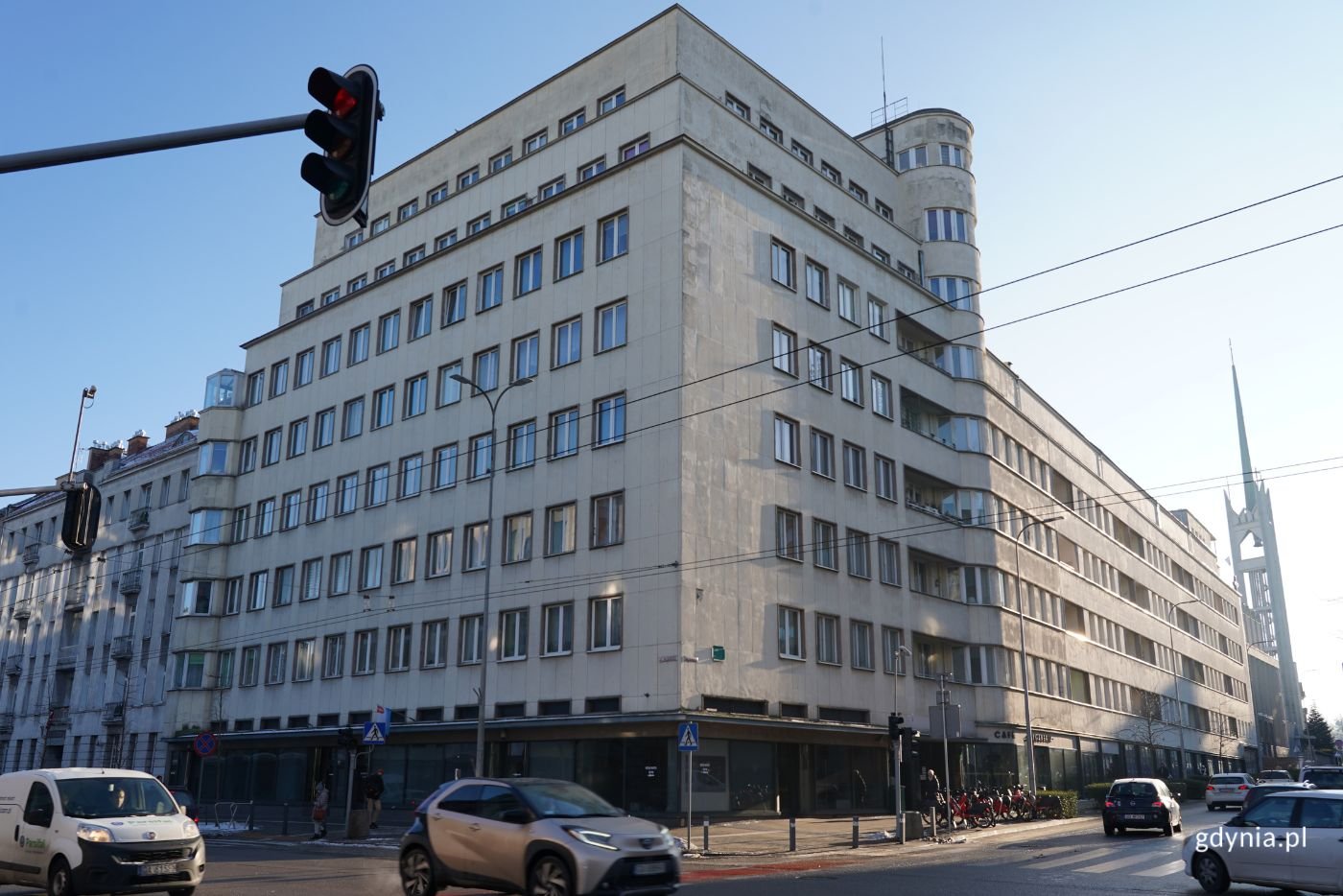
The “bank building”. Photo credit: Magdalena Starnawska/gdynia.pl
Notes from Poland is run by a small editorial team and published by an independent, non-profit foundation that is funded through donations from our readers. We cannot do what we do without your support.
Main image credit: K. Maćkowiak/gdynia.pl

Alicja Ptak is deputy editor-in-chief of Notes from Poland and a multimedia journalist. She has written for Clean Energy Wire and The Times, and she hosts her own podcast, The Warsaw Wire, on Poland’s economy and energy sector. She previously worked for Reuters.