Keep our news free from ads and paywalls by making a donation to support our work!

Notes from Poland is run by a small editorial team and is published by an independent, non-profit foundation that is funded through donations from our readers. We cannot do what we do without your support.
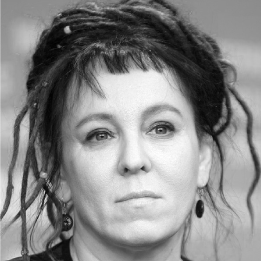
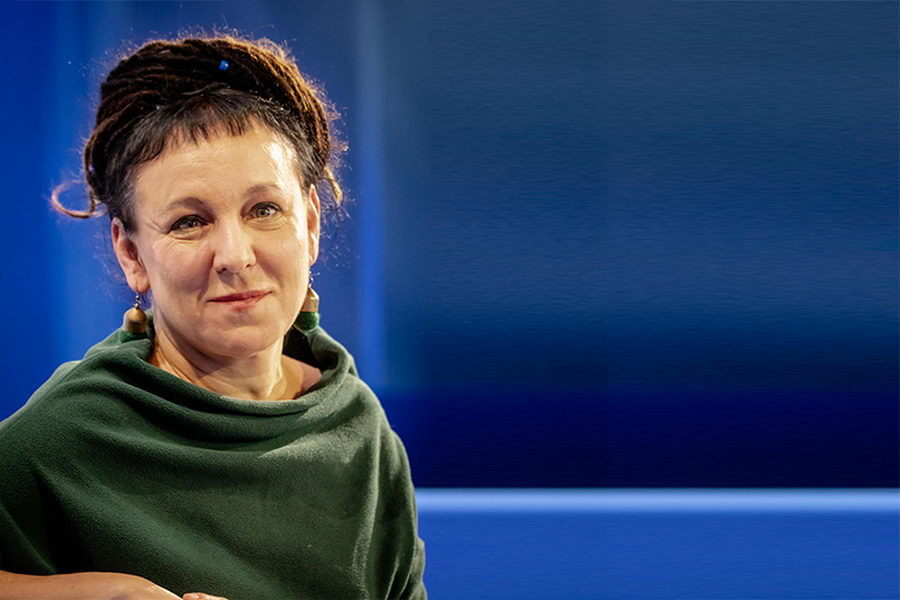
Polish author Olga Tokarczuk, who won the 2018 Nobel Prize in Literature, has sparked controversy and criticism after revealing that she uses artificial intelligence (AI) to help develop her ideas.
Following the backlash, Tokarczuk released a statement suggesting that her remarks had been “incorrectly understood” and confirming that she did not use AI to write her forthcoming novel, which will be released later this year.
Olga Tokarczuk o tym jak wspomaga się AI przy pisaniu książki.
A potem gada o tym, że szkoda, że takie czasy nastały:(( pic.twitter.com/6qwb3ORg5m
— HIB HOB XD (@HibHobXD) May 18, 2026
The comments in question came during an appearance last week by Tokarczuk at Impact’26, a major conference of leading political, business and cultural figures held in the Polish city of Poznań.
She discussed how her upcoming novel would probably be her last, because the amount of time needed to write such a work makes it not worthwhile “from a purely economic perspective”, according to a transcript of the talk. She said she would instead focus on writing short stories.
Tokarczuk then suggested that “perhaps a symbiotic future and cooperation with artificial intelligence will help” authors in the future. “In fluid literary fiction, this technology is an asset of incredible proportions,” she said. “Despite fears, I believe that we writers, due to the specific nature of our craft, are most attuned to tools like AI.”
“I bought myself the highest, most advanced version of one [AI] language model, and I’m often deeply shocked by how it so fantastically broadens and deepens my creative thinking,” said Tokarczuk. “Often I just throw an idea to the machine for analysis with the request: ‘Darling, how could we develop this beautifully?'”
The author admitted that, “when I was writing my latest novel, which will be released this autumn, I asked this advanced model what songs my characters might have danced to at a dance several decades ago”.
She said that it had given her a few suggestions, one of which contained a clear mistake in the name. “You have to be careful of hallucinations,” said Tokarczuk.
More broadly, despite her praise for AI, the author said that she “feels a poignant, very human sorrow for an era that is disappearing forever”.
“My heart aches for the passing of traditional literature, written over months in solitude, a work of life crafted in the mind of a fully conscious, single individual,” said Tokarczuk. “I don’t believe that any modern chatbot will ever be able to speak in such an exquisite way.”
The Nobel Laureate Olga Tokarczuk’s recent comments on her use of AI in ‘preliminary research’ have hit a nerve – and rightly so, says Helen Charman https://t.co/JVUsl0NBly
— ArtReview_ (@ArtReview_) May 20, 2026
Tokarczuk’s comments prompted criticism from many commentators online and also some other Polish writers.
Szczepan Twardoch, winner of the 2021 EBRD Literature Prize and another speaker at Impact’26, wrote in a statement on Facebook (which did not mention Tokarczuk directly) that he “would have to lose my mind to use a language model in this worthy and noble pursuit of literature”.
“Entering into a ‘relationship’ with a language model, whether emotional or creative, makes about as much sense as marrying a vibrator,” he added.
However, Tokarczuk was defended by writer Ziemowit Szczerek, who criticised the “moral outrage” over her remarks. “I don’t understand why Olga Tokarczuk can’t have some fun with it [AI] if she wants to,” he wrote.
In response to the backlash, Tokarczuk released a statement on social media clarifying her views. “Like any other conversation, remarks made before a live audience at a public event can be incorrectly understood,’ she wrote.
“I make use of artificial intelligence on the same principles as most people in the world – I treat it as a tool that allows faster documenting and checking of facts,” said Tokarczuk. “Whenever I use this tool I additionally verify the information.”
“None of my texts, including the novel that will appear in Polish this fall, has been written with the help of artificial intelligence – except for using it as a tool for faster preliminary research,” she continued.
Notes from Poland is run by a small editorial team and published by an independent, non-profit foundation that is funded through donations from our readers. We cannot do what we do without your support.
Main image credit: Harald Krichel/Wikimedia Commons (under CC BY-SA 4.0)

Daniel Tilles is editor-in-chief of Notes from Poland. He has written on Polish affairs for a wide range of publications, including Foreign Policy, POLITICO Europe, EUobserver and Dziennik Gazeta Prawna.