Keep our news free from ads and paywalls by making a donation to support our work!

Notes from Poland is run by a small editorial team and is published by an independent, non-profit foundation that is funded through donations from our readers. We cannot do what we do without your support.
The United States Department of Defence has pledged that it will retain “a strong military presence in Poland”, which it called “a model ally” whose example other NATO countries should follow.
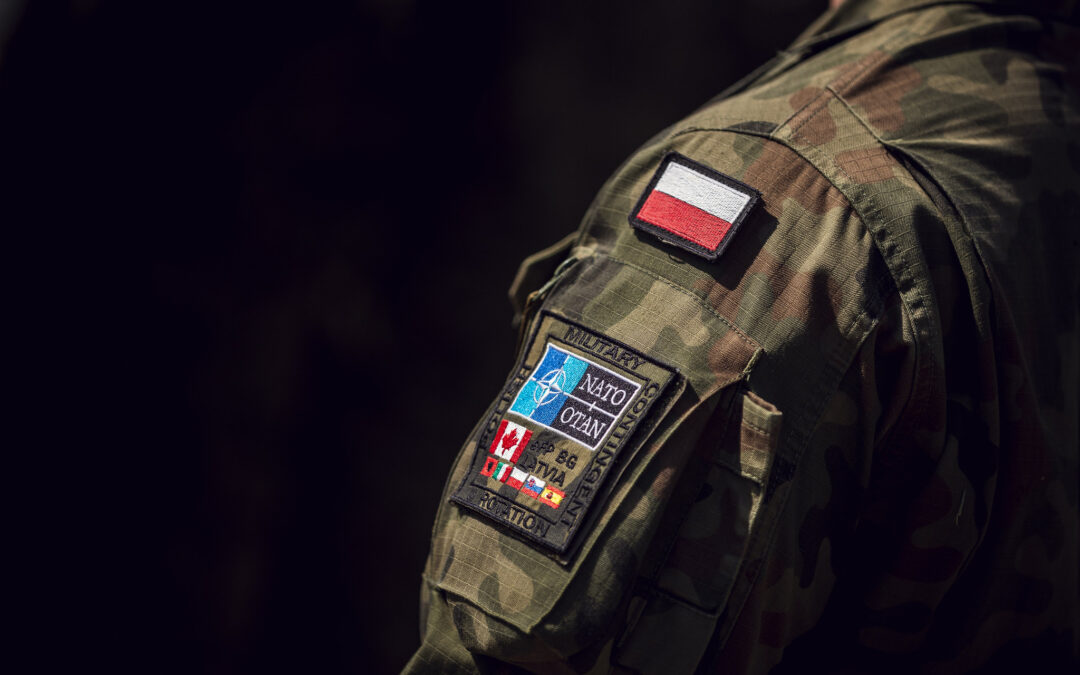
Its statement came in response to concerns over a last-minute decision to cancel the planned deployment of almost 4,000 rotational US troops to Poland. The Pentagon says this was only a “temporary delay” but stopped short of confirming that there would be no reduction in troop numbers in Poland.
STATEMENT:
The Department of War has reduced the total number of Brigade Combat Teams (BCTs) assigned to Europe from four to three. This returns us to the levels of BCTs in Europe in 2021. This decision was the result of a comprehensive, multilayered process focused on U.S.…
— Sean Parnell (@SeanParnellASW) May 19, 2026
Last week, it emerged that the deployment of the 2nd Armoured Brigade Combat Team, 1st Cavalry Division to Poland had been called off. The decision was made so late that some troops were reportedly already in Poland and their equipment was already en route.
The Polish government has insisted the decision will not affect size of the US military presence in Poland, which currently compromises around 10,000 troops (though the figure varies based on force rotation). It portrayed the move as a logistical decision relating to the reduction in US troop numbers elsewhere in Europe.
However, amid public and political concern over the development, the government has also sought assurances from Washington that there will indeed be no reductions. In fact, Poland has been seeking an increase in the US military presence.
Following American media reports that the US has cancelled the deployment of thousands of troops to Poland at the last minute, the Polish government has denied that the situation pertains to Poland itself and says it relates to other parts of Europe https://t.co/kh3AMdWHCw
— Notes from Poland 🇵🇱 (@notesfrompoland) May 14, 2026
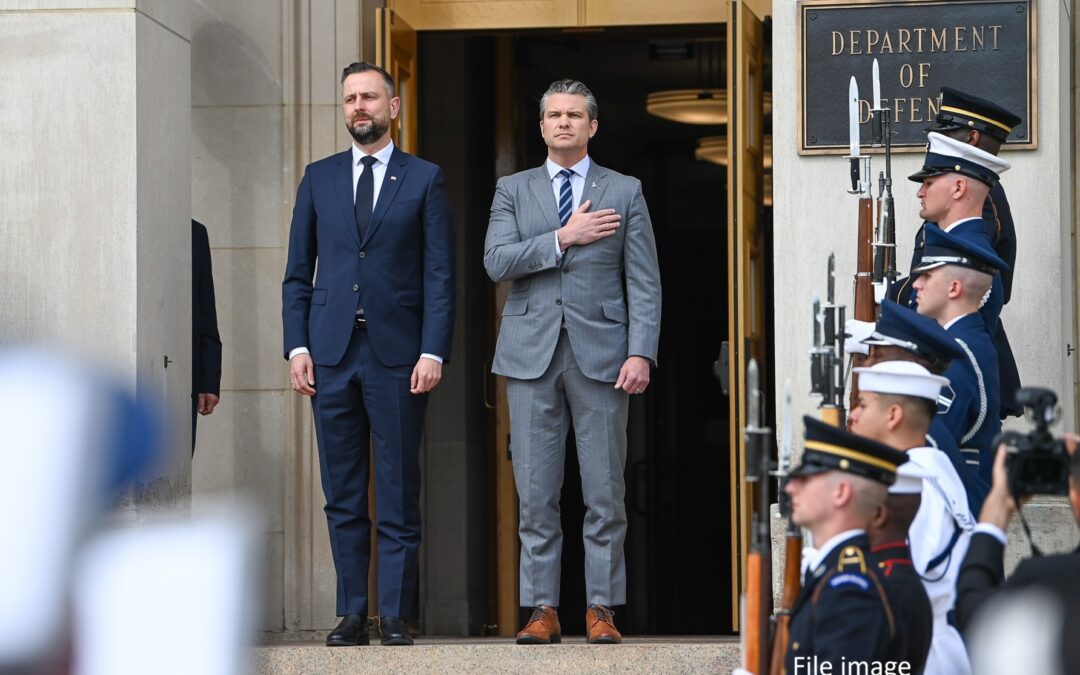
On Tuesday, Polish defence minister Władysław Kosiniak-Kamysz spoke to his US counterpart Pete Hegseth. Afterwards, Pentagon spokesman Sean Parnell issued a statement.
He said that the “temporary delay” in the deployment of rotational forces to Poland was part of the Defence Department’s decision to “reduce the total number of Brigade Combat Teams assigned to Europe from four to three”, restoring it to the level of 2021.
Parnell added that “the final disposition of these and other US forces in Europe” would be determined based on “further analysis of US strategic and operational requirements, as well as our allies’ own ability to contribute forces toward Europe’s defence”.
“This analysis is designed to advance President Trump’s America First agenda in Europe and other theatres, including by incentivising and enabling our NATO allies to take primary responsibility for Europe’s conventional defence,” he added.
Regarding Poland itself, Parnell said that the “[Defence] Department will remain in close contact with our Polish counterparts as this analysis proceeds, including to ensure that the United States retains a strong military presence in Poland”.
“Poland has shown both the ability and resolve to defend itself. Other NATO allies should follow suit,” he added.
Donald Trump’s new defence secretary, @PeteHegseth, has hailed Poland as a “model ally” during a visit to Warsaw on his first overseas trip.
He said that US relations with Poland are "unmatched" anywhere else in Europe and he "came here to reinforce that" https://t.co/em9cZYn2JW
— Notes from Poland 🇵🇱 (@notesfrompoland) February 14, 2025
Parnell’s statement echoed remarks earlier on Tuesday by Vice President JD Vance, who noted that the US “has not reduced troops levels in Poland by 4,000”. It has simply “delayed a troop deployment that was going to go to Poland” as part of “a standard delay in rotation”.
Vance added that the US wants to “shift resources around” in Europe in order to “maximise American security” and “encourage Europe to take more ownership” of its own defence.
However, when asked to confirm that the troops in question would ultimately be sent to Poland, Vance said that “we actually haven’t made a final determination” and “could decide to send them elsewhere”. But he added that “we love Poland, we love the Polish people”.
Reporter: The Pentagon halted 4,000 troops to Poland. Why are you rewarding Putin and punishing your best ally in Europe?
Vance: There's been no president who's done more to ensure that Ukraine survived the invasion of Russia than Trump. Poland is capable of defending itself.… pic.twitter.com/kcj4AdY4bu
— Acyn (@Acyn) May 19, 2026
On Wednesday morning, Kosiniak-Kamysz told a press conference that, in conversations with Hegseth and other senior US officials he “was reassured once again that Poland is a model ally” and “an extremely important partner, if not the most important partner, of the United States in Europe”.
“Decisions made in the US…may temporarily delay the deployment of US forces in Poland,” he added, but “no decision has been made to reduce” the American military presence.
Indeed, it could result in “a more favourable presence of American troops in Poland than before”, said Kosiniak-Kamysz, quoted by news website Wirtualna Polska. “Sometimes a rotational model can become a permanent model, and that’s always much better.”
Earlier this month, after Trump ordered the withdrawal of around 5,000 US troops from Germany, Poland’s President Karol Nawrocki, a Trump ally, and some government figures expressed Poland’s readiness to host those forces.
President @NawrockiKn's chief of staff and most senior foreign policy aide have both called on the Polish government to “take advantage” of President Trump’s decision to withdraw 5,000 US troops from Germany by seeking to have them redeployed to Poland https://t.co/07YM74HFY3
— Notes from Poland 🇵🇱 (@notesfrompoland) May 6, 2026
Notes from Poland is run by a small editorial team and published by an independent, non-profit foundation that is funded through donations from our readers. We cannot do what we do without your support.
Main image credit: MON (under CC BY-SA 4.0)

Daniel Tilles is editor-in-chief of Notes from Poland. He has written on Polish affairs for a wide range of publications, including Foreign Policy, POLITICO Europe, EUobserver and Dziennik Gazeta Prawna.