Keep our news free from ads and paywalls by making a donation to support our work!

Notes from Poland is run by a small editorial team and is published by an independent, non-profit foundation that is funded through donations from our readers. We cannot do what we do without your support.
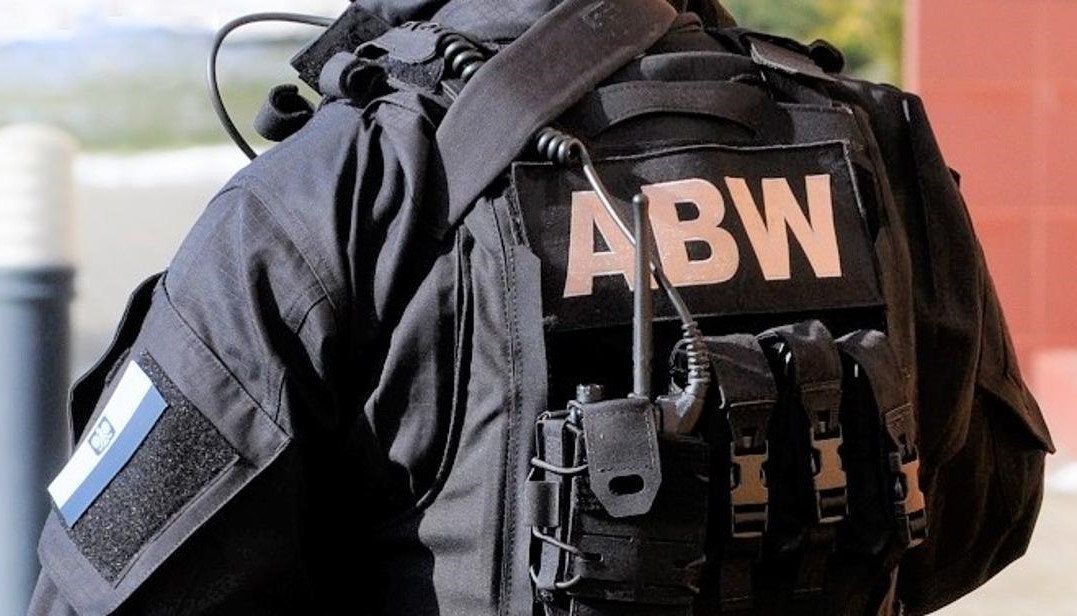
Poland’s Internal Security Agency (ABW) launched 48 investigations related to espionage last year, more than twice as many as in 2024. In those two years, there were more espionage investigations than over the previous three decades combined, the ABW has revealed in a new report.
The agency said the figures demonstrate an “unprecedented increase in threats” from agents working on behalf of Russia and Belarus in particular. It also pointed to a range of other threats, including espionage by China and the radicalisation of some young Poles.
Agencja Bezpieczeństwa Wewnętrznego wraca do dobrego zwyczaju i po kilkunastu latach przerwy publikuje jawną część raportu ze swojej działalności. Prezentuje on najpoważniejsze zagrożenia dla bezpieczeństwa Polski inspirowane i organizowane przez rosyjskie służby specjalne. Są to… pic.twitter.com/hx83K2QndR
— Jacek Dobrzyński (@JacekDobrzynski) May 6, 2026
In recent years, Poland has detained, charged and convicted a growing number of individuals and groups found to have been carrying out espionage, sabotage and other so-called “hybrid activities” on behalf of Russia.
Such actions have intensified since Russia’s invasion of Ukraine in 2022, with Poland being one of Kyiv’s staunchest allies. They have included an arson attack that destroyed Warsaw’s largest shopping centre and the use of an explosive device to damage a rail line.
In a new report outlining its activities over the last two years, the ABW said that Russian sabotage remains Poland’s biggest security threat. The agency revealed that it had prevented numerous attacks on Polish military facilities, critical infrastructure, public utilities and other targets.
In 2025, the ABW launched 48 investigations into espionage, a year-on-year increase of 128% compared to 2024. The total number over those two years, 69, is equal to the figure for the entire period from 1991 to 2023, says the agency. It added that, in the last two years alone, Poland has charged 82 people with espionage.
In December, a Russian national was charged with running an espionage and sabotage network in Poland on behalf of Russia’s Federal Security Service (FSB). The agents whom he oversaw were mainly Ukrainians and Belarusians, as have been many others convicted of conducting Russian hybrid activities in Poland.
“Russian intelligence agencies are constantly modifying their methods of operation and developing tools used in hybrid operations,” wrote the ABW.
“They use people looking for easy money to carry out reconnaissance and sabotage tasks. They recruit them, among other ways, through instant messaging, posting ads offering the opportunity to quickly get rich in exchange for performing specific tasks, often seemingly unrelated to intelligence activities.”
A recent report by the International Centre for Counter-Terrorism noted that Poland is the main target of Russia’s campaign of sabotage across Europe, accounting for around a fifth of all incidents between 2022 and 2026, and over a quarter of those that have taken place recently.
Poland is the "primary focus" of Russia's sabotage campaign in Europe, finds a new report by the International Centre for Counter-Terrorism.
Among 151 incidents identified since 2022, 31 of them took place in Poland – more than in any other country https://t.co/QXfSI00FD6
— Notes from Poland 🇵🇱 (@notesfrompoland) March 3, 2026
Besides cases of Russian and Belarusian espionage, the ABW pointed to an “increase in Chinese activity in Poland”, with “Chinese intelligence lobbying for [China’s] interests, including for specific Chinese entities, while using these enterprises to conduct intelligence activities”.
The agency also said that, over the last two years, Chinese intelligence officers have sought to “recruit [Polish] experts, academics, officials and individuals associated with law enforcement agencies under the guise of well-paid assignments”.
Earlier this year, Poland’s armed forces banned Chinese-made vehicles from entering military bases, citing security threats relating to the gathering of sensitive data. It has also barred military personnel from connecting their work phones to the systems of such cars.
A Chinese man has been detained by police in Poland after being spotted taking photographs of railway infrastructure in a small village https://t.co/WEL2mfrEFE
— Notes from Poland 🇵🇱 (@notesfrompoland) April 8, 2026
In its report, the ABW said that, while the threat of terrorism related to Islamic fundamentalism in Poland remains “at a relatively low level”, “a worrying trend is the growing interest in terrorist propaganda (e.g. of Islamic State) among very young people.”
In 2025, the ABW detained three 19-year-olds in the city of Olsztyn “who planned to carry out a terrorist attack, including on one of the local schools”. Later in the year, they detained another 19-year-old who had been planning an attack on a Christmas market inspired by Islamic State.
In February this year, in a separate case, the agency revealed that an 18-year-old will stand trial, accused of preparing to carry out an attack inspired by Islamic State, with a school his apparent target.
In December, the spokesman for the security services, Jacek Dobrzyński, issued an appeal to parents to look out for any signs of their children becoming radicalised.
“If you see your children interested in Islam, communism, or fascism, and collecting all sorts of information and items on the subject, that’s the first sign. Take care of your own children, because things can only get worse from there,” he said.
Poland has detained a man who was allegedly planning a terrorist attack on a Christmas market as an act of support for Islamic State.
The suspect, a 19-year-old Pole, had become "infatuated with Islam", say the security services https://t.co/N4WDVZdlai
— Notes from Poland 🇵🇱 (@notesfrompoland) December 16, 2025
Notes from Poland is run by a small editorial team and published by an independent, non-profit foundation that is funded through donations from our readers. We cannot do what we do without your support.
Main image credit: Służby specjalne (under CC BY-NC-ND 3.0 PL)

Olivier Sorgho is senior editor at Notes from Poland, covering politics, business and society. He previously worked for Reuters.