Keep our news free from ads and paywalls by making a donation to support our work!

Notes from Poland is run by a small editorial team and is published by an independent, non-profit foundation that is funded through donations from our readers. We cannot do what we do without your support.
Polish arms manufacturer Mesko has announced the best financial results in its 100-year history. It says that record-breaking revenue and profits in 2025 were driven in large part by growing international demand for its flagship Piorun air-defence systems.
Mesko, which belongs to the state defence holding group Polska Grupa Zbrojeniowa (PGZ), revealed that its revenue rose 33.2% year-on-year to around 2.28 billion zloty (€540 million), marking the first time it had crossed the 2 billion zloty threshold.
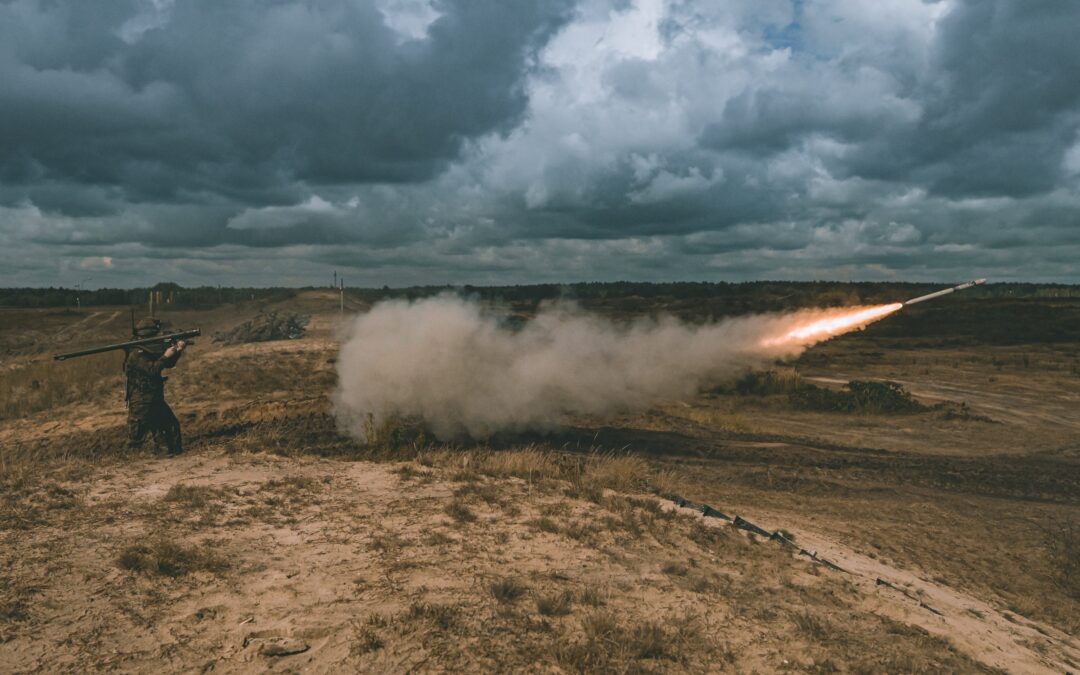
The Piorun man-portable system, which has proved successful in Ukraine’s defence against Russia’s invasion, has helped drive international interest in the company’s products and bolstered Poland’s ambitions of becoming a bigger player in arms exports.
Przychody @PGZ_MESKO_SA S.A. przekroczyły 2 mld zł. Tak dynamicznego rozwoju spółka nie notowała w swojej ponad 100-letniej historii.@PGZ_pl https://t.co/Dz9BgH3Jmk
— PortalObronny (@PortalObronny) April 14, 2026
The firm said in a statement that it “had never recorded such dynamic growth in its more than 100-year history”, as its net profit jumped 63.8% year-on-year to roughly 374.7 million zloty. Compared to 2023, it increased more than sixfold.
Last year was also record-breaking “in terms of the number of contracts and orders”, the firm said, noting that its Piorun systems have been ordered so far by Lithuania, Latvia, Estonia, Georgia, Moldova, Norway, Sweden, Belgium, and the United States.
In September 2025, Sweden announced the purchase of Pioruns for around 3 billion Swedish krona (1.2 billion zloty) while Belgium earlier in the year said it was buying hundreds of the systems for around €140 million. France has also expressed interest, according to Mesko.
Poland’s deputy defence minister, Cezary Tomczyk, revealed earlier this year that Germany was also interested in the systems. Mesko, however, made no mention of Germany in its own press release.
The Piorun (whose name means “lightning” in Polish) went into service in 2019 as a modernisation of the Grom (meaning “thunder”) man-portable air-defence system. It is designed to shoot down low-flying aircraft such as planes, helicopters and drones.
Mesko also said that its production of ammunition increased last year, reaching a capacity of 250 million small- and medium-calibre rounds annually – around one million per working day – following the opening of a new production hall.
Poland is seeking to bolster its domestic ammunition production capacity, both to strengthen its own defence and to support exports amid rising demand across Europe driven by a deteriorating geopolitical environment.
In 2024, a special law was passed granting defence firms up to 3 billion zloty (€712 million) to invest in the production of artillery shells.
Poland has increased the production of small-calibre ammunition fivefold – to one million bullets a day – at state-owned defence firm Mesko following the opening of a new production facility https://t.co/kcGh7EDT54
— Notes from Poland 🇵🇱 (@notesfrompoland) June 16, 2025
Since Russia’s full-scale invasion of Ukraine in 2022, Poland has increased its wider defence spending to the highest relative level among NATO members, with the figure set to reach 4.8% of GDP this year.
While Poland still mainly buys equipment from the United States and South Korea, the government has sought to increase purchases from domestic suppliers.
It says that almost 90% of the funds that Poland will receive in loans for defence spending from the European Union under the SAFE programme will be spent at home, in a further boost to its arms industry.
Poland has been NATO's biggest importer of arms over the last five years, according to new data from @SIPRIorg.
Over 90% of Polish imports have come from South Korea and the United States https://t.co/jij0nfbhFc
— Notes from Poland 🇵🇱 (@notesfrompoland) March 9, 2026
Notes from Poland is run by a small editorial team and published by an independent, non-profit foundation that is funded through donations from our readers. We cannot do what we do without your support.
Main image credit: Polska Grupa Zbrojeniowa / X

Olivier Sorgho is senior editor at Notes from Poland, covering politics, business and society. He previously worked for Reuters.