Keep our news free from ads and paywalls by making a donation to support our work!

Notes from Poland is run by a small editorial team and is published by an independent, non-profit foundation that is funded through donations from our readers. We cannot do what we do without your support.
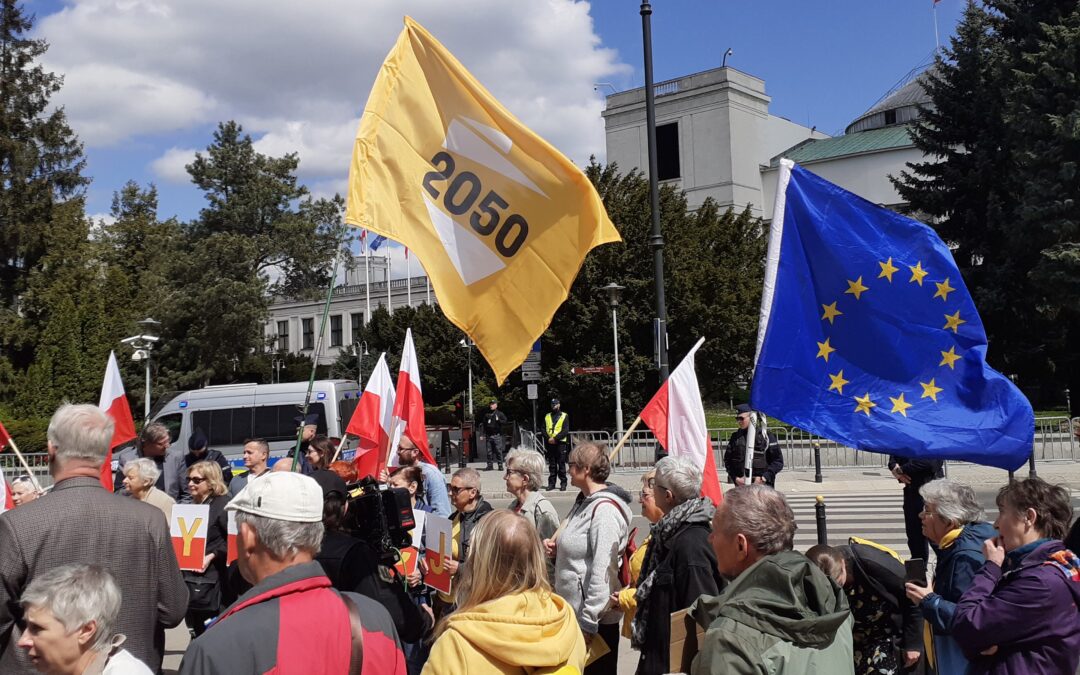
Around half of the MPs from the centrist Poland 2050 (Polska 2050), a junior member of Poland’s ruling coalition, have broken away from the party and announced the creation of an alternative new caucus in parliament.
They say they have done so because of dissatisfaction with how the party’s new leader, Katarzyna Pełczyńska-Nałęcz, has acted since being elected to the position at the end of January.
Zakładamy Klub Parlamentarny Centrum, bo Centrum to miejsce, gdzie spotykają się ludzie, w którym wypracowują dobre kompromisy i odnoszą sukcesy. Chcemy, by Polska była w Centrum naszej pracy, w Centrum naszej uwagi.
Centrum to również miejsce, którym zdobywa się równowagę i… pic.twitter.com/YSUppA2Ytl
— Paulina Hennig-Kloska (@hennigkloska) February 18, 2026
Poland 2050 was founded in 2021 by former TV presenter Szymon Hołownia following his strong third place finish as an independent in the 2020 presidential elections.
It initially pledged to seek to break the longstanding duopoly of the centrist Civic Coalition (KO) and national-conservative Law and Justice (PiS), which have alternately ruled Poland for the last two decades. However, in 2023, Poland 2050 joined a new coalition government led by KO and its leader, Donald Tusk.
The party’s caucus in the Sejm, the more powerful lower house of parliament, up until now contained 31 MPs. However, 15 of them, as well as three Poland 2050 members of the upper-house Senate, have now announced a breakaway. They are forming a new group called Centre (Centrum).
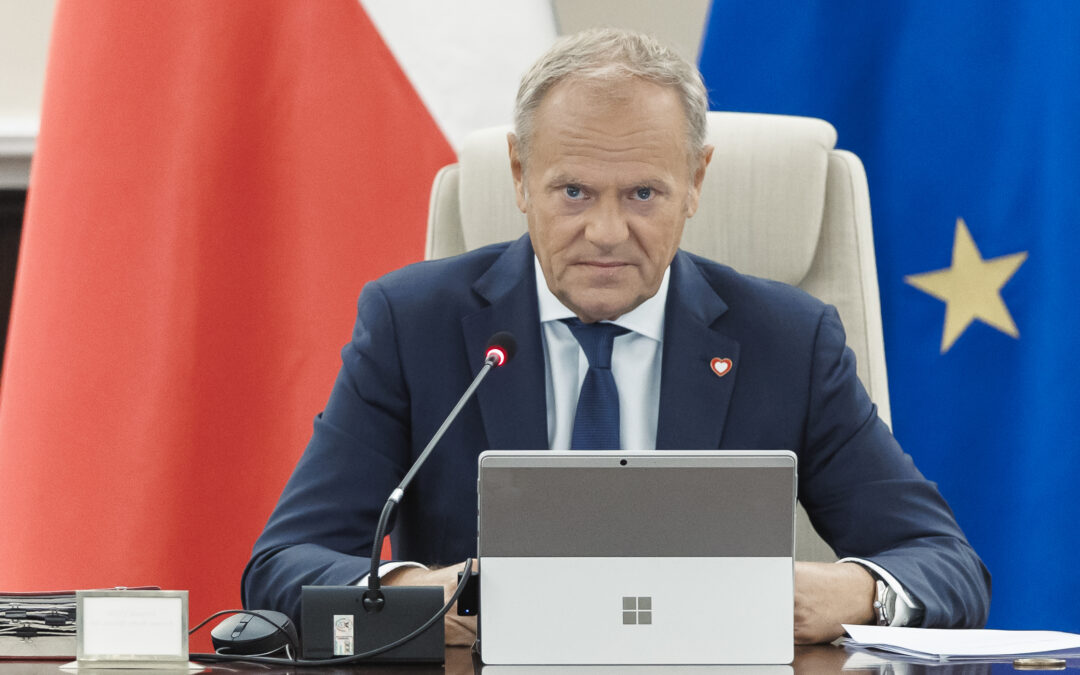
The leading figure in the new faction is Paulina Hennig-Kloska, who serves as climate and environment minister in Tusk’s government. She recently finished runner-up to Pełczyńska-Nałęcz, who is the minister of funds and regional policy, in the contest to replace Hołownia as leader, after he decided to step down.
Today’s announcement follows weeks of turmoil within the party, which has in recent months been polling at around 2-3%, well below the threshold of 5% needed in elections to enter parliament.
Last month, the second round of Poland 2050’s leadership election was cancelled after it had already taken place amid claims of “outside interference” in the online voting system. Even after it was run again, with Pełczyńska-Nałęcz winning, discontent remained with the party.
On Monday, one of Poland 2050’s founders, Michał Kobosko, who is a member of the European Parliament, announced that he was quitting due to “an attempt to introduce a dictatorship within the party”.
His resignation was then followed by that of Anna Radwan, a deputy foreign minister, who said that she “does not feel comfortable in a place where substantive political debate has been replaced by undemocratic and non-transparent decisions”.
Szanowni Państwo,
rezygnuję z członkostwa w Polski 2050 Szymona Holowni.
Nie odnajduję się w miejscu, gdzie merytoryczną polityczną debatę zastąpiły niedemokratyczne i nietransparentne decyzje.
Dziękuję koleżankom i kolegom z Polski 2050 za kilka lat dobrej współpracy. pic.twitter.com/9tex9XCSHW
— Anna Radwan (@RadwanAnia) February 16, 2026
That was echoed today by Hennig-Kloska, who said that “having the [party] leader decide on the fate of the parliamentary caucus alone is not a style we can accept”
However, she called for “continued good cooperation” with Poland 2050 and declared “continued loyalty” to Tusk’s coalition, reports news website Wirtualna Polska.
In response, Poland 2050 said in a post on social media that the MPs who have decided to leave the party “could not come to terms with the democratic decision” of party members who elected Pełczyńska-Nałęcz as leader.
Hołownia himself echoed that sentiment, saying that Pełczyńska-Nałęcz is the “democratically elected leader and we have to respect that”. He accused Hennig-Kloska of “destroying” the party and “destabilising the coalition”.
Ludzie Polski 2050 dokonali demokratycznego wyboru. Wybrali przewodniczącą. Wybrali drogę zgodną z naszymi wartościami i naszym DNA.
Wszyscy kandydaci obiecywali, że zaakceptują wyniki demokratycznych wyborów. Tej obietnicy nie dotrzymali.
Posłowie, którzy opuścili Polskę 2050,…
— Polska 2050 (@PL_2050) February 18, 2026
However, in response to today’s news, Tusk said that there was no threat to the stability of his coalition’s parliamentary majority.
“In recent days and hours, both Pełczyńska-Nałęcz and Hennig-Kloska assured me that they will remain loyal to the government,” said the prime minister, quoted by news website Interia.
The ruling coalition has a majority of 240 MPs in the 460-seat Sejm. Most of those, 156, are from Tusk’s KO, with a further 32 from the centre-right Polish People’s Party (PSL), 21 from The Left (Lewica), and 31 from the now-splitting Poland 2050 caucus.
Poland 2050 and PSL were previously themselves part of an alliance called Third Way (Trzecia Droga), which stood jointly at the 2023 elections. However, last year the two parties confirmed that they were ending the alliance and would stand separately at the next elections, scheduled for autumn 2027.
🔹 Polska 2050 w złej kondycji? Pojawił się rozłam, ale premier Tusk mówi: koalicja pozostanie stabilna 🤝 ➡️ https://t.co/GTyumdUqpt#Polska2050 #DonaldTusk #Koalicja #Stabilność #Sejm #Centrum pic.twitter.com/cK1W5GZggG
— Fakt (@Fakt_pl) February 18, 2026
Notes from Poland is run by a small editorial team and published by an independent, non-profit foundation that is funded through donations from our readers. We cannot do what we do without your support.
Main image credit: Tomasz Molina/Wikimedia Commons (under CC BY-SA 4.0)

Olivier Sorgho is senior editor at Notes from Poland, covering politics, business and society. He previously worked for Reuters.