Keep our news free from ads and paywalls by making a donation to support our work!

Notes from Poland is run by a small editorial team and is published by an independent, non-profit foundation that is funded through donations from our readers. We cannot do what we do without your support.
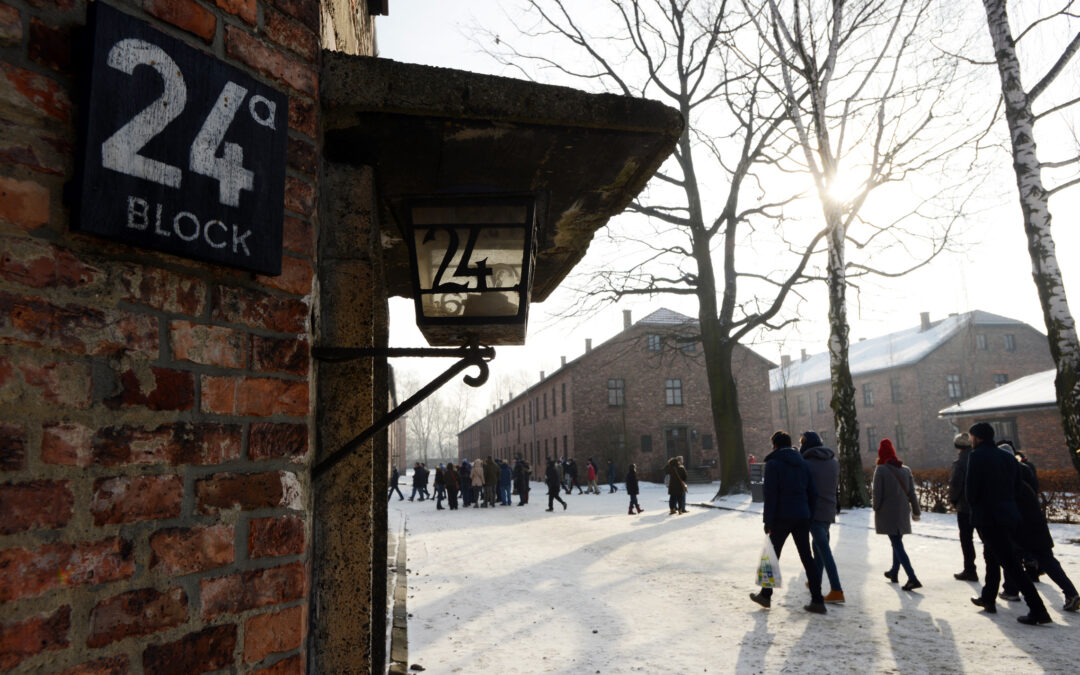
The Auschwitz Museum, one of Poland’s most-visited memorial sites, has announced that it will stop selling entry tickets on site from next month, with visits instead having to be booked online in advance.
The museum says that the decision is a response to the “unethical practices” of private travel companies that bring large numbers of visitors to the former Nazi-German concentration camp without pre-booked reservations.
Starting March 1, individual visitors will be able to make reservations for all entry cards exclusively online through the official system at https://t.co/E97pAip5Gq.
This applies to both guided tours and free admission. The change will make it easier for visitors to plan their… pic.twitter.com/pk2cI1ewjL
— Auschwitz Memorial (@AuschwitzMuseum) February 4, 2026
“The change is designed to help visitors plan their visits more effectively and eliminate lines at the museum entrance,” announced the museum, which last year received 1.95 million visitors, over three quarters of them from abroad.
Entry to the museum, a state institution, is free of charge. But, in practice, most visitors – around 90% last year – join guided tour groups, which they pay for. Those can currently be booked in advance or upon arrival.
However, the museum notes that travel companies often mislead customers into thinking the trips they purchase included both transport and pre-booked entry to Auschwitz.
In reality, entry has not been booked, and the firms then inform customers of last-minute cancellations or itinerary changes, often resulting in arrivals at the museum during the night.
“Even if entry cards were still available, visitors sometimes had to wait several hours for their tour to begin,” said the museum’s spokesman, Bartosz Bartyzel. “We also documented heated conflicts among some ‘tour operators’ over their spots in line, which required intervention by museum security and even the police.”
“Unfortunately, this misleading practice became a business model for some entities. Furthermore, they shifted the blame for the supposed difficulties onto the museum, which was entirely untrue,” added Andrzej Kacorzyk, the museum’s deputy director responsible for visitor services.
Bartyzel says that the new system, whereby entry cards for guided tours can only be booked online through the official museum website, will prevent such situations and allow “visitors to plan their visit in advance and choose the most convenient way to reach the museum”.
Last year, the museum similarly stopped issuing free entry passes at its on-site entrance in response to a surge in visitor numbers and a rise in travel firms’ questionable practices. That policy will now also apply to guided-tour purchases.
The @AuschwitzMuseum has announced new restrictions on entry amid a surge in visitor numbers – which are close to record levels so far this year – and a rise in unscrupulous private firms bringing large numbers of people without pre-booked tickets https://t.co/HV4J2NXVsS
— Notes from Poland 🇵🇱 (@notesfrompoland) April 28, 2025
Both organised groups and individual visitors will be able to book guided-tour tickets online up to three months in advance, while free entry cards will remain available for online reservation up to seven days ahead.
The 1.95 million visitors to the Auschwitz Museum last year was, a rise of 7% compared to 2024 but still below the pre-pandemic peak of 2.32 million in 2019. Poles accounted for 23% of all visitors last year, the largest national group, followed by Brits, Italians, Spaniards, and Germans.
Poland is home to many historically significant sites, which is partly why its tourism sector is seeing a rise in visitor numbers. But the country’s growing popularity also means it faces mounting challenges relating to overtourism, and is under increasing pressure to protect sensitive sites.
Poland saw the EU's second-fastest growth in tourism in 2025, behind only the Mediterranean island state of Malta https://t.co/WVkRbHtU7o
— Notes from Poland 🇵🇱 (@notesfrompoland) January 19, 2026
Auschwitz was first set up by Nazi Germany in occupied Poland in 1940 during the World War Two as a camp to house Polish “political” prisoners, before later becoming primarily a site for the murder of Jews.
At least 1.3 million victims were transported there, with at least 1.1 million of them killed at the camp. Around one million of those victims were Jews, most of whom were murdered in gas chambers immediately after their arrival. The second largest group of victims – around 70,000 people – were ethnic Poles.
The camp was liberated by the advancing Soviet Red Army in January 1945. Two years later, after the end of the war, a Polish state museum was established there.
Poland covers almost all the costs of maintaining former Nazi-German camps on its territory. It has spent more on this than Germany has paid in compensation to Polish war victims
It's time for Germany to fund preservation of the sites, argues @W_Kononczuk https://t.co/08nf4c2jMz
— Notes from Poland 🇵🇱 (@notesfrompoland) January 25, 2026
Notes from Poland is run by a small editorial team and published by an independent, non-profit foundation that is funded through donations from our readers. We cannot do what we do without your support.
Main image credit: Bartosz Siedlik/European Union 2017

Olivier Sorgho is senior editor at Notes from Poland, covering politics, business and society. He previously worked for Reuters.