Keep our news free from ads and paywalls by making a donation to support our work!

Notes from Poland is run by a small editorial team and is published by an independent, non-profit foundation that is funded through donations from our readers. We cannot do what we do without your support.
Over half (53%) of people aged 25-34 in Poland now live with their parents, which is the fourth-highest level in the European Union. Poland’s figure also saw the second-largest rise in the EU between 2018 and 2023.
The data, from a new report by Eurofound, an EU research agency, highlight concerns that young Poles are increasingly being squeezed out of a housing market that has seen prices grow at some of Europe’s fastest levels in recent years.
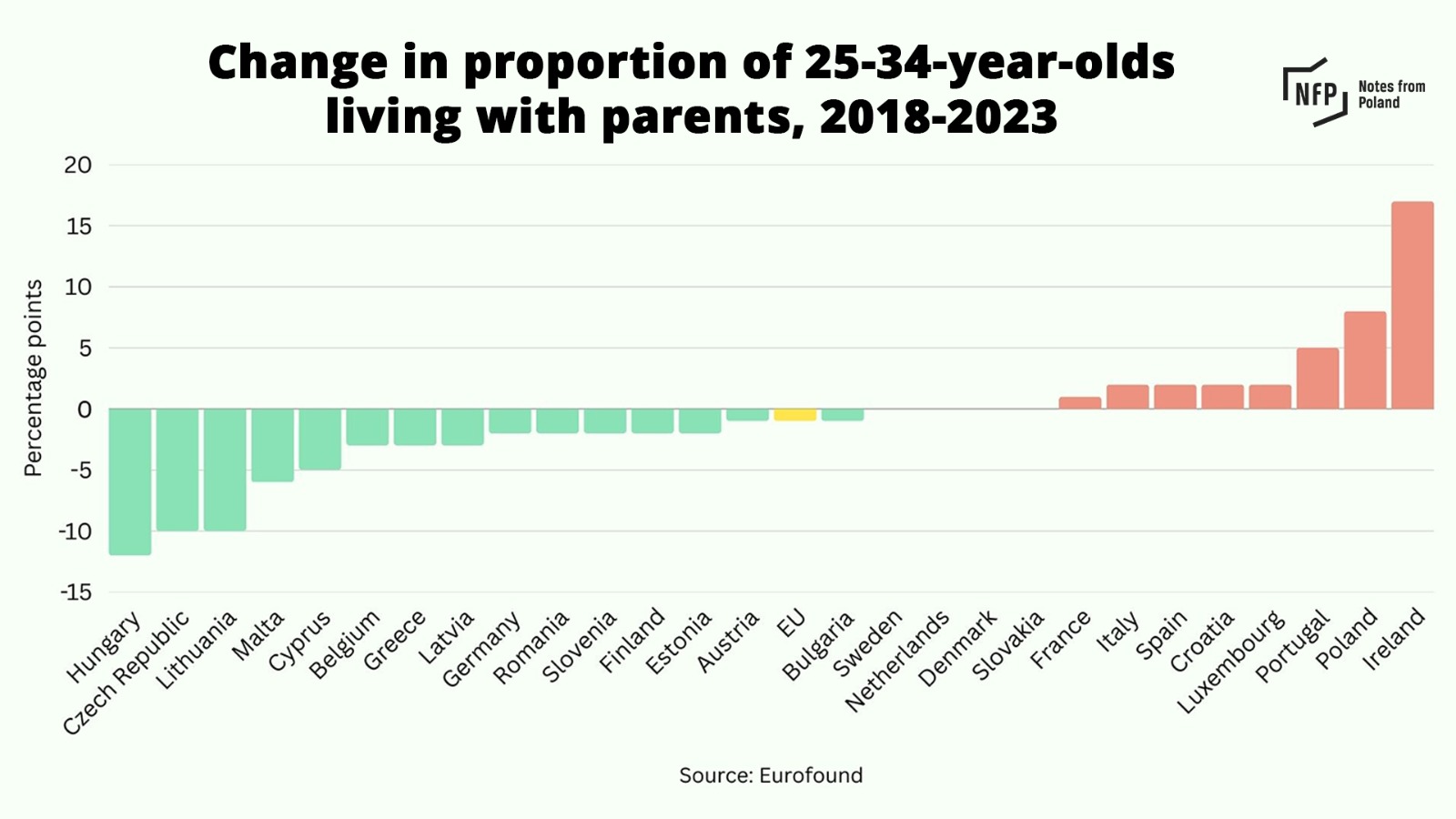
Between 2018 and 2023, the proportion of people in Poland aged 25-34 living in the parental home rose by eight percentage points. Only Ireland, at 17 percentage points, saw a larger increase over that period.
However, Ireland still had a lower overall figure, with 40% of young adults living at home in 2023. Poland’s figure of 53% was smaller only than in Croatia (64%), Slovakia (57%) and Greece (55%)
By contrast, Hungary, the Czech Republic and Lithuania saw their figures decline by 12, 10 and 10 percentage points, respectively, between 2018 and 2023. The lowest overall proportion of young people living with their parents in 2023 was found in Finland and Denmark (both 3%).
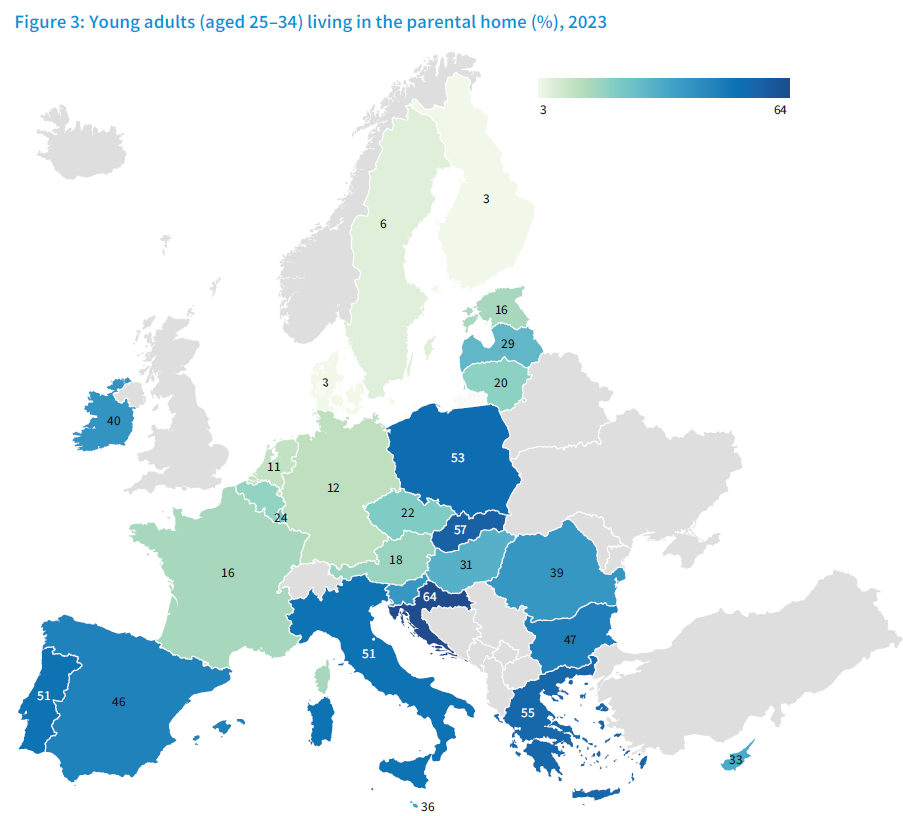
Source: Eurofound
The findings are consistent with data published by Eurostat, the EU’s statistical office, which reported in 2024 that 53.9% of Poles aged 25–34 lived with their parents, also the fourth-highest share in the bloc.
A study carried out by the Polish state research agency CBOS found that last year that, among people aged 25 to 35 who are unmarried and do not have children of their own, 39% lived with their parents.
Eurofound noted housing affordability pressures have intensified in recent years as high energy prices, labour shortages, environmental rules, zoning laws and limited land availability have constrained construction.
At the same time, housing has increasingly been used as an investment, putting households in direct competition with investors in an already tight market.
“In Bulgaria, Ireland, Poland, Portugal and Spain, and in parts of Austria and Italy, the degree of unaffordability in the rental market is such that, in many areas, more than 80% of the median wage would be required to rent a standard two-room apartment,” the agency said.
Young people in Poland were, on average, more likely than their peers in most other countries to see housing costs as a heavy financial burden.
About half of Poles aged 18-29 reported that housing costs were a significant strain. That share was the highest in Greece (61%). The lowest shares were recorded in Lithuania (4%), Latvia (8%), and the Netherlands (9%).
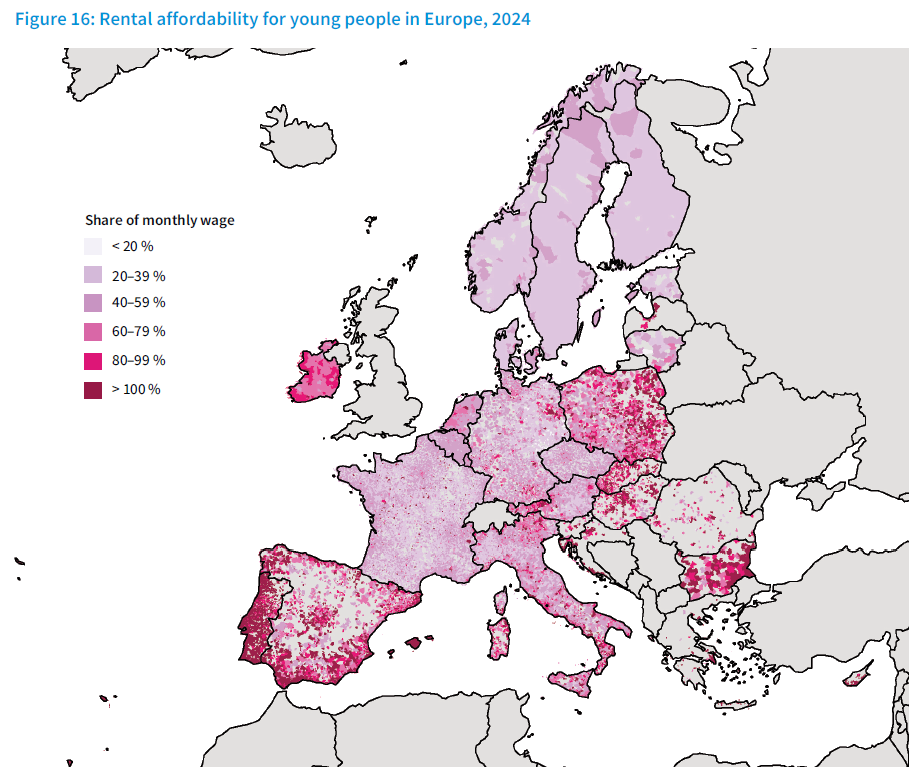
Source: Eurofound
Housing prices have increased rapidly in Poland in recent years. According to Eurostat data, from 2015 to the third quarter of 2025, they more than doubled, with the vast majority of this increase occurring after 2018.
In 2024, Poland recorded the largest increase in housing prices among European countries, according to a study by consultancy Deloitte. It found that the average cost per square metre of a new home in Warsaw is now higher than in Rome.
Poland’s sharp rise in housing prices in recent years has been fuelled by a combination of limited new supply and surging demand, due in part to state-backed mortgage subsidies for first-time buyers.
Poland recorded the largest increase in housing prices (19.3%) among all European countries last year, while Kraków had the biggest rise (28.1%) among cities.
Meanwhile, housing prices in Warsaw are now higher than in Rome, finds a new @Deloitte report https://t.co/Rt9GScX4Vx
— Notes from Poland 🇵🇱 (@notesfrompoland) September 2, 2025
Notes from Poland is run by a small editorial team and published by an independent, non-profit foundation that is funded through donations from our readers. We cannot do what we do without your support.
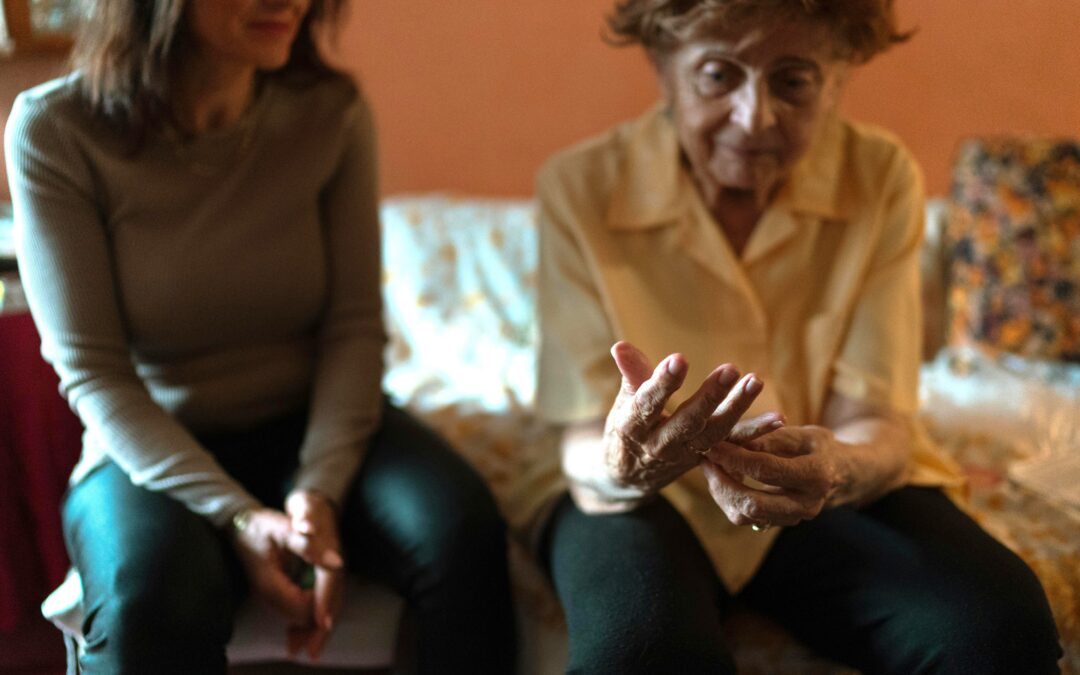
Main image credit: Jsme MILA/Pexels

Alicja Ptak is deputy editor-in-chief of Notes from Poland and a multimedia journalist. She has written for Clean Energy Wire and The Times, and she hosts her own podcast, The Warsaw Wire, on Poland’s economy and energy sector. She previously worked for Reuters.