Keep our news free from ads and paywalls by making a donation to support our work!

Notes from Poland is run by a small editorial team and is published by an independent, non-profit foundation that is funded through donations from our readers. We cannot do what we do without your support.
The POLIN Museum of the History of Polish Jews has appealed to the public to help compile a catalogue of everyday objects that were once found in prewar Jewish homes. They have asked people who possess such items to send a photo and description of them via a new online platform.
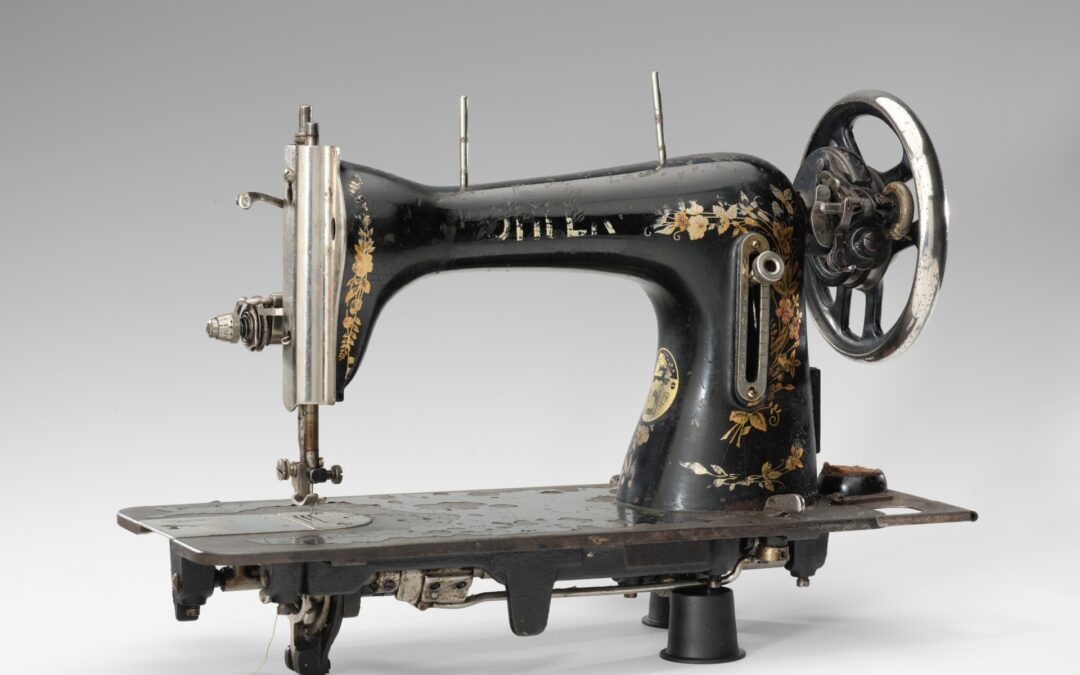
Artefacts already displayed and mapped on the website include a sewing machine in the village of Rożniaty in southern Poland, a set of cutlery in the city of Łódź, and a recommendation letter written by a rabbi for a pupil at a yeshiva in Radun, now in Belarus but which before the war was part of Poland.
For centuries, Poland had a large and prominent Jewish community. On the eve of World War Two, around 3.3 million Jews lived in the country, more than anywhere in the world other than the United States and representing around 10% of Poland’s population.
However, the vast majority of Polish Jews were killed in the Holocaust, while others fled or emigrated during or after the war, meaning that, according to the 2021 census, only 15,700 now live in Poland. There are also believed to be many more residents of Poland with Jewish roots, of which some are not even aware.
POLIN has now partnered with researchers from the Humboldt University in Berlin and Jagiellonian University in Kraków for an EU-funded project, called Przechowane (meaning “preserved”), to document part of the physical legacy of the former Jewish community.
They have created an online space “to bring together people who keep in their homes – or found by chance – objects once belonging to Polish Jews”, the museum reported in a press release.
POLIN is calling for people to send in a picture and description of any such items they possess, even inconspicuous or damaged objects, to make it possible to imagine everyday life in a prewar Jewish house, workshop or shop.
“We would like everybody who has some Jewish memorabilia to be able to use the platform to be able to share them and tell their story,” said Piotr Ostrowski of the museum’s digital collection, quoted by Polskie Radio.
The aim is to shed light on objects that might otherwise not be included in museum collections but are important mementoes of people who are no longer there, Ostrowski explained. Those sending them in will also have the chance to discuss their possessions with researchers.
Eventually, the organisers hope to hold a travelling exhibition of maps, photographs and memories associated with the objects.
Over 400 items, most likely hidden by Jews during WWII, have been discovered during renovation work in Łódź.
Among them were two hanukkiahs that, eight decades after being buried, were used by the city during its celebration of Hannukah last month https://t.co/KlCr4ORPJE
— Notes from Poland 🇵🇱 (@notesfrompoland) January 9, 2023
Notes from Poland is run by a small editorial team and published by an independent, non-profit foundation that is funded through donations from our readers. We cannot do what we do without your support.
Main image credit: POLIN Museum of the History of Polish Jews
Ben Koschalka is a translator, lecturer, and senior editor at Notes from Poland. Originally from Britain, he has lived in Kraków since 2005.