Keep our news free from ads and paywalls by making a donation to support our work!

Notes from Poland is run by a small editorial team and is published by an independent, non-profit foundation that is funded through donations from our readers. We cannot do what we do without your support.
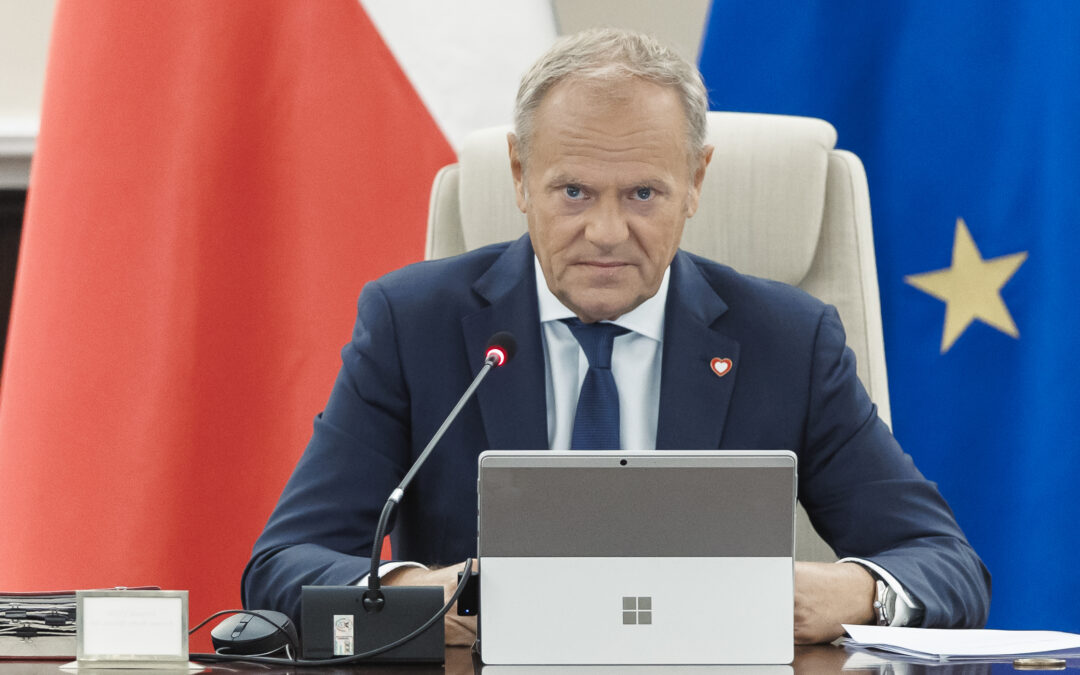
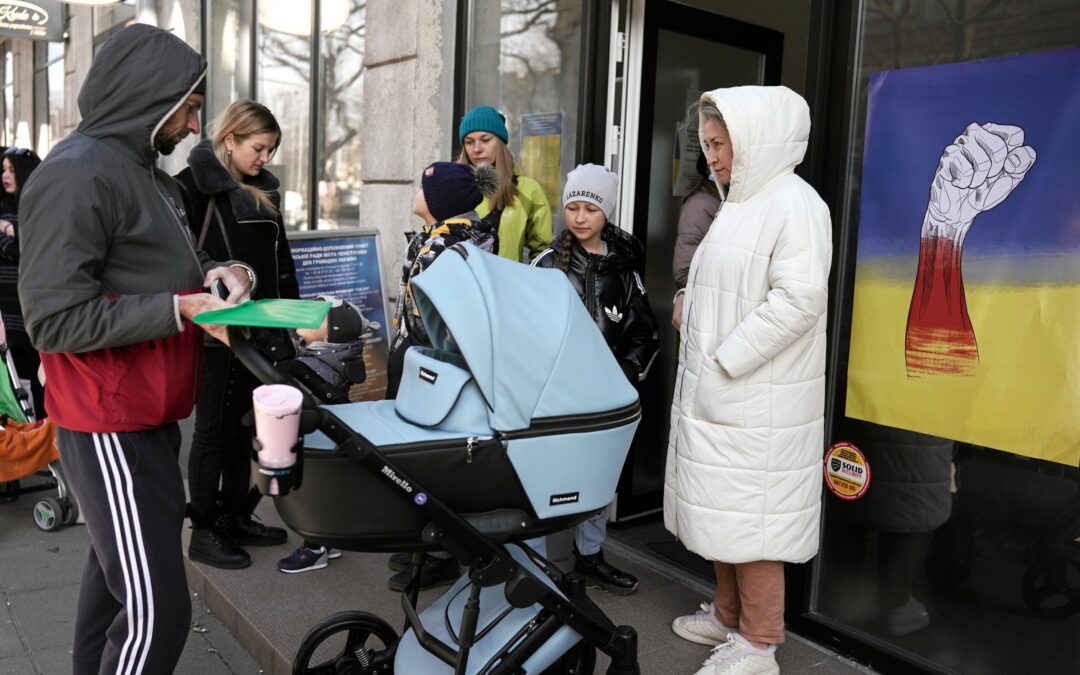
Poland’s government has approved a bill that would end the special support provided to Ukrainian refugees, which was put in place after millions began to arrive in 2022 following Russia’s full-scale invasion. Almost one million Ukrainian refugees remain in Poland today.
“After almost four years, the situation is more stable,” said government spokesman Adam Szłapka at a press conference on Tuesday, announcing the plans. “We are no longer dealing with such a large, simultaneous wave of refugees.”
“Most [Ukrainian refugees] residing in Poland are working; their children are attending school,” he added. “So we can now phase out these extraordinary measures and move from temporary solutions to systemic ones.”
🟢 KOMUNIKAT | Rada Ministrów przyjęła projekt ustawy wygaszającej rozwiązania specustawy ukraińskiej
📑 Nowe przepisy #MSWiA, które trafią pod obrady Sejmu, to stopniowe wygaszanie specjalnych regulacji dla uchodźców z Ukrainy, przy jednoczesnym zachowaniu ochrony tymczasowej… pic.twitter.com/1sBD88XNw7
— MSWiA 🇵🇱 (@MSWiA_GOV_PL) January 20, 2026
In March 2022, Poland put in place special measures to support Ukrainian refugees, who were at the time entering Poland in huge numbers. Since then, the legislation has been repeatedly extended.
However, last year it was the subject of a political dispute between the government and newly elected President Karol Nawrocki, who is aligned with the right-wing opposition.
In August, Nawrocki vetoed a government bill extending support on existing terms, arguing that it unjustly “privileged” Ukrainians over other groups. In the end, he and the government reached a compromise that extended support until March 2026 but made access to certain benefits contingent upon employment.
The president also made clear that it was the last time he would approve an extension of special support for Ukrainians. “We need to switch to normal conditions, i.e. treating Ukrainian citizens in Poland in the same way as all other foreigners,” said his chief of staff, Zbigniew Bogucki.
President @NawrockiKn has signed into law a government bill extending support for Ukrainian refugees in Poland but making access to certain social benefits for them and other foreigners conditional upon being in employment
https://t.co/mt5vcT7ZDU— Notes from Poland 🇵🇱 (@notesfrompoland) September 26, 2025
The new measures, which were agreed by the government on Tuesday but must still be approved by parliament and the president, would go into force in March 2026. They would end some forms of special support for Ukrainians immediately, while phasing out others by March 2027.
Instead, the legislation would introduce “a single, coherent support system for all foreigners covered by temporary protection in the EU, regardless of citizenship…includ[ing] equal access to benefits, the labour market and healthcare”, says Prime Minister Donald Tusk’s office.
One element of the bill would see “a gradual transition of healthcare to principles similar to those applicable to Polish citizens ([through] contributions and insurance)”, says the interior ministry.
Ukrainian refugees without healthcare insurance would be treated the same as uninsured Polish citizens. There would be exceptions for children, pregnant women, victims of violence, and wounded soldiers.
Additionally, special measures put in place to help Ukrainian children adapt to Polish schools – such as Polish language classes, preparatory courses and simplified rules for hiring intercultural assistants – will be removed at the end of the current academic year.
Meanwhile, the provision of accommodation and food would be restricted to particularly vulnerable groups, such as the elderly or people with disabilities.
The current right of Ukrainians to establish a business under special rules – i.e. the same conditions applicable to Polish citizens – will also be terminated, notes the Gazeta Wyborcza daily.
Almost 14,000 businesses were created by Ukrainians in Poland in the first nine months of 2022, reports @PIE_NET_PL
In April their number tripled after the government allowed Ukrainians to run businesses on the same terms as Poles https://t.co/Gm0VfLeAIv
— Notes from Poland 🇵🇱 (@notesfrompoland) January 12, 2023
Some human rights groups have warned that the proposed new measures go too far, and could leave some vulnerable groups without protection and even at risk of homelessness.
The Helsinki Foundation for Human Rights (HFPC) argues that an element of the bill giving those wishing to obtain support a 14-day deadline to apply for a Polish identity number contravenes EU law. They also note that, for some Ukrainians, obtaining the necessary documentation may be hard due to the war in their homeland.
The office of Poland’s Commissioner for Human Rights has raised similar objections, reports Gazeta Wyborcza.
Mimo zdumiewającego terminu wyznaczonego organizacjom społecznym na zgłoszenie uwag, który może sugerować pozorność konsultacji publicznych i który został oprotestowany także przez HFPC, Fundacja zdecydowała się przedstawić w wyznaczonym terminie skróconą opinię dot. tzw. ustawy… pic.twitter.com/ZeiN5rvyDe
— Helsińska Fundacja Praw Człowieka (@hfhrpl) January 2, 2026
Meanwhile, the Lewiatan Confederation, a business lobby representing large employers, criticised the fact that the planned measures will limit the possibility of hiring Ukrainians under a simplified procedure.
They warn that this could “paralyse the labour” market, noting that Ukrainians constitute around 66% of the million or so foreign workers in Poland.
Lewiatan also criticised the fact that temporary protection would be removed from foreigners who leave Poland for more than 30 days, noting that the bill does not make any exception for employees posted abroad by Polish companies.
The bill could still be amended while it undergoes work in parliament, where the government has a majority. Once approved by parliament, Nawrocki would have the choice of signing it into law, vetoing it, or sending it to the constitutional court for review.
Ukrainian refugees boosted Poland’s GDP by 2.7% last year while not raising unemployment or lowering wages, finds a report by the UN @Refugees agency and @Deloitte
"Whoever thinks refugees are a burden on the economy should think again," says @UNHCRPoland https://t.co/rOvtOvBNwG
— Notes from Poland 🇵🇱 (@notesfrompoland) June 12, 2025
While the initial mass arrival of Ukrainian refugees in Poland in 2022 prompted a mass outpouring of support from Poles, many of whom hosted refugees in their own homes, sentiment has recently been turning against them.
A poll published this month by state research agency CBOS showed that the proportion of Poles opposed to accepting Ukrainian refugees has risen to 46%, the highest level ever recorded.
In September, a United Surveys poll for Wirtualna Polska found that 37% of Poles negatively view the presence of Ukrainians in Poland, up from 29.5% two years earlier.
The proportion of Poles opposed to accepting Ukrainian refugees has reached its highest ever level of 46%, up from 3% in the wake of Russia's full-scale invasion.
Other recent surveys have also indicated declining sympathy towards Ukrainians among Poles https://t.co/DLPGY2ToZG
— Notes from Poland 🇵🇱 (@notesfrompoland) January 7, 2026
Notes from Poland is run by a small editorial team and published by an independent, non-profit foundation that is funded through donations from our readers. We cannot do what we do without your support.
Main image credit: Grzegorz Skowronek / Agencja Wyborcza.pl

Daniel Tilles is editor-in-chief of Notes from Poland. He has written on Polish affairs for a wide range of publications, including Foreign Policy, POLITICO Europe, EUobserver and Dziennik Gazeta Prawna.