Keep our news free from ads and paywalls by making a donation to support our work!

Notes from Poland is run by a small editorial team and is published by an independent, non-profit foundation that is funded through donations from our readers. We cannot do what we do without your support.
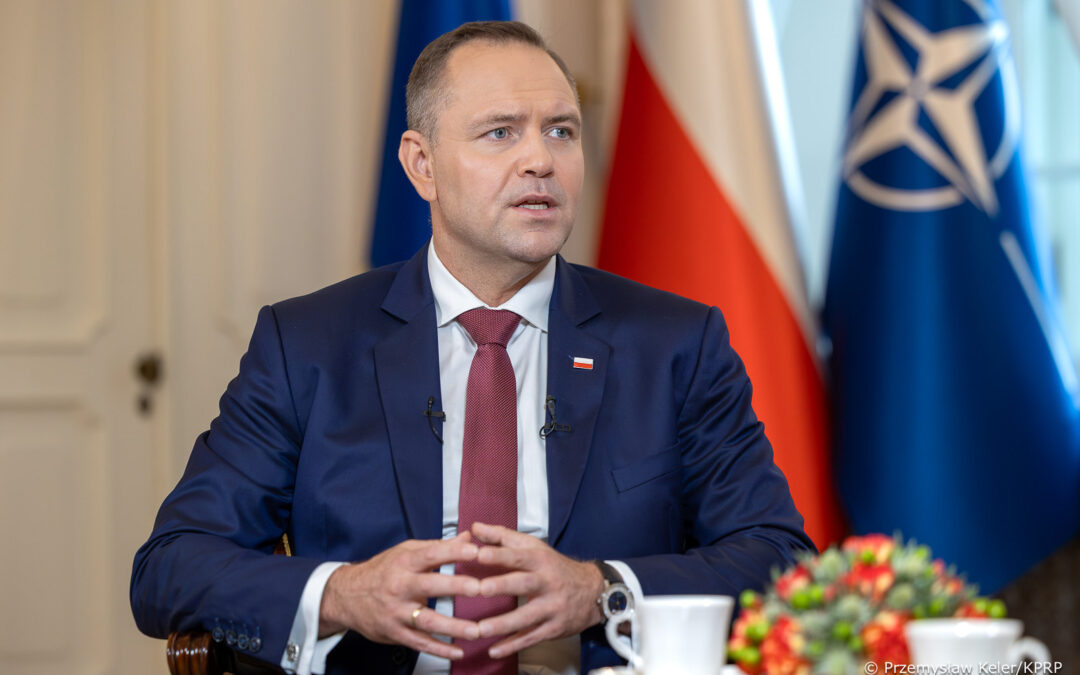
President Karol Nawrocki has vetoed two government bills that would have raised taxes on alcoholic, sugary and sweetened drinks, as well as on winnings from various forms of competitions and gambling.
The vetoes fulfil a promise Nawrocki made in his election campaign this year to oppose tax rises. He accused the government of trying to take the “easy route” of “reaching into Poles’ pockets”.
His decision will complicate efforts to bolster revenues in an already strained budget. The finance ministry estimated the higher excise duty on alcohol would have brought in around 2 billion zloty (€470 million) next year, while the increased levy on sweet drinks would raise around 1.3 billion zloty.
The vetoes – the latest in an unprecedented number issued by opposition-aligned Nawrocki – thus complicate efforts to rein in Poland’s public finances at a time when the country is under the EU’s excessive deficit procedure and recently recorded the bloc’s second-fastest growth in public debt.
Jako Prezydent RP mam obowiązek powiedzieć TAK, gdy ustawy służą obywatelom i powiedzieć NIE, gdy im szkodzą. I z tego obowiązku będę się skutecznie wywiązywał – @NawrockiKn o swoich decyzjach dotyczących kolejnych ustaw. https://t.co/RN7BLQjl3r pic.twitter.com/iUpZmj87nn
— Kancelaria Prezydenta RP (@prezydentpl) December 18, 2025
The surcharge on sugary and artificially sweetened drinks was introduced in 2021 under Poland’s former Law and Justice (PiS) government. The levy was intended to discourage consumption of unhealthy drinks, with the money raised also designated to support healthcare.
Last month, parliament approved a proposal by the current government, which replaced PiS in office in December 2023, to raise by 40% the fixed fee for drinks containing up to 5 grams of sugar or sweetener per 100 millilitres and to double the variable fee for those that contain higher quantities.
The same bill would also have raised taxes on winnings from competitions, games, pool betting and bonus-related prizes from 10% to 15%.
A separate bill would have increased planned rises in alcohol excise taxes. The current law, introduced under PiS, provides for rises of 5% in 2026 and 5% in 2027. The amendment would have lifted rates by 15% in 2026 and 10% in 2027.
Explaining his decision to veto the measures, Nawrocki accused the government of taking the “easiest route” of “reaching into Poles’ pockets” instead of tackling VAT fraud.
He rejected the claim that the taxes were intended to improve public health because “there is no provision in the bill on excise duty increases” to earmark the additional revenue for healthcare. “This speaks louder than a thousand declarations,” said Nawrocki.
Nawrocki reiterated his campaign pledge not to sign bills raising taxes and said the sugar levy was aimed at “filling the huge budget hole for which the government is responsible”. He added that it would hurt farmers, fruit growers and rural communities.
Parliament has approved plans by the government to increase taxes on alcohol, sweetened beverages, and energy drinks from next year.
However, it appears likely that the measures will be vetoed by opposition-aligned President @NawrockiKn https://t.co/FfXTM7Qtzu
— Notes from Poland 🇵🇱 (@notesfrompoland) November 10, 2025
The government criticised the veto as inconsistent. “The sugar tax is bad even though it fully finances healthcare, and the increase in excise duty on alcohol is bad because it allegedly does not go towards financing healthcare,” finance minister Andrzej Domański wrote on social media platform X.
He also rejected the president’s accusations that the government is not dealing with VAT fraud, saying that they had “reduced the VAT gap” left by Nawrocki’s “colleagues” from PiS, which ruled Poland for eight years until late 2023.
The government’s draft budget for next year, which assumed the tax increases would take effect, forecasts a deficit of 271.7 billion zloty, equivalent to 6.5% of gross domestic product, more than double the EU’s 3% fiscal limit.
Opłata cukrowa jest zła mimo że w całości finansuje ochronę zdrowia, a podwyżka akcyzy na alkohol jest zła bo rzekomo nie idzie na finansowanie ochrony zdrowia – tyle z dzisiejszego weta. A, jeszcze jedno, Panie Prezydencie, to my obniżyliśmy lukę VAT po Pana kolegach.…
— Andrzej Domański (@Domanski_Andrz) December 18, 2025
Since being elected as president this year with the backing of PiS, which is now the main opposition party, Nawrocki has made unprecedented use of his veto power.
As well as vetoing the two tax bills on Thursday, Nawrocki also vetoed another relating to the education system. That brought his total number of vetoes since taking power in August to 20 – more than the 19 his predecessor Andrzej Duda issued in his entire ten years in office.
Notes from Poland is run by a small editorial team and published by an independent, non-profit foundation that is funded through donations from our readers. We cannot do what we do without your support.
Main image credit: Przemysław Keler/KPRP

Alicja Ptak is deputy editor-in-chief of Notes from Poland and a multimedia journalist. She has written for Clean Energy Wire and The Times, and she hosts her own podcast, The Warsaw Wire, on Poland’s economy and energy sector. She previously worked for Reuters.