Keep our news free from ads and paywalls by making a donation to support our work!

Notes from Poland is run by a small editorial team and is published by an independent, non-profit foundation that is funded through donations from our readers. We cannot do what we do without your support.
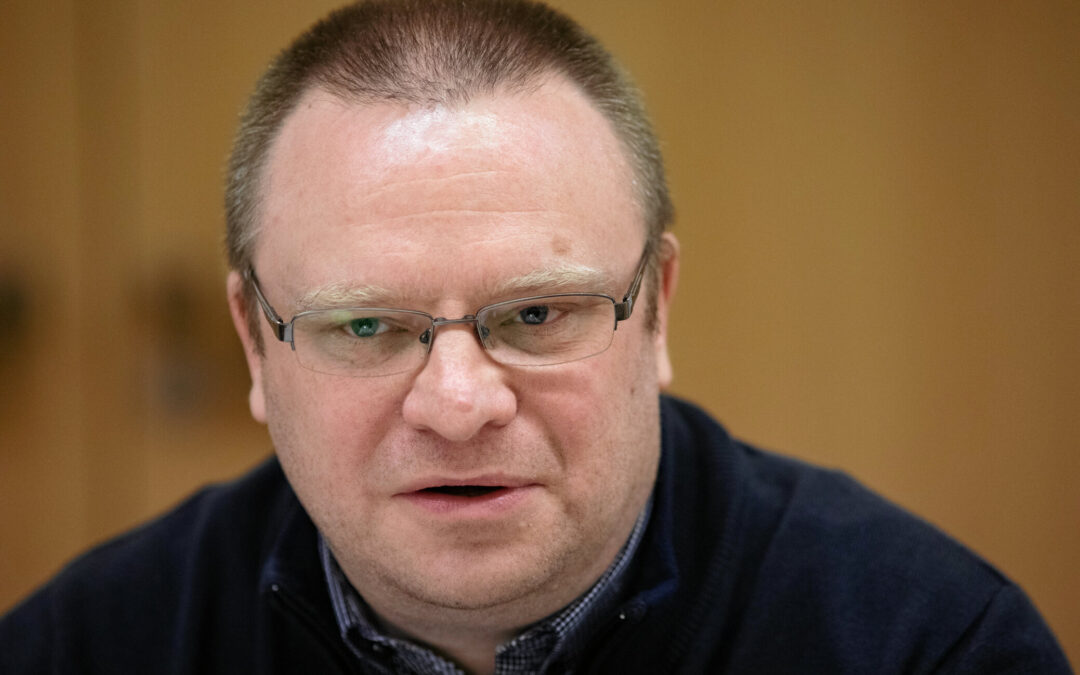
A prominent Polish journalist and commentator, Łukasz Warzecha, has been prevented from entering Ukraine and handed a three-year ban from entering the country.
Warzecha, who is primarily associated with right-wing weekly Do Rzeczy, says he was told that the decision had been made for “security reasons”.
Polish journalist Łukasz Warzecha was travelling to Kyiv on a study visit jointly organised by Poland’s @MieroszewskiPL Centre and the Ukrainian Institute @UA_Institute an institution affiliated with Ukraine’s Foreign Ministry. According to head of @MieroszewskiPL Dr Łukasz… https://t.co/Tawp2hEJ5u
— Sławomir Dębski (@SlawomirDebski) November 2, 2026
Warzecha had been due to join a study visit to Ukraine for Polish journalists organised by the Mieroszewski Centre, a Polish state institution, and the Ukraine Institute, a Ukrainian public body affiliated with the foreign ministry.
The head of the Mieroszewski Centre, Łukasz Adamski, revealed that the list of journalists attending the tour had been agreed between the two organisers and forwarded to the relevant Ukrainian state authorities, who previously raised no objection.
However, on Monday afternoon, Warzecha announced on social media that he had been held at the Ukrainian border and told to wait in a room. The journalist remained there for over seven hours before being informed that he was banned from entering Ukraine for three years.
Proszę państwa, oto miś. Miś jest bardzo grzeczny dziś. pic.twitter.com/aVEUnkGhM7
— Łukasz Warzecha (@lkwarzecha) November 3, 2026
Adamski revealed that his organisation had sought to intervene with the foreign ministries of both countries, but to no avail. Warzecha said on social media that he had been told the decision, which was issued by the Security Service of Ukraine (SBU), was made due to “security reasons”.
Adamski commented that, while he “recognises Ukraine’s sovereign right to decide whom to grant entry…restricting journalists’ work on state security grounds…creates fertile ground for unfriendly commentary”.
At the time of writing, there had been no comment from the SBU regarding its decision to issue an entry ban against Warzecha.
In his journalistic work, Warzecha has at times been critical of Ukraine, for example over its honouring of historical nationalist figures, and has called for a reduction in social benefits given to Ukrainian refugees in Poland. However, those views are within the Polish mainstream.
Warzecha has also voiced support for Ukraine in its defence against Russian aggression. In February 2023, on the first anniversary of Russia’s full-scale invasion, he expressed satisfaction that Ukraine defended itself so effectively.
However, Do Rzeczy, with which Warzecha has been associated for around a decade, has taken a tougher position on Ukraine. In 2024, its front cover warned of the “Ukrainisation of Poland”, a phrase often used by the far right to warn against the growing presence and influence of Ukrainians.
OKŁADKA "Do Rzeczy" nr 35: Ukrainizacja Polski. Raport "Do Rzeczy" o groźnym procesie pic.twitter.com/SUYy1GhIat
— DoRzeczy (@DoRzeczy_pl) August 25, 2024
Speaking to Do Rzeczy after the ban against him was issued, Warzecha said he had “wanted to confront my own views with open-minded politicians and opinion leaders in Ukraine. Unfortunately I was not given the opportunity to do so”.
Ukraine’s decision was criticised by Andrzej Śliwka, an MP from the national-conservative Law and Justice (PiS), Poland’s main opposition party. He asked if Warzecha had been banned “because he dared to criticise Ukrainian corruption, the confrontational policy toward Poland, and the distortion of history”.
“One can agree with editor Warzecha or not, but such a decision demands explanations and a firm response from Polish authorities,” wrote Śliwka. At the time of writing, Poland’s government had not commented on the case.
Polski dziennikarz, red. Łukasz Warzecha, otrzymuje od ukraińskich służb trzyletni zakaz wjazdu na Ukrainę. Dlaczego? Czy dlatego, że odważył się krytykować ukraińską korupcję, konfrontacyjną politykę wobec Polski i zakłamywanie historii?
Można zgadzać się z red. Warzechą albo… https://t.co/JvuhLL9O8F
— Andrzej Śliwka 🇵🇱 (@SliwkaAndrzej) November 2, 2026
Adamski said that the visit to Ukraine had been arranged specifically with the aim of “representing diverse editorial perspectives”. The Mieroszewski Centre last month arranged a similar visit for Ukrainian journalists to Poland.
The aim was “to enable Polish journalists to gain direct knowledge of the situation in Ukraine, engage in conversations with representatives of various communities, and achieve a better understanding of the challenges facing Ukrainian society”, wrote Adamski.
Since Russia’s full-scale invasion of Ukraine in 2022, Poland has been one of Kyiv’s closest allies, providing extensive military, humanitarian and diplomatic support.
However, there have also been regular tensions between the two countries, in particular over their difficult shared histories. This year has seen the two sides clash over the unresolved issue of large-scale massacres during World War Two.
Notes from Poland is run by a small editorial team and published by an independent, non-profit foundation that is funded through donations from our readers. We cannot do what we do without your support.
Main image credit: Dawid Zuchowicz / Agencja Wyborcza.pl
Daniel Tilles is editor-in-chief of Notes from Poland. He has written on Polish affairs for a wide range of publications, including Foreign Policy, POLITICO Europe, EUobserver and Dziennik Gazeta Prawna.